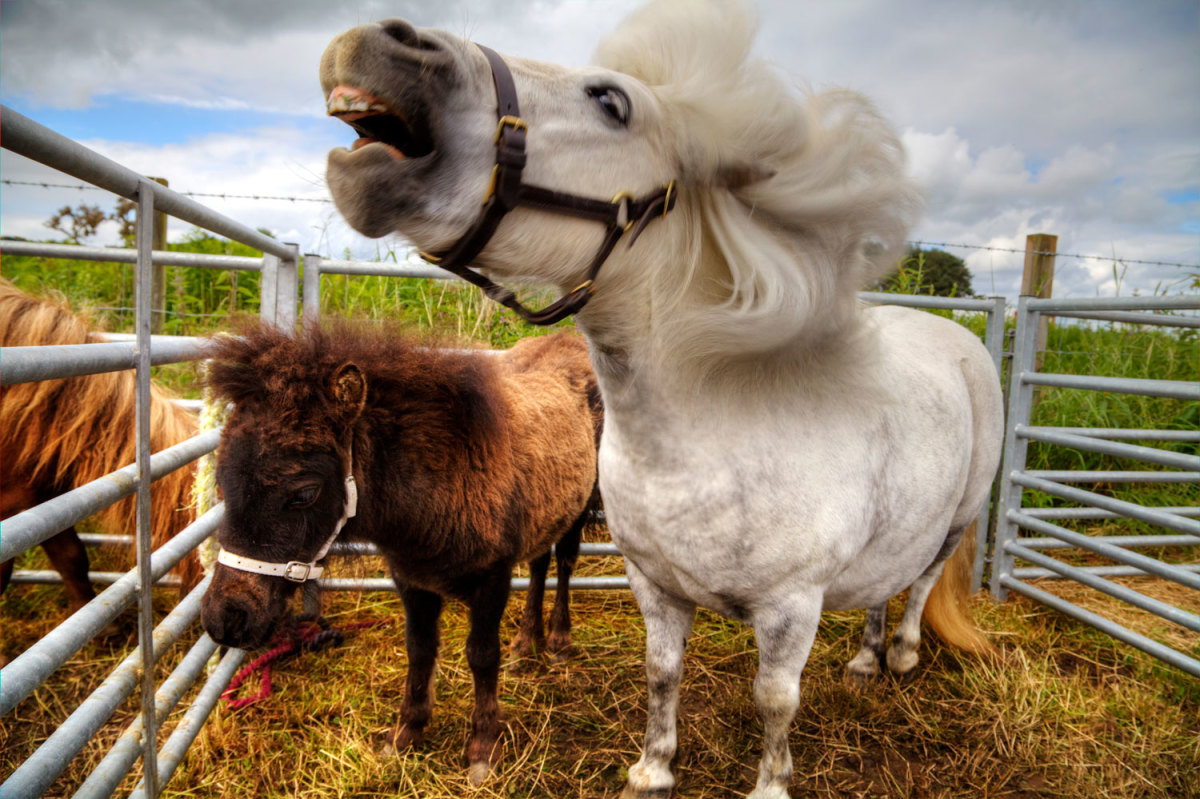
One of the more frustrating syndromes that horse owners and veterinarians deal with is headshaking. Horses might move their head and neck vertical, horizontally or in a rotational motion when doing this. Some display strong and excessive snorting, nasal or facial rubbing, or striking their nose with their foreleg. Exercise often elicits more dramatic reactions, but some horses experience headshaking issues at rest.
A German study presented a questionnaire that was responded to by 163 horse owners and riders with headshaking horses—64% geldings, 34% mares and about 2% stallions [Stange, L.M.; Krieter, J.; Czycholl, I. Overview of the Current Situation in a Sample of Headshakers and Owner Assessment of Effective Therapeutic Measures Used in Germany. Journal of Equine Veterinary Science 2020, vol. 95; doi.org/10.1016/j.jevs.2020.103270].
An overview of research results might help practitioners and owners to target effective therapies.
- Vertical head movement was noted in 75.5% of the horses; horizontal movements occurred in 22%. Half of the horses snorted or sneezed, while 64% rubbed their noses and a third struck their face with their front leg.
- Exercise elicited headshaking in 83.4%; 27% of horses had headshaking while resting in the field or stable
- Stress was reported as the main trigger for headshaking in 18.4%.
- Owners further reported that 18.4% of horses also displayed other stereotypical behaviors, such as weaving, cribbing or running in circles.
- Nearly half of the horses were not rideable due to headshaking, and nearly 2% were actually dangerous.
- About 91% of horse owners attempted therapies.
- Surgical therapy was tried in 1.2% and medical treatment (steroids or NSAIDs) in 9.8%.
- A nose cover was used by 54% of owners.
- Alternative therapies were used by 84%—physiotherapy in 32%, equipment changes in 23%, dietary changes in 7%, and changes in riding style in 29%.
- Horses aged less than 10 years accounted for 43% of headshakers in the survey. The average age of affected horses was 12.7 years.
- Comorbidities of musculoskeletal disease occurred in 18%, the gastrointestinal tract in 8%, the respiratory tract in 8%, eye disease in nearly 7%, and skin and dental disease in 13.5%.
- Owners identified a specific trigger for headshaking onset in 28%, with stress most often in 18.4%. Other situations were identified as a trigger—training and events, training of young horses, poor fitting saddles, vaccination, and kissing spine or skull fractures.
The authors noted that stress reduction management practices, use of suitable equipment, and gentler rider’s habits are known to mitigate some headshaking symptoms. Greater success in resolution is achieved with an accurate diagnosis of the etiology of the headshaking in individual horses.