This article originally appeared in the Winter 2025 issue of EquiManagement. Sign up here for a FREE subscription to EquiManagement’s quarterly digital or print magazine and any special issues.
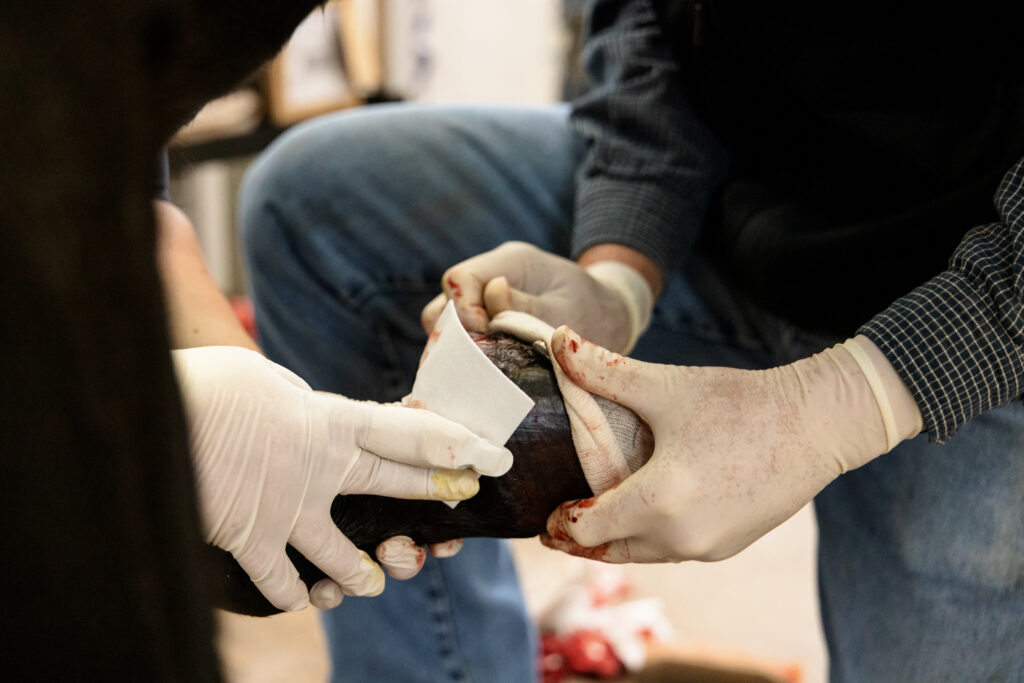
Veterinarians carry the responsibility of selecting antiseptics and dressings whose efficacy and safety they can trust. The vast number of wound-care products can make choosing an appropriate one overwhelming, and a recent literature review found many therapies have exhibited controversial results, with a lack of specific, standardized treatment protocols (Ribeiro et al. 2024). Here’s a concise look at some antiseptic and dressing options with demonstrated efficacy.
Medical-Grade Honey
What it is: Medical-grade honey (MGH), specifically Manuka honey, has been increasingly used and studied for both its broad-spectrum antimicrobial action and wound-healing benefits.
Recommended uses: Decreasing wound retraction, size, and inflammation and increasing angiogenesis, fibrosis and collagen organization, and epithelialization. Dean Hendrickson, DVM, MS, DACVS, reported frequent use of MGH in equine practice, citing its ability to reduce wound size and infection rates significantly.
Limitations: Research shows that MGH doesn’t shorten overall healing time and has no significant effect on growth factor TGF-β1 and TGF-β3 concentrations (Bischofberger et al. 2011, 2016).
Silver-Impregnated Dressing
What it is: Silver-based dressings, particularly those with nanocrystalline silver, provide potent antimicrobial activity. They can come in the form of dressing pads or aerosolized spray.
Recommended uses: These dressings are most useful during the inflammatory phase of wound healing to reduce microbial burden. Their efficacy includes action against Pseudomonas and antibiotic-resistant strains such as methicillin-resistant Staphylococcus aureus (Loftus 2022; Percival et al. 2011).
Limitations: Extended use might delay healing or impair fibroblast activity.
Calcium Alginate Dressing
What it is: A wound-care product made from the fibers of seaweed (alginates). When these dressings come in contact with wound exudate, they help maintain a moist healing environment and stimulate healthy granulation tissue formation.
Recommended uses: Since they are highly absorbent, calcium alginate dressings are useful for wounds with significant drainage. Their hemostatic properties also help manage minor bleeding. They are best used in early wound stages or when loaded with the antibiotic ampicillin or combined with antimicrobials such as honey or silver (Ribeiro et al. 2024).
Limitations: Calcium alginate dressings are not appropriate for burns or dry wounds; they will adhere to the tissue and potentially cause trauma when removed.
Polyurethane Foam
What it is: Foam dressing designed to maintain moisture balance, insulate wounds, and cushion against trauma. Their nonadherent nature allows for atraumatic removal and infrequent changes.
Recommended uses: Polyurethane foams are best suited for clean, granulating wounds during the proliferative phase and are often layered over primary antimicrobial dressings for added protection (Loftus 2022). A silver sodium zirconium phosphate polyurethane semiocclusive foam dressing showed significantly decreased wound area and granulation tissue scores when evaluated < 30 days and over 60 days, although complete healing times did not differ significantly (Kelleher 2015).
Limitations: Some foams are disadvantaged by being nonadherent, potentially moving away from the wound bed.
Conclusion
Practitioners select antiseptics and dressings based on their best judgment of a wound’s phase, location, characteristics, and infection risk. A strategic combination of research-backed products is often warranted, with adjustments made throughout different phases of wound healing.
Brought to you by Silver Honey.
Related Reading
- Topical and Systemic Treatment of Equine Skin Infections
- Equine Pathogens’ Susceptibility to Different Wound Dressings
- Responsible Antimicrobial Usage in Horses
Stay in the know! Sign up for EquiManagement’s FREE weekly newsletters to get the latest equine research, disease alerts, and vet practice updates delivered straight to your inbox.