This article originally appeared in the Summer 2026 issue of EquiManagement. Sign up here for a FREE subscription to EquiManagement’s quarterly digital or print magazine and any special issues.
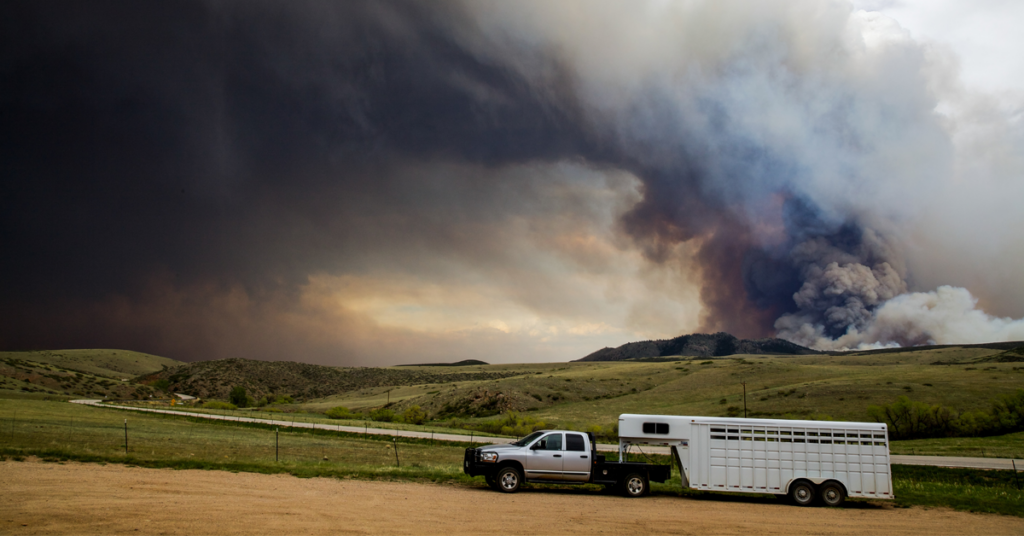
In 2024, the U.S. declared a major weather emergency on average every four days, according to the International Institute for Environment and Development. And that figure doesn’t include large-scale hazards created by events like train derailments, hazardous materials spills, explosions, and even disease outbreaks.
For example, the November 2025 UPS cargo plane crash at the Louisville, Kentucky, airport and an electric truck fire in Northern California in August of 2024 both had the potential to endanger nearby equine veterinary practices and the clients in their care.
“It is hard to put out lithium battery fires, and the toxic gases can be dangerous,” says Briana Hamamoto, DVM, PhD, the large animal veterinarian on the California Veterinary Emergency Team, run by the University of California, Davis.
Veterinary practices are often among the first (and most trusted) animal professionals in a disaster-affected community. They quickly become the information hub for horse owners; medical support for injured or displaced animals; coordination points for relocation, triage, and recovery; and trusted advisors, according to Jerrica Owen, executive director of the National Animal Shelter & Rescue Coalition.
“Preparation allows practices to move from reactive crisis response to coordinated animal disaster management, which improves outcomes for animals, protects veterinary staff, and reduces chaos for the community,” Owen says.
When it comes to preparing for these scenarios, Rebecca Gimenez Husted, PhD, refers to advice that Richard A. Mansmann, VMD, PhD, the director of the Equine Health Program at North Carolina State University’s Department of Clinical Sciences, gave her years ago: What you do in your procedures and methods practiced every day determines your actual ability to be resilient in an emergency or a disaster.
“If you do a bit of planning for what could happen and mitigate or practice for those things, then when it actually happens, it isn’t as big a deal,” she says. “That includes training staff on skills you hope you don’t have to use often, following biosecurity procedures, performing daily safety and security checks, and educating clients on procedures and the importance of well-mannered horses.”
While the first 24 hours might get the most attention, disaster response often stretches far beyond the initial event. Practices need staffing, documentation, and supply plans that can hold up over days or weeks to ensure business continuity. These seven steps can help you prepare.
1. Understand the Risks
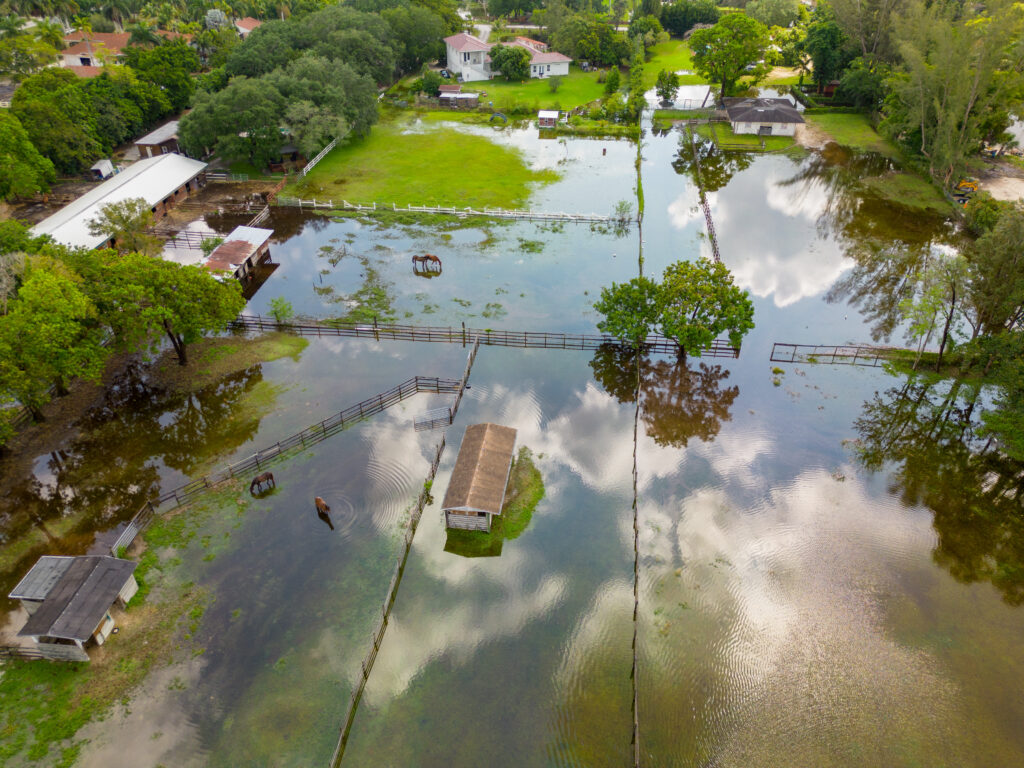
Many practitioners underestimate their exposure because they don’t see themselves in the classic hurricane, tornado, or wildfire narrative.
“I’ve heard clinicians say, ‘Oh, I’m in Pennsylvania, we don’t have disasters here,’ ” Hamamoto says. “They do have giant snowstorms, and power outages are a big deal. Have you considered how you operate your clinic without power?”
Power outages can occur anywhere for a variety of reasons—even extreme heat can knock out power from overuse. Do you have a plan for preserving genetic materials, vaccines, or drugs that must remain frozen or refrigerated?
Start by identifying the hazards and risks most common to your region. Define how these scenarios can affect your business with a business impact analysis (BIA) available from Ready.gov. The BIA provides a step-by-step approach for assessing your risk. The American Veterinary Medical Association (AVMA) offers members a downloadable workbook that can also help you prepare your practice.
Owen adds that practice leaders can assess their preparedness level by asking:
- If we lost power for 72 hours, could we still operate safely?
- Do we have off-site access to client records and medical histories?
- How would we communicate with staff if normal systems fail?
- Do we have a plan for animals currently in our care?
- If evacuation became necessary, how would we move equipment, medications, and animals?
- Who are our local emergency management and animal response partners?
Husted recommends reviewing your insurance paperwork closely with someone who understands the policy. Does it cover drought, hail, ice, flooding, or wind-driven events? Look for clauses like “acts of government,” and be clear about what it covers in legal situations.
“What happens if a horse dies at the clinic while you’re trying to load it in a trailer to evacuate?” she says. “Talk through potential situations and how you would handle them.”
2. Develop Preparedness Plans
Risk assessment is only the starting point. The next step is deciding what functions must remain operational when systems fail and how fast you need each function back online.
“Rank the importance of your essential functions,” Hamamoto says. “An example could be ICU treatments being the priority to have functioning within the first four hours.”
Preparedness strategies should focus on four areas: facilities, staff, operations, and on-site animals, Owen says.
For example, that might mean buying a generator, backing up files to the cloud, installing security and fire systems, and creating a plan for on-site animals, including whether to shelter in place or evacuate and how they will be tagged and identified.
3. Create an Evacuation Plan
Remember back in grade school when firefighters came to school and encouraged you to create a home evacuation plan with your parents? While evacuation plans are key parts of preparedness strategies, Husted says they’re often the most overlooked.
“Many people think they know what is involved, but they have never taken 15 minutes to practice an actual fire drill or evacuation drill, and it shows when there is a real emergency,” she says. “Set it up for a training event, keep a checklist, and have your staff work through it.”
4. Practice Plans Beforehand
A written plan is only useful if your team can execute it under pressure. Running realistic drills exposes weak spots in communication, equipment, decision-making, and animal handling before a real emergency turns those gaps into costly mistakes.
“The best way to assess preparedness is to run a drill,” Husted says. “Simulate a barn fire. You might even bring in the local fire department as a practice drill or simulate that a wildfire is coming your way and that you have to deal with locking everything up and evacuating with animals and people, or that you are enacting your shelter-in-place plan and staying to fight the fire with appropriate hoses and extinguishers.”
She recommended setting off an alarm and seeing what happens. It might surprise you what people do when they don’t know what to do.
“Then, learn from the experience, and apply it and get better,” she says.
5. Secure Your Oxygen Mask First
If you listen to airline safety instructions, you know their message: Secure your oxygen mask before assisting others. Carry that mindset into your practice.
“If you don’t have a plan, you will be too busy to help anyone else,” says Husted. “You just can’t help anyone else until you have your proverbial crap in a bag.”
That must trickle down to your employees, too, she adds. If your employees don’t have a plan, they aren’t going to show up to work because they will be working through their own issues.
“Disasters impact people first,” Owen says. “Veterinary practices should plan for staff communication protocols, emergency contact lists and backup plans, expectations for work responsibilities during disasters, and staff personal preparedness so they can safely report to work.”
6. Plan for Emotional and Mental Health Impacts
Veterinarians are hardwired to help, which can put them at heightened risk in chaotic situations like wildfires, hurricanes, or large-scale evacuations. In her own wildfire response, Hamamoto acknowledges how it felt when the disaster was close to home.
“It was very different in how it was so emotionally charged,” she says. “It was my clients coming into the shelter, bringing the patients our clinic was caring for regularly.”
Self-awareness and trusted colleagues who can step in when stress clouds judgment are just as important as any written protocol.
“Giving yourself grace and knowing that the mental capacity and the mental stress of all this is very important,” Hamamoto says. “When I’m working in these situations, I say to my technicians, ‘Don’t let me do something dumb,’ because I know I’ll have a mental block.”
Owen recommends rotating staff when possible, maintaining rest and hydration, documenting treatments and animal movement, and preserving supplies for ongoing needs.
“Disaster response is often a marathon, not a sprint,” she says. “Long-term recovery can last weeks or months after the initial disaster.”
7. Connect With Emergency Management Systems
Partnerships and coalitions help keep veterinarians from pushing too far into danger and provide critical information and support for coordinating care for animals in harm’s way.
“If they don’t know you, and you aren’t part of the process or at least have you on their distribution and resource list, don’t expect to be treated differently than the masses when the disaster comes,” Husted says.
The Stark Reality
Disasters rarely arrive when it’s convenient. Weather forecasts, especially for hurricanes, give time to react, but other events do not. Clinic owners and managers who have thought through the risks, practiced the response, and built systems to respond are best positioned to protect their business and care for patients.
Resources
- AAEP Emergency Relief Fund: foundationforthehorse.org/impact/disaster-relief/
- AAEP Disaster Preparedness for Horse Owners Webinar: youtube.com/watch?v=6I_6dyVvvdY
- American Veterinary Medical Association Emergency Planning for Veterinary Practices: avma.org/resources-tools/animal-health-and-welfare/disaster-preparedness/emergency-planning-veterinary-practices
- Business Impact Analysis: ready.gov/business/planning/impact-analysis
Related Reading
- The Business of Practice: Responding to Horse Trailer Accidents
- Equine and Livestock Evacuation Kit Essentials
- Disease Du Jour: Equine Infectious Disease Patterns and Threats
Stay in the know! Sign up for EquiManagement’s FREE weekly newsletters to get the latest equine research, disease alerts, and vet practice updates delivered straight to your inbox.