Today’s equine prepurchase exam (PPE) has evolved into a complex, high-stakes risk assessment shaped by rising horse values, client expectations, insurance pressures, and a growing culture of litigation.
“That evolution may have made things better in many cases, but it also may have made things worse over the last 20 years,” said British Equine Veterinary Association (BEVA) chief executive David Mountford. He served as session chair during the 2026 National Equine Forum, where a panel of equine veterinarians and industry members reviewed the current state of PPEs and how to improve the system as it stands currently. Here are some of the key takeaways.
The Purpose and Limits of the PPE
The fundamental purpose of a prepurchase exam is risk reduction, explained Lucy Grieve, MRCVS, who, in her work with BEVA, has developed a series of guidelines for veterinarians performing PPEs.
Buyers are investing significant sums of money and want reassurance that the horse they are purchasing is suitable for their intended use. “However, vettings are a snapshot in one day, and a horse is a living creature,” she said. “You’re seeing it for that small amount of time and trying to judge what you see in front of you and whether that horse is the right horse for the person.”
Grieve emphasized that PPEs are not guarantees of future soundness, performance, behavior, or insurability. “I think people expect more from the vetting than is possibly possible,” she added, which can lead to misunderstandings and even litigation.
Sam Cutts, MRCVS, an expert witness and director at Hook Norton Veterinary Group, in Oxfordshire, UK, said, “We’re vetting a specific horse for a specific purpose,” meaning the same horse could be deemed suitable in one context and unsuitable in another. Despite this, the industry continues to treat PPEs as pass/fail events. Cutts said even the wording “suitable” or “not suitable” is often interpreted this way, fueling misunderstanding and disputes.
Minimizing Misunderstandings
While the PPE process itself is generally well understood, interpretation of findings varies widely, particularly depending on the purchaser’s experience and risk tolerance, said Mark Georgetti, MRCVS, clinical director at Three Counties Equine Hospital, in Gloucestershire, UK. A professional rider might accept certain findings as manageable, for instance, while a less experienced amateur might view the same findings as disqualifying.
Lack of or poor communication increases the likelihood of misunderstandings and misaligned expectations, especially when the purchaser is not present at the vetting, he added.
“We really need to have good communication with the purchaser prior to the examination,” Georgetti said. “It’s easiest for us if we’re doing that vetting for one of our own clients because we already know them well and have a good working relationship. But it’s frequent for us to do vettings for people we don’t know.”
In these cases, the veterinarian must quickly assess the buyer’s experience level, their expectations and risk tolerance, and their intended use for the horse. Georgetti also encouraged practitioners to have a dialogue with the purchaser’s primary veterinarian.
Industry Pressure and an Unsustainable System
From a seller’s perspective, Julia Martin, owner of Kings Hill Equestrian, in West Sussex, UK, said “the [PPE] system as it is is not sustainable.”
She said increasing expectations for “perfect” horses, particularly among amateur riders, are leading to a dramatic decline in successful sales. When she began selling horses decades ago, Martin said 9 out of 10 horses would “pass” a PPE; today only 2 in 10 will. She has gone from selling 250-300 horses a year to less than 100.
Regardless of whether these figures are universally representative, they illustrate a perceived trend: More horses are being rejected, often due to relatively minor or manageable findings. She attributed this to several factors: inexperienced buyers entering the market, unrealistic expectations of perfection, misinterpretation of clinical findings, and fear-driven veterinary decision-making influenced by litigation.
The result, Martin argues, is a market where horses are written off unnecessarily, even when they are actively competing and performing. She said a downstream consequence is once a horse has “failed” a vetting, its market value might drop, even if another veterinarian would deem it suitable for its intended use.
Litigation and the Culture of Blame
The increasing threat of litigation has shaped veterinary behavior in PPEs. Today, prepurchase exams and post-purchase disputes account for a significant proportion of equine-related claims, said Cutts. She explained that this has led to more conservative decision-making, increased documentation of findings, and heightened stress among veterinarians.
“In years gone by, if somebody bought a horse and it didn’t work out, well, that was bad luck,” she said. “These days, somebody buys a horse and it doesn’t work out, it’s going to be somebody’s fault.”
Cutts acknowledged that while we can all make mistakes, when things go wrong post-purchase, it’s often that the buyer has bought the wrong horse. “If we’re asked to do a vetting, we are assessing whether the horse is suitable for the purpose that’s been described,” she explained. “So, if I’m asked to say, do I reasonably think this horse will be fit for being a Grand Prix dressage horse, then that’s what I’m assessing. I’m not assessing whether the owner is going to be able to ride it.”
Grieve added that this environment is deterring some veterinarians, especially younger practitioners, from performing PPEs altogether. The fear is not just immediate but prolonged, with potential claims arising months after an exam.
To mitigate risks, she advised meticulously documenting PPE findings. “The problem is the more findings you document, the more there is for the insurance company to exclude,” she said. “And then even if the horse was found suitable for purchase, after the buyer speaks to the vet and the insurance company, they decide not to go ahead. It’s a difficult cycle sometimes.”
Variability in Veterinary Opinion
During the panel discussion, Cutts underscored the point that a PPE is an opinion. Even highly experienced veterinarians might reach different conclusions about the same horse. This variability stems from differences in clinical judgment, varying interpretations of risk, the intended use of the horse, and the buyer’s goals and tolerance.
Georgetti added that professional experience plays a significant role. More experienced veterinarians tend to be more comfortable contextualizing findings, communicate risk more effectively, and tolerate manageable issues. However, he emphasized that all veterinarians begin as less experienced practitioners, making mentorship and support essential.
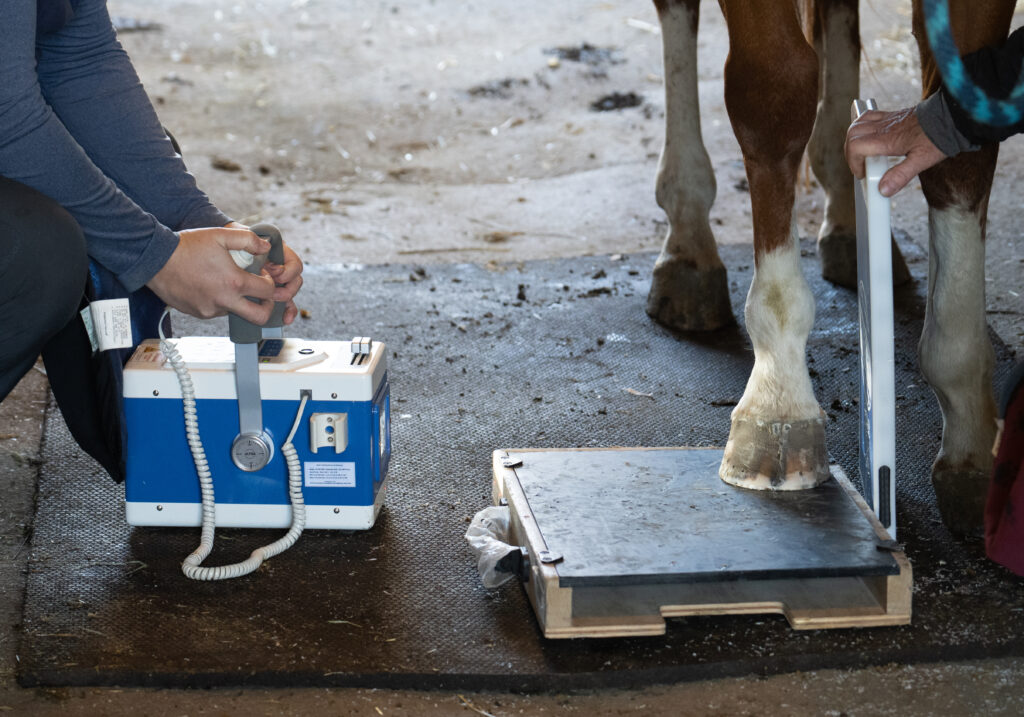
Advanced diagnostics, particularly radiography, add another layer of complexity. Georgetti pointed out the “wide variability” in how veterinarians interpret imaging findings, largely due to a lack of robust evidence linking specific findings to clinical outcomes. This can result in overinterpretation of incidental findings, increased buyer anxiety, and more conservative recommendations. Martin echoed his concern, advocating for reduced reliance on radiographs as predictors of future performance.
The panel was similarly skeptical about the use of gait analysis technology in PPEs. Georgetti noted that all horses exhibit some degree of asymmetry, and these tools might highlight differences that are clinically irrelevant. Grieve added that such tools are not particularly useful for a “single snapshot” assessment.
The Horse Itself: A Variable System
A critical, often underappreciated factor is the horse’s response to change. Georgetti and Grieve both emphasized that moving to a new environment can alter a horse’s behavior and soundness. Changes in management, rider, workload, and training surface can reveal issues that were not apparent during the vetting.
Grieve provided examples of horses developing back pain or behavioral issues after a change in rider or management, even when previously sound. Conversely, some issues might resolve under better management.
This reinforces the central limitation of PPEs: They cannot predict how a horse will respond to future conditions.
Steps Toward a Better System
At the end of the session, the panel converged on several key areas for improvement:
- Move Away from “Pass/Fail”
Cutts advocated for a shift toward categorizing horses as low, medium, or high risk. This aligns more closely with the true nature of PPEs and might reduce unnecessary deal breakdowns.
- Improve Communication and Transparency
All panelists stress the importance of honest seller disclosures, pre-vetting discussions with buyers, and collaboration with the horse’s care team, including farriers and physios.
- Support and Mentor Veterinarians
Grieve highlighted the need to build confidence among younger vets through mentorship and team support, ensuring the sustainability of the profession.
- Develop Better Evidence and Consensus
Georgetti called for an honest and transparent history on every horse, as well as improved data and consensus on the clinical significance of diagnostic findings, particularly radiographs.
- Recalibrate Client Expectations
Martin emphasized the need to educate buyers, especially amateurs, that “there is no perfect horse” and that some level of risk is inevitable.
For equine veterinarians, the key takeaway is that the value of a PPE lies not in eliminating risk, but in communicating it clearly. Success depends less on identifying every possible issue and more on contextualizing findings, understanding the buyer, managing expectations, and documenting and communicating effectively.
Related Reading
- The Cost of Public Judgment in Veterinary Medicine
- Performance Horse Ethics for Early-Career Veterinarians
- The Importance of Medical Recordkeeping in Equine Practice
Stay in the know! Sign up for EquiManagement’s FREE weekly newsletters to get the latest equine research, disease alerts, and vet practice updates delivered straight to your inbox.