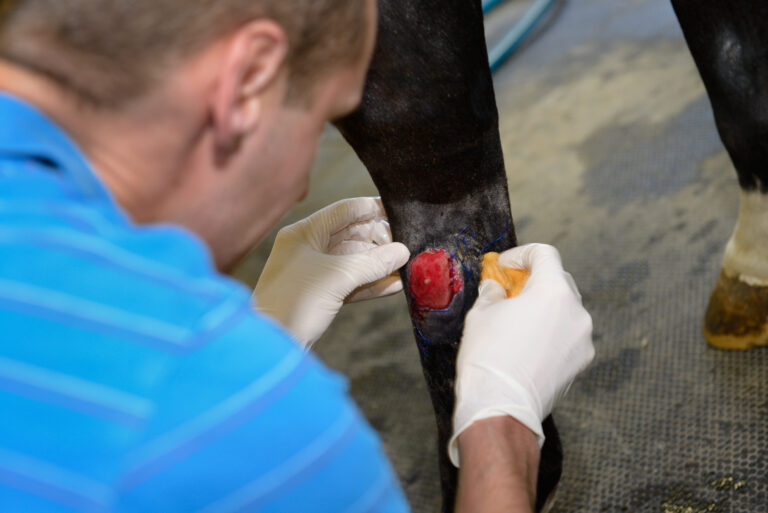
There is always a risk that horse(s) will become ill due to an infectious disease. Diseases caused by bacteria and viruses (such as strangles and equine herpesvirus) are prevalent in the horse population, and they can have a severe impact on a horse’s health and welfare.
With the support of the United States Department of Agriculture, the Equine Disease Communication Center (EDCC) is conducting a survey to determine the awareness and knowledge of biosecurity in the horse industry.
We need your help!
The survey will take approximately 10 minutes.
The responses will be tabulated by The Matrix Group, a professional firm with experience conducting qualitative and qualitative research in the equine industry. All the information from this survey will be strictly confidential.
Please help by participating in the survey.
While taking the survey, note the following definitions:
- Horse: Defined as any equid (horses, ponies, donkeys, mules)
- Non-Resident horse: A horse on the property for less than 30 days
- Infectious disease: Infectious diseases are disorders caused by organisms such as bacteria, viruses, fungi or parasites. Infectious diseases can be passed from horse to horse, transmitted by insects or caused by consuming contaminated food or water or being exposed to organisms in the environment.
- Biosecurity: A set of management and physical measures designed to reduce the risk of introduction, establishment and spread of animal diseases, infections or infestations to, from and within an animal population.
- Isolation or Isolate: Horses separated from other horses with no opportunity for direct contact.
- Disease outbreak: A disease outbreak is the occurrence of disease cases in excess of what is normally expected.