EEE Confirmed in Horses in Three States

Wisconsin, North Carolina and South Carolina all have recent confirmed cases of Eastern equine encephalitis (EEE).

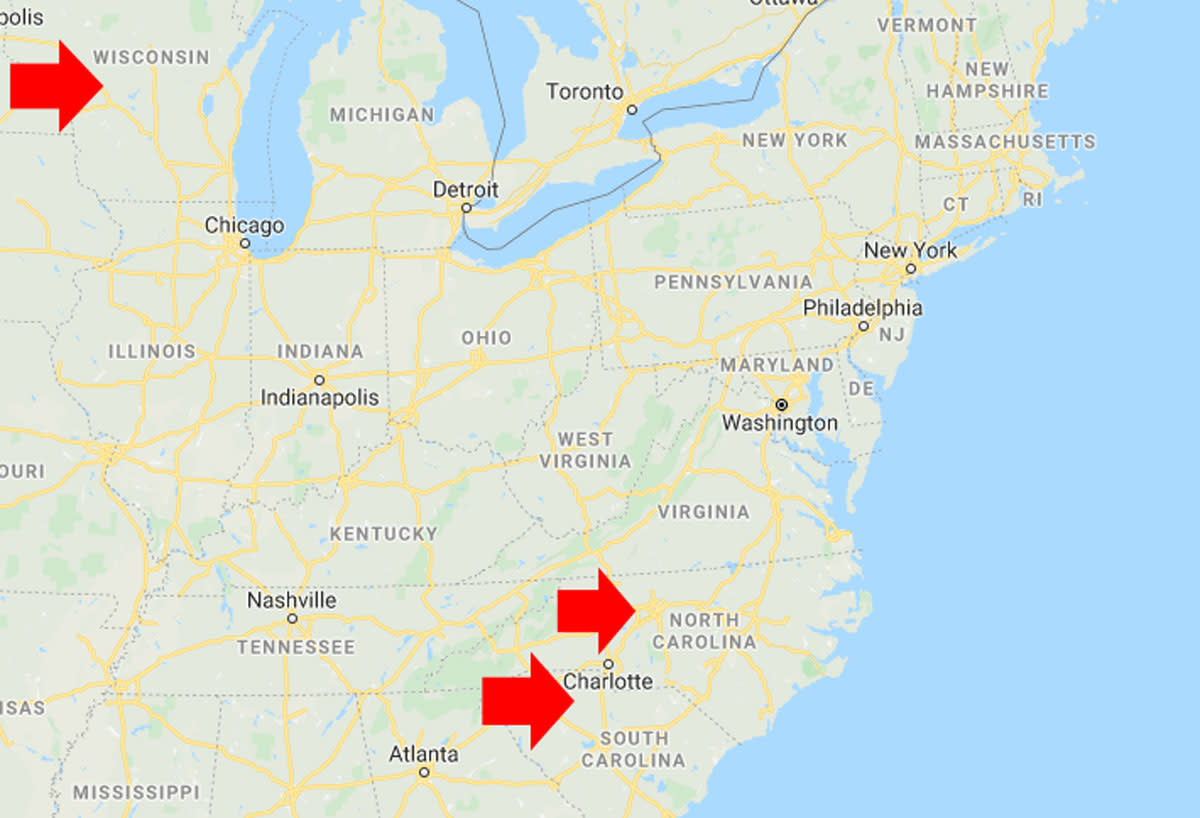
Wisconsin, North Carolina and South Carolina all have recent confirmed cases of Eastern equine encephalitis (EEE). Google maps

Since the start of 2020, the Equine Disease Communication Center has reported EEE in eight states either on the East Coast or along the borders of the Great Lakes. Those states are Florida, Georgia, Michigan, New York, North Carolina, South Carolina, Virginia and Wisconsin.

Recently, North and South Carolina and Wisconsin have reported cases of EEE. Following are the specifics of those reports.

Wisconsin

The Wisconsin Department of Agriculture, Trade and Consumer Protection confirmed EEE in a 7-year-old Belgian mare residing in Chippawa County. She had onset of clinical signs on August 14 that included fever, neurologic signs and recumbency. She was confirmed on August 21. The unvaccinated mare was euthanized.

This was the sixth confirmed EEE case for Wisconsin in 2020 and the second confirmed case in Chippewa County.

North Carolina

The North Carolina Department of Agriculture and Consumer Services confirmed one case of EEE in a 5-year-old mare residing in Robeson County. No other information was reported.

South Carolina

Clemson Livestock Poultry Health confirmed two cases of EEE in South Carolnia. The first case in Colleton Couny was in a 4-year-old vaccinated Paint mare that was euthanized.

The second confirmed EEE case was in a 2-year-old unvaccinated Paint colt in Jasper County. The colt was euthanized.

For more information on EEE visit this page on the AAEP.org website.
categories
tags
Trending Articles
Horse lay on back and having fun to roll in sand
Risk Factors for Equine Strangulating Lipoma Colic 
m250029-zygolide_carton-1mg_group_r2-new-1
Dechra Announces FDA Approval of Zygolide® (pergolide tablets) for the Control of Clinical Signs Associated With PPID in Horses
Horse with colic lay down and sleep outside
Strangulating Lipomas in Horses
Stablelab
Understanding the Typical Serum Amyloid A Response Curve: The Key to Interpreting Stablelab Results
Newsletter
Get the best from EquiManagement delivered straight to your inbox once a week! Topics include horse care, disease alerts, and vet practitioner updates.

"*" indicates required fields

This field is for validation purposes and should be left unchanged.
Name*
Country*

Additional Offers

Untitled
EquiManagement
Privacy Overview

This website uses cookies so that we can provide you with the best user experience possible. Cookie information is stored in your browser and performs functions such as recognising you when you return to our website and helping our team to understand which sections of the website you find most interesting and useful.