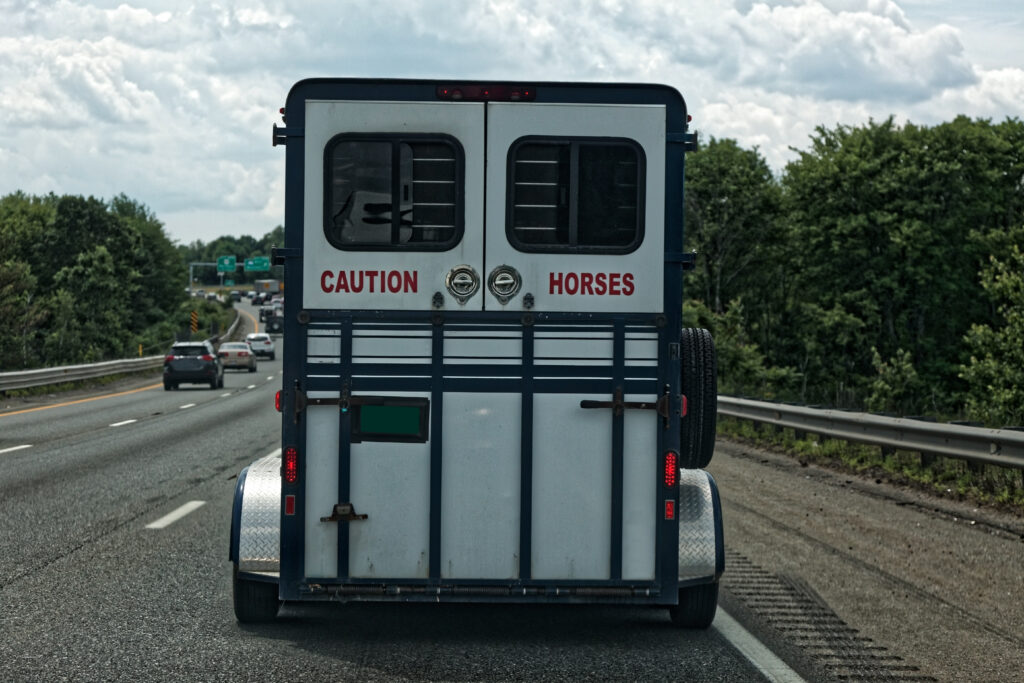
In this episode of The Business of Practice podcast, Rebecca (Gimenez) Husted, PhD, talked about what veterinarians can expect when called to a horse trailer accident. She offered advice for staying safe and navigating common scenarios.
Husted is passionate about large animal rescue and has taught many veterinarians and first responders about the subject. Equine veterinarians are often called to trailer wrecks when animals are involved, and the unfamiliar situation can cause a lot of anxiety. She explained what veterinarians should expect when they get these calls, how to determine who’s the incident commander in charge, and the responsibilities of each team member.
Husted described common situations, common injuries, and safe approach methods. Sometimes, horse trailers are still upright but unattached to the vehicle, and other times they are on their side. They can be on or off the roadway. Staying safe is the most important factor when attending an accident, and she recommended always wearing a helmet and a fluorescent vest. Because horses are often knocked off their feet in an accident, they might have injuries to their heads or lower limbs, which can be exacerbated when they struggle to rise. Sedation is an important part of staying safe.
Husted said the best way to ensure horses are removed efficiently from the scene to receive care is by knowing people in the area who have horse trailers. Loading horses on a highway can be difficult, but they must be removed for treatment, and she emphasized that a loose horse on a highway often causes additional accidents.
The top three things veterinarians in this situation must have in their truck are sedation drugs, a headlamp, and a helmet, she explained. Veterinarians can usually make a pole syringe with a broom handle and duct tape. Firetrucks also generally have long poles that can be pressed into action.
In closing, Husted recommended veterinarians educate themselves by utilizing the many resources available on large animal rescue, including Husted’s paper “How to Respond to Equine Trailer Crashes on the Roadside.”
About Dr. Rebecca Gimenez Husted
Rebecca (Gimenez) Husted, PhD, published the first textbook on Technical Large Animal Emergency Rescue with Drs. Tomas Giminez and Kimberly May through Wiley-Blackwell in 2008. She is a decorated combat veteran, retired Signal Officer, U.S. Army. She holds a bachelor’s in biology from Wofford College and a PhD in animal physiology from Clemson University. She provides training in Technical Large Animal Emergency Rescue (TLAERTM) techniques across the U.S. and internationally. She has published numerous critiques, techniques, and journal articles on a variety of technical subjects in large animal disaster and emergency rescue, horse barn fires, and heavy rescue of large animals. She contributes to equine welfare committees and other organizations defining technical competencies for large animal rescue around the world.
Related Reading
- Injury Risk and Prevalence in Equine Practice
- Equine Veterinary Sustainability: Initiating Haul-In Policies for Emergency Care
- Disease Du Jour: Equine Disasters
Stay in the know! Sign up for EquiManagement’s FREE weekly newsletters to get the latest equine research, disease alerts, and vet practice updates delivered straight to your inbox.