Equine Recovery from Multiple Procedures Under General Anesthesia

With an increasing number of anesthetic events, the horses recovered better, with improved balance and coordination and less knuckling over. There seemed to be a learned response over each anesthetic recovery event.

As horses underwent multiple anesthesia events and were recovered, they seemed to learn how to recover better. Amy Dragoo

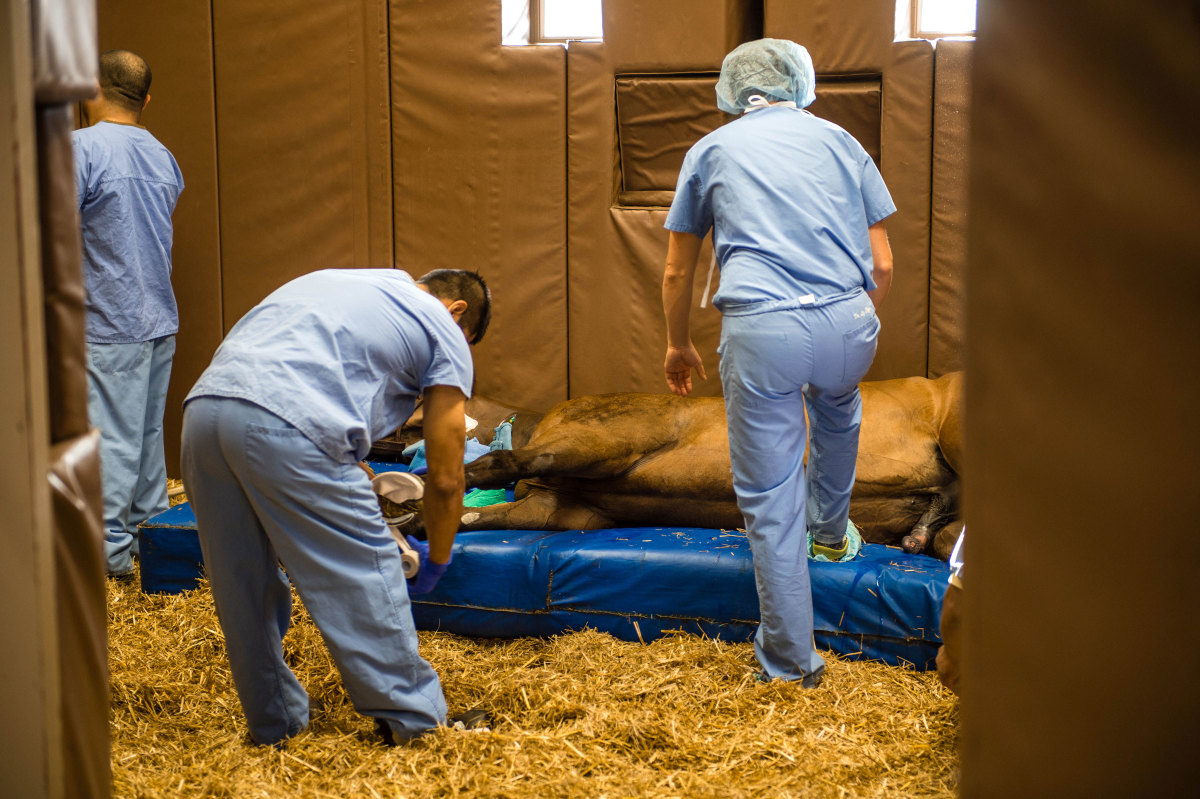
Sometimes a horse must undergo repeated surgeries under general anesthesia. Despite a low fatality rate associated with general anesthesia (less than 1%), 70% of fatalities during recovery from general anesthesia are caused by catastrophic fractures incurred during poor recovery. An innate flight-or-fight reflex encourages a horse to attempt to rise prematurely before coordination and strength are restored.

Using eight adult horses undergoing general anesthesia for multiple (six) MRI imaging events over 14 weeks, a study at Texas A&M University set out to evaluate the effects of multiple anesthetic episodes on recovery (Platt, J.P.; Simon, B.T.; Coleman, M.; Martinez, E.A.; Lepiz, M.A.; Watts, A.E. The effects of multiple anesthetic episodes on equine recovery quality. Equine Veterinary Journal, Aug 2017, epub). The horses were videotaped for observation of duration of recumbency, balance, coordination, knuckling, strength and time to full recovery.

It turns out that with an increasing number of anesthetic events, the horses recovered better, with improved balance and coordination and less knuckling over. There seemed to be a learned response over each anesthetic recovery event. 

Neither acepromazine nor xylazine interfered with the horses’ abilities to learn and become habituated to the anesthetic experience. 
categories
tags
Trending Articles
Veterinarian examines horse with stethoscope during medical training
The Business of Practice: The Ethics of Equine Emergency Care
[Aggregator] Downloaded image for imported item #19769
Strangles Case Confirmed in Spokane County, Washington
Horse at horse barn chewing hay
Updates on Treatment of Equine Gastric Disease
Shetlandhengst
Updates on Equine Endocrinological Disorders: PPID and EMS 
POLLS AND SURVEYS
Newsletter
Get the best from EquiManagement delivered straight to your inbox once a week! Topics include horse care, disease alerts, and vet practitioner updates.

"*" indicates required fields

This field is for validation purposes and should be left unchanged.
Name*
Country*

Additional Offers

Untitled
EquiManagement
Privacy Overview

This website uses cookies so that we can provide you with the best user experience possible. Cookie information is stored in your browser and performs functions such as recognising you when you return to our website and helping our team to understand which sections of the website you find most interesting and useful.