Rehabilitating Equine Soft Tissue Injuries

Evidence-based guidelines for decision-making and rehab program design.

This article originally appeared in the Winter 2025 issue of EquiManagement. Sign up here for a FREE subscription to EquiManagement’s quarterly digital or print magazine and any special issues.

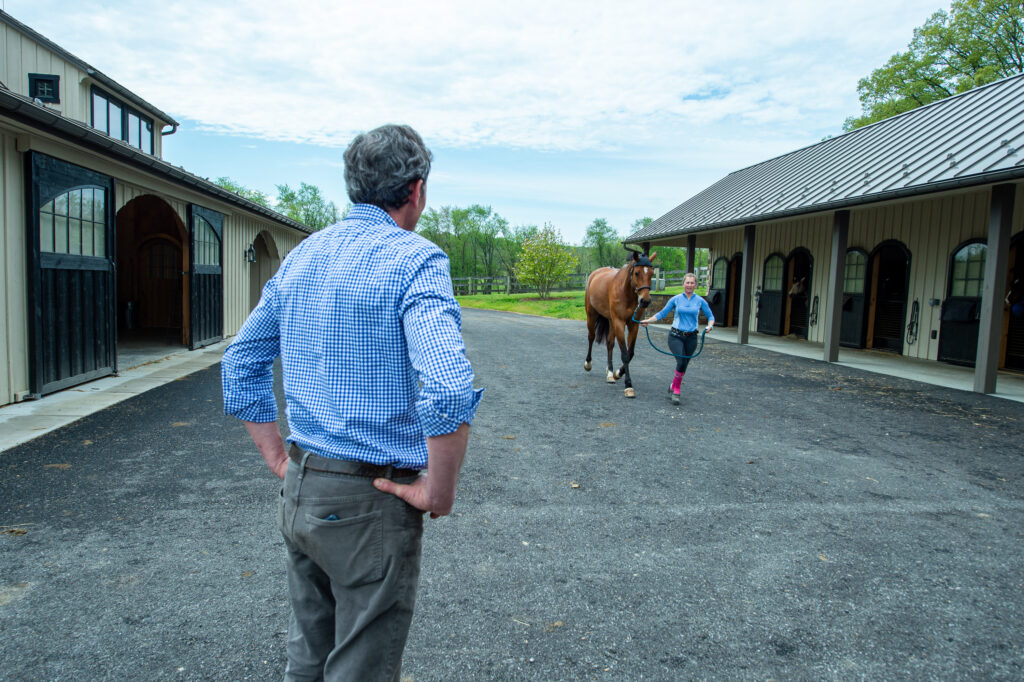
Veterinarian evaluating a horse trotting for an equine soft tissue injury.
Regardless of the methods used to rehabilitate an equine soft tissue injury, reliably evaluating and tracking progress is crucial. | Amy K. Dragoo

When a horse is diagnosed with a locomotor disorder, the veterinarian treats the specific injury to restore the horse to soundness, states a 2021 scoping review of the past 20 years of literature on equine rehabilitation.1 “Even after the injury has healed, however, the horse may not be fully functional due to persistent limitations in movement or strength,” the authors added.

That’s where the rehab plan comes in. Rehabilitation seeks to optimize whole-body function and reduce any existing disability, the researchers explain. We’ve consulted sports medicine specialists and reviewed the literature to obtain the most up-to-date guidelines specific to soft tissue rehabilitation in equine athletes. 

Stall Rest Is No Longer Standard

In recent years, the general recommendation for equine soft tissue injuries has evolved from long-term immobilization to structured early mobilization. This mindset shift is primarily credited to recent research highlighting the negative effects of sedentary conditions and the benefits of controlled movement on equine musculoskeletal health.

Indeed, prolonged immobilization has been shown to lead to a reduction in water and proteoglycan content in tendons, as well as weaker and randomly organized collagen fibers with lower tensile strength and failure at lower strains.2 Long-term stall rest also results in tendon atrophy due to lower vascularization and metabolic rate. In light of this information, practitioners have been recommending controlled walking exercise earlier in the rehab process, when appropriate. 

Whether a prompt return to movement with soft tissue pathology is ­recommended “depends on the severity of the injury—for example, severe injuries involving weight-bearing structures still require strict stall rest for longer periods,” says Santiago Demierre, MV, an associate veterinarian at Palm Beach Equine Clinic, in Wellington, Florida. Demierre primarily focuses on equine performance medicine and lameness in sport horses. 

“In general, for less severe injuries, the current standard is strict stall rest only during the first few days, especially if the horse is lame,” he explains. “After that, controlled hand-walking is typically recommended. Movement helps support the early phases of the healing process, minimizes adhesion formation, and—taking the whole horse into consideration—also reduces the risk of digestive issues such as colic.” 

Demierre has his clients start with hand walking, then tack walking, followed by trotting in straight lines, gradually introducing curves, and only then cantering. “From there, the specific discipline will determine the next step (in the rehab process),” he says.

Veterinarians continue to favor straight motion and caution horse owners against longe line work when rehabbing horses with soft tissue injuries. “Longeing can be appropriate in cases where the horse needs to begin working without a rider, such as with back or spinal issues,” Demierre says. “However, for lower limb soft tissue injuries, longing in tight circles adds ‘torque’ stress on the limbs and is therefore contraindicated. 

“Additionally, horses coming back from prolonged time off are often fresh, making them more difficult to control on the longe line, which increases the risk of injury while longeing,” he adds. Demierre always advises his clients against trotting before a proper warm-up walk or working horses on deep or uneven footing.

Regenerative Therapies Have Changed the Rehab Landscape

Biological regenerative therapies, once new and innovative, are now well-­ingrained into equine sports medicine and rehabilitation, both clinically and in the literature. “There is ample evidence now, both experimental and clinical, of the beneficial effects of regenerative medicine and orthobiologics for the treatment of soft tissue injuries,” says Kyla Ortved, DVM, PhD, DACVS, DACVSMR, associate professor of Large Animal Surgery at the University of Pennsylvania’s New Bolton Center in Kennett Square. 

“Blood-based regenerative therapies such as platelet-rich plasma (PRP) have been shown to improve healing in superficial digital flexor tendon (SDFT) core lesions likely due to their high concentration of growth factors and immunomodulatory cytokines that help direct healing of injured tissue toward a more organized and normal tendinous structure,” she explains.Along with PRP, interleukin-1 receptor antagonist protein (IRAP) and Pro-Stride are widely used in equine practice for treating soft tissue injuries.

“Similarly, cell-based therapies such as mesenchymal stem cells, especially when derived from the bone marrow, have been shown to improve healing, and, importantly, decrease reinjury rates of bowed tendons—specifically looking at superficial digital flexor tendinitis in racehorses,” Ortved notes. “The theory behind this is that stem cells secrete growth factors and immunomodulatory cytokines, which direct healing and result in a stronger and more elastic tendon.” 

Overall, Ortved says orthobiologics have provided veterinarians and horse owners with options to directly improve the healing of soft tissue injuries. “While these therapies do not necessarily speed up the rate of healing and do not replace the need for rehabilitation, it does appear that the final healed product is stronger and healthier (with regenerative medicine) than we can achieve with conservative management alone,” she concludes. 

Measurements of Progress

Veterinarian evaluating a horse's soft tissue injury.
One of the most important and useful objective measurements is the assessment of a horse’s lameness over time as they rehabilitate from an injury. | Courtesy Zoetis

Regardless of the methods used to rehabilitate a soft tissue injury, reliably evaluating and tracking progress is crucial. In most cases, unless the horse is sent to a dedicated rehabilitation facility, the execution of the patient’s day-to-day recovery remains entirely in the hands of their owner, and practitioner evaluation only happens at intervals that can span several weeks or more.

Naturally, one of the most important and useful objective measurements is the assessment of a horse’s lameness over time as they rehabilitate from an injury, says Jackie Hill, DVM, DACVS-LA, associate veterinarian and surgeon at Littleton Equine Medical Center, in Littleton, Colorado. “Today, several objective gait analysis systems are available that enable precise and repeatable evaluation of movement asymmetries.These tools help track the horse’s progress more accurately than subjective observation alone.”

Hill shares three additional objective measurements that prove valuable in measuring progress in soft tissue injury rehabilitation: 

Changes in the size of soft tissue structures on diagnostic ultrasound—for example, evaluating the cross-sectional area of a tendon or ligament during the healing process.

Joint range of motion, measured using a goniometer. Joints and soft tissue structures are intertwined and intricately linked, and this information is especially useful in cases involving joint stiffness or postoperative recovery, Hill says.

Limb circumference measurements are another helpful tool for tracking swelling or joint effusion over time.

“Together, these measurements allow for data-driven adjustments to the rehabilitation plan and help ensure the horse’s progress remains on track,” she notes.

Ideally, how often do practitioners need to reevaluate their patients coming back from soft tissue injuries? There isn’t one clear-cut answer, but in her practice, Ortved generally recommends a four- to six-week interval and performs a lameness evaluation and ultrasound during these rechecks. “This allows alterations and increases in the workload adapted to the horse’s progress,” she explains. 

Demierre recommends rechecking a horse right before moving on to the next step in the rehab process, specifying that the frequency of vet rechecks depends on how spaced out each phase is in the specific plan—this could be every two weeks, monthly, or at a different interval. For him, indicators of progress include soundness, improvement on palpation (in terms of size and sensitivity), and improvement on ultrasound of the affected structure. On the other hand, he notes that signs of setbacks include the recurrence of lameness, increased size or pain upon palpation, or any worsening observed on the ultrasound.

Research-Based Rehabilitation Modalities

Therapeutic ultrasound, a rehabilitation modality for an equine soft tissue injury.
Therapeutic ultrasound has been shown to produce beneficial increases in suspensory ligament cross-sectional area. | Courtesy Carrozzo et al. 2019; JEVS

Rehabilitation is a broad term that encompasses a wide range of techniques, therapies, and modalities, the use of which may or may not be regulated, standardized, or backed by research. According to the 2021 scoping review of equine rehabilitation practices from the past two decades, notable research surrounding the usage or efficacy of specific rehabilitation tools and techniques includes: 

Passive stretching. Stretching exercises, such as rear limb protraction and quadriceps extension, appear to help improve range of motion, prevent injury, and reduce pain when performed for 3 to 5 minutes once daily, three to seven days per week.3

Tissue mobilization. Tissue mobilization techniques, such as massage, are commonly used in equine rehabilitation, with 69% of veterinary practitioners reporting their use.4

Joint mobilization. This manual technique involves applying forces to move joints through specific rhythmic oscillations and gliding movements, aiming to improve motion, reduce stiffness, and alleviate pain. It is widely used, with 71.9% of practitioners reporting the use of range of motion therapies in equine rehabilitation.4

Kinesiological taping and bandages. Kinesiology tape applied with 10% tension for 72 hours after tibio-­patellofemoral (stifle) joint arthroscopy significantly reduced swelling between 24 and 72 hours post-surgery.5

Therapeutic ultrasound. A narrative review outlined therapeutic ultrasound parameters using a 1 MHz transducer for deep tissue and 3 MHz for superficial, with energy levels of 1-2 W/cm² applied continuously for 10 minutes.3 A lameness study provided protocols for acute, subacute, and chronic injuries involving different transducer types, emission modes, power levels (70-95% full power), and durations, with a mean treatment period of 3.3 weeks producing beneficial increases in suspensory ligament cross-sectional area.6

Laser therapy. A study of high-power laser therapy in 150 lame sport horses used the manufacturer’s pre-established protocol for the area of injury.7 Horses received 250 J/cm2 for 20 minutes daily for two consecutive weeks with an exercise rehabilitation protocol and/or pharmacological treatment prescribed at the veterinarian’s discretion. The results suggested a beneficial contribution of high-power laser therapy.

Hydrotherapy. Hydrotherapy uses water’s physical properties—temperature, pressure, viscosity, and buoyancy—to relieve pain, stimulate circulation, and treat musculoskeletal disorders, including soft tissue injuries. Surveys show that hydrotherapy is a common intervention, with water treadmill use reported in up to 39% of cases, primarily for the rehabilitation of tendonitis and suspensory desmitis.4 “Swimming and water treadmills can be very useful rehab tools for certain conditions—if used correctly,” Demierre says.

Exercise Therapy. As discussed, equine rehabilitation guidelines now emphasize an early, controlled return to specific exercises tailored to the horse’s injury and needs, rather than prolonged rest. Techniques such as hand-walking, dynamic mobilization stretches, treadmill work, and use of weighted or tactile stimulators have been shown to improve muscle strength, joint mobility, and core stability. Progressive, carefully monitored exercise programs accelerate recovery from muscle, bone, and tendon injuries as well as post-surgical rehabilitation, enabling horses to return to work more quickly and safely. Overall, exercise is a fundamental component of modern rehabilitation protocols designed to restore function and performance in athletic horses. 

The popularity of different rehabilitation techniques varies, with a 2018 survey of 305 international veterinarians citing the nine most commonly used practices to treat soft tissue injuries as:4 

  • Controlled hand walking (97.3%)
  • Therapeutic shoeing (96.1%)
  • Ice (95.2%)
  • Compression bandaging (89.5%)
  • Platelet-rich plasma (86.5%)
  • Therapeutic exercises (84.3%)
  • Interleukin-1 receptor antagonist protein therapy (81.4%)
  • Stretching (83.3%)
  • Cold water hydrotherapy (82.9%). 

Key Factors Affecting Rehab Program Design

The nature and severity of the injury. “Understanding the specific diagnosis and the expected time frame for tissue healing is critical,” says Hill. “This guides both the structure and timeline of the rehabilitation plan and helps set realistic expectations for the owner regarding the duration and intensity of care.” Demierre adds that the type, characteristics (cross-sectional area vs. length), and severity of the lesion, as well as the structure(s) involved, impact the rehab plan. 

The horse’s temperament and behavior. “A horse’s personality plays a major role in determining how well they will tolerate confinement, stall rest, or controlled exercise,” Hill says. “Some horses may require sedatives or calming supplements to remain safe and manageable during recovery.”

Housing and handling options. Available facilities (i.e., stall, paddock, or pasture access) and the environment’s safety for restricted movement must be considered when creating a rehab program.

The owner’s capabilities and commitment. The owner’s or caretaker’s experience level and availability can significantly impact the program’s success. It’s important to tailor the plan to what is realistic for the person implementing it.

“Each rehab plan should be dynamic and regularly reassessed by a veterinarian, incorporating both subjective observations and objective metrics to adapt to the horse’s progress,” says Hill.

Take-Home Message

“In general, soft tissue injuries require intense and long-term rehabilitation to achieve optimal outcomes,” says Ortved. “Soft tissue injuries tend to be slow to heal and do best with close monitoring and frequent reevaluations to tailor the rehab program to the horse. Loading of tendons and ligaments is necessary for healing, but it must be done in a careful and controlled manner. An intensive, veterinary-directed, and individually tailored treatment and rehabilitation program is essential.” 

References

  1. Atalaia T, et al. 2021. Equine Rehabilitation: A Scoping Review of the Literature. Animals, 11(6), 1508. 
  2. Reis IL, et al. 2024. Equine Musculoskeletal Pathologies: Clinical Approaches and Therapeutical Perspectives—A Review. Veterinary Sciences, 11(5), 190. 
  3. Kaneps AJ, et al. 2016. Practical rehabilitation and physical therapy for the general equine practitioner. Veterinary Clinics of North America: Equine Practice, 32(1), 167–180. 
  4. Wilson JM, et al. 2018. International Survey Regarding the Use of Rehabilitation Modalities in Horses. Front. Vet. Sci., 5, 120.  
  5. Mattos LHL, et al. 2017. Treatment With Therapeutic Bandages to Control Equine Postarthroscopic Tibio-Patellofemoral Swelling. Journal of Equine Veterinary Science, 54, 87-92. 
  6. Carrozzo U, et al. 2019. Assessment of Noninvasive Low-Frequency Ultrasound as a Means of Treating Injuries to Suspensory Ligaments in Horses: A Research Paper. Journal of Equine Veterinary Science, 80, 80-89. 
  7. Pluim M, et al. 2018. Short- and long term follow-up of 150 sports horses diagnosed with tendinopathy or desmopathy by ultrasonographic examination and treated with high-power laser therapy. Research in Veterinary Science, 119, 232-238. 

Stay in the know! Sign up for EquiManagement’s FREE weekly newsletters to get the latest equine research, disease alerts, and vet practice updates delivered straight to your inbox.

categories
tags
Trending Articles
Pregnant mare portrait
Research Spotlight: Equine Placentitis
Medical
NSAIDs & Equine Osteoarthritis: Best Practices for Efficacy and Safety 
Tragende Warmblutstute
Daily Vet Life: Breeding an Older Barren Mare
Medical
Evidence-Based Antiseptics & Dressings for Equine Wounds
Newsletter
Get the best from EquiManagement delivered straight to your inbox once a week! Topics include horse care, disease alerts, and vet practitioner updates.

"*" indicates required fields

This field is for validation purposes and should be left unchanged.
Name*
Country*

Additional Offers

Untitled
EquiManagement
Privacy Overview

This website uses cookies so that we can provide you with the best user experience possible. Cookie information is stored in your browser and performs functions such as recognising you when you return to our website and helping our team to understand which sections of the website you find most interesting and useful.