There are reports that 50% of horses today are currently overweight, if not actually obese. The dangers of insulin resistance and laminitis loom over these individuals, often creating a management conundrum for horse owners and veterinarians. Exercise and dietary restrictions tend to be the common recipes for helping with weight loss.
Another suggestion for encouraging weight loss was proposed by a group of researchers (M.A. Latt, et al.) and published in the Journal of Veterinary Internal Medicine (2016;30:1732–1738). They investigated the use of a dynamic feeding system that stimulates horses to “browse and move” for their daily food intake. This entails using a feeder with two sliding doors on either side, yet only one door is open at a time.
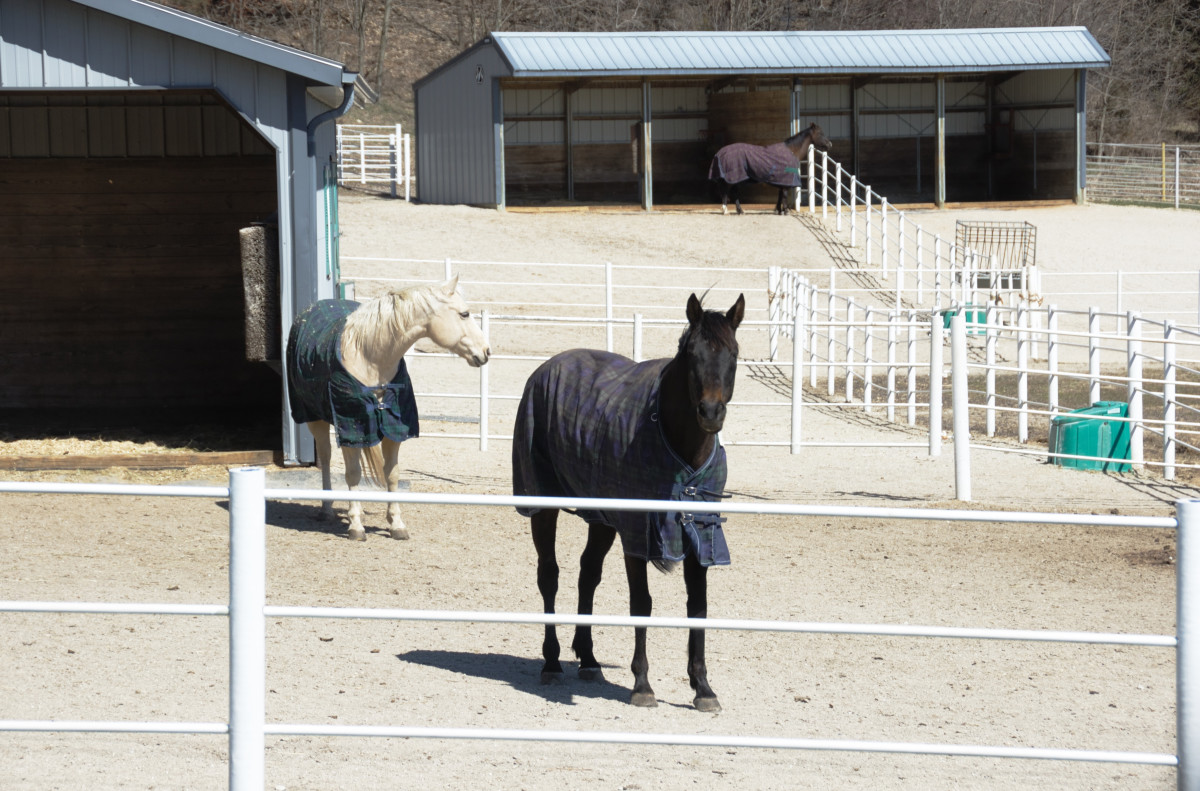
After a pre-determined period of time—five minutes was used in the study—an electronic timer closes the door and opens the other side. Then the horse or pony has to walk around to the other side of the feeder to access more hay. The distance can be adjusted using gates and fence barriers so he has to walk a short or long distance, depending on the desired level of exercise. The design of this study encouraged the horse or pony to walk for three to four hours a day.
The study concluded: “This consistent exercise twice daily over a three-month period decreased fat percentage and improved body condition, consistent with the hypothesis that increased exercise decreases adiposity.” Of note, however, is that insulin sensitivity did not improve in all equines, but did in those walking more than three kilometers (1.8 miles) a day.
Author’s note: Horse owners frustrated by the difficulties of paring extra weight off their horses will be greatly appreciative of veterinary assistance with additional diet and exercise strategies.