Mad Barn has published results from a 16-week controlled field trial in 16 mature Friesian geldings showing that horses fed a balanced forage-based ration supplemented with Omneity® and 3:1 Zinc Copper achieved 22% faster hoof growth than unsupplemented controls. The study was conducted by Ana Mesa, PhD, Equine Nutritionist at Mad Barn, and overseen by Priska Darani, PhD, Mad Barn’s Director of Research.
Most hay-based diets have micronutrient gaps that require a vitamin and mineral balancer. These horses were historically fed a complete feed at a low feeding rate, leaving many nutrient deficiencies. Forage testing identified elevated iron levels in the hay and pasture, which can interfere with the horse’s ability to effectively utilize zinc and copper. Based on this, organic zinc and copper were also added to address the elevated iron levels along with Omneity® to ensure all vitamin/mineral needs are met.
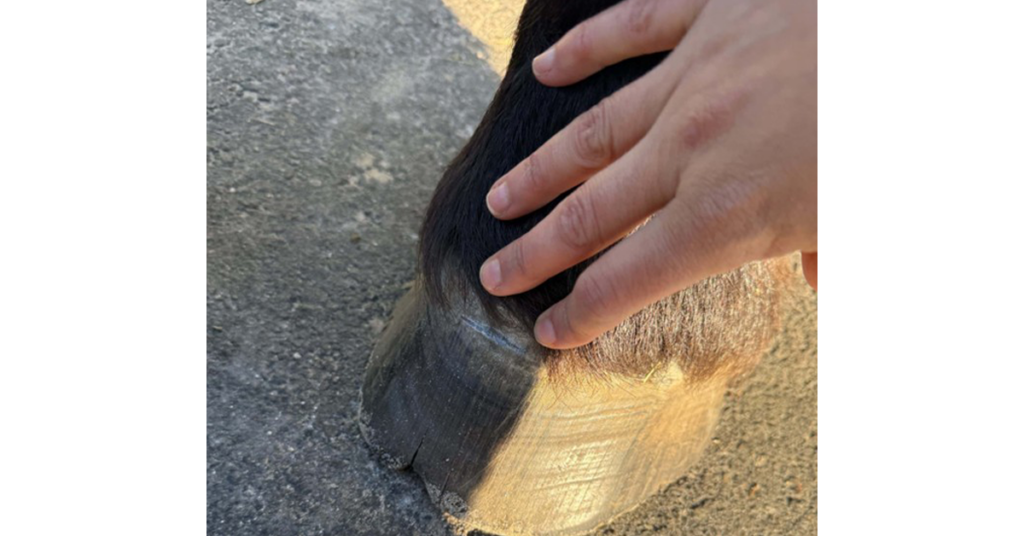
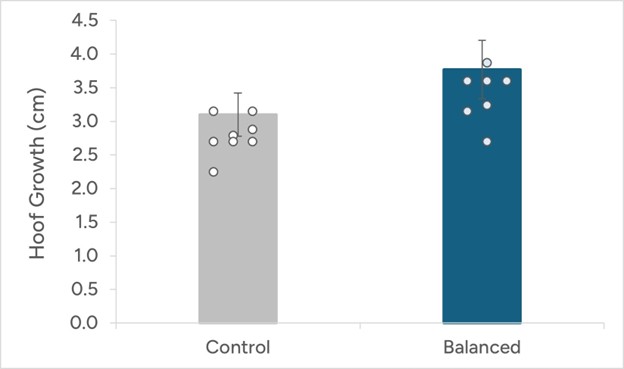
In the trial, the balanced group received Omneity® Premix at 120 g per day and 3:1 Zinc Copper at 6 g per day. Over a 10-week measurement period, hoof growth averaged 3.77 cm in the balanced group versus 3.10 cm in controls. Therefore, any defects such as cracks or abscesses should take less time to resolve in the supplemented group. Results also showed improved hoof wall integrity in the supplemented horses, including fewer cracks and more uniform new growth.
Omneity® Premix is an all-in-one vitamin and mineral supplement designed to balance forage-based diets and complement grain feeding programs. It is formulated with 100% organic trace minerals, B-vitamins, amino acids, digestive enzymes, and yeast. At the standard feeding rate for a 500 kg (1,100 lb) horse, each 120 g daily serving provides 20 mg of biotin, with no added grains, fillers, sugars, or iron. Pairing Omneity® with 3:1 Zinc Copper is recommended in situations where dietary iron levels are elevated.
3:1 Zinc Copper is a targeted trace mineral supplement rather than a complete vitamin and mineral balancer. It supplies zinc and copper in a 3:1 ratio, within the 3:1 to 5:1 range generally recommended for equine diets. One scoop provides 300 mg of zinc and 100 mg of copper for a 500 kg (1,100 lb) horse. The formula uses 100% chelated organic zinc and copper sources and is intended to help correct common imbalances associated with high-iron forage or low trace mineral intake.
Researchers also tracked coat color during the 16-week intervention. Coat pigmentation is influenced by genetics, sunlight exposure, and nutritional status, particularly the intake of trace minerals involved in melanin production and hair structure. Copper is required for the activity of tyrosinase, a key enzyme involved in melanin synthesis, while zinc supports both pigment formation and normal keratin production in the hair shaft. When copper and zinc intake is low or poorly balanced, black horses might develop a faded, rusted, or sun-bleached appearance. In this study, subjective coat color improved in all horses between September 2024 and January 2025, although the difference between the balanced and control groups was not statistically significant. Declining seasonal UV exposure in central Florida likely also contributed to coat darkening in both groups.
Full study details are available on the Mad Barn website: Field Study: Omneity® for Improved Hoof Growth & Coat Color in Mature Friesians.
This field study is part of Mad Barn’s broader equine research program. Every purchase helps fund research aimed at improving equine nutrition, health, performance, and welfare, including in-house trials and collaborations with leading universities.
Mad Barn’s research program also includes mathematical modeling of equine digestion and metabolism, a published meta-analysis on voluntary forage intake, development of an AI-assisted body condition scoring tool, and a large-scale equine management and turnout survey involving more than 30,000 horses. The program also includes extensive product research and validation trials designed to evaluate formulation efficacy and advance evidence-based equine nutrition. Collaborators include researchers from institutions such as the University of Guelph, Wageningen University,and Ohio State University.
About Mad Barn
Mad Barn is an equine nutrition company dedicated to advancing the field of horse nutrition through research, education, and evidence-based feeding solutions. Our team includes PhD researchers, equine nutritionists, veterinarians, and horse owners working together to support the health, performance, and well-being of horses. Through our products, nutrition programs, and research initiatives, Mad Barn helps horse owners make more informed feeding decisions grounded in science.