This article originally appeared in the Winter 2025 issue of EquiManagement. Sign up here for a FREE subscription to EquiManagement’s quarterly digital or print magazine and any special issues.
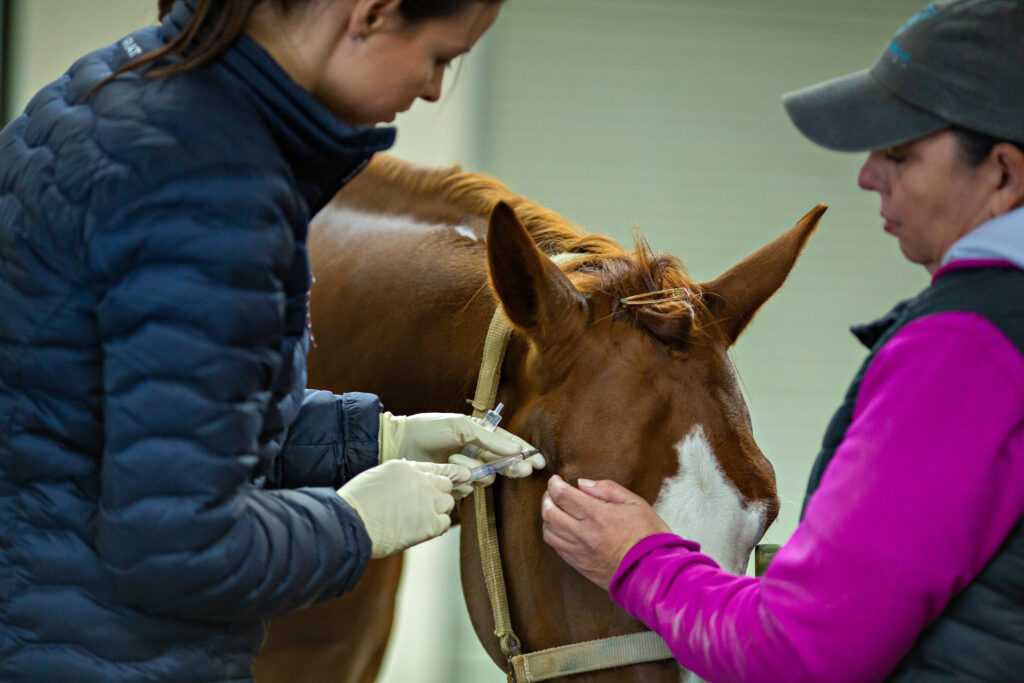
Veterinary medicine truly is a team sport. Even solo practitioners with no employees form a team with their clients to ensure their patients thrive. However, most practices, even the small ones, have employees who are instrumental to the operation and success of the business. Equine practices have an average ratio of full-time equivalent (FTE) staff to veterinarians of 1:1, while companion animal practices have a staff:DVM ratio of 4:1. As you might imagine, those equine staff members wear many hats and are responsible for a wide variety of tasks.
Communication within a team is one of the most important elements of cohesion. Unfortunately, it is not uncommon for multidoctor equine practices to operate as silos, with minimal collaboration. The lack of shared knowledge within the team can negatively affect customer service. In small practices, the owner is often simultaneously the management team, the practice leader, and the senior veterinarian earning the highest revenue through patient care. All these responsibilities can be difficult to balance in the limited time of each day, so a staff that’s not truly a team becomes an added source of stress for practice owners.
How to Gauge Work Engagement and Satisfaction
A recent study investigating the predictors of employee engagement and work satisfaction in equine veterinary teams revealed that levels of work engagement and satisfaction in the veterinary profession could be gauged using four factors:
- The extent to which employees’ personal core values align with the practice’s mission.
- Relationships between staff members and owners.
- Working conditions, level of collegiality, and compensation.
- The team culture and opportunities to pursue personal and professional growth.
Thus, a team’s success starts with hiring the right people—individuals who share the practice values and are collaborative rather than competitive—and builds when each person can grow and thrive in their role.
How to Build a Better Organizational Culture
According to Gallup’s recent State of the American Workplace report, only 13% of U.S. workers strongly agree that their organization’s leadership communicates effectively. In many cases, employees are saying they want to be heard. Only three in 10 U.S. employees strongly agree that their opinions at work seem to count. Increasing the amount of positive feedback and number of conversations that empower the employee will strengthen engagement and promote psychological safety in the workplace. Everyone in the practice can have more productive conversations when they listen with curiosity, seek to understand, ask clarifying questions, give feedback that challenges and supports, and establish accountability and next steps. This is a key part of building a better organizational culture.
Work by Harvard Business School professor Amy Edmondson, PhD, showed that leaders are susceptible to forgetting to ask questions as they become more successful and experienced. High achievers in particular frequently fail to wonder what others’ perspectives are and what problems and solutions they see. Because leaders do not want to be seen as incompetent or weak, they might avoid asking questions. And because veterinarians are by nature problem-solvers who want to offer solutions, they might not recognize the value of questions seeking others’ input. When leaders show interest in what others are seeing and thinking by asking questions, it prompts other people in the organization to do the same. This helps create a cohesive team.
Final Thoughts
To create a culture focused on teamwork, foster a workplace where everyone feels like they are heard and their contributions matter. Listen with curiosity, and create an inclusive communication chain. Remember that small gestures matter, like always greeting your colleagues, advocating for your team’s well-being, celebrating successes, noticing generosity of time and spirit, showing appreciation, and reaching out to someone who’s going through a tough time. A cohesive team can become one of the practice’s most valuable assets.
Related Reading
- Equine Veterinary Sustainability: Supporting Equine-Track Students
- Working With Different Personalities in Equine Practice
- Are You Burned Out in Equine Practice?
Stay in the know! Sign up for EquiManagement’s FREE weekly newsletters to get the latest equine research, disease alerts, and vet practice updates delivered straight to your inbox.