
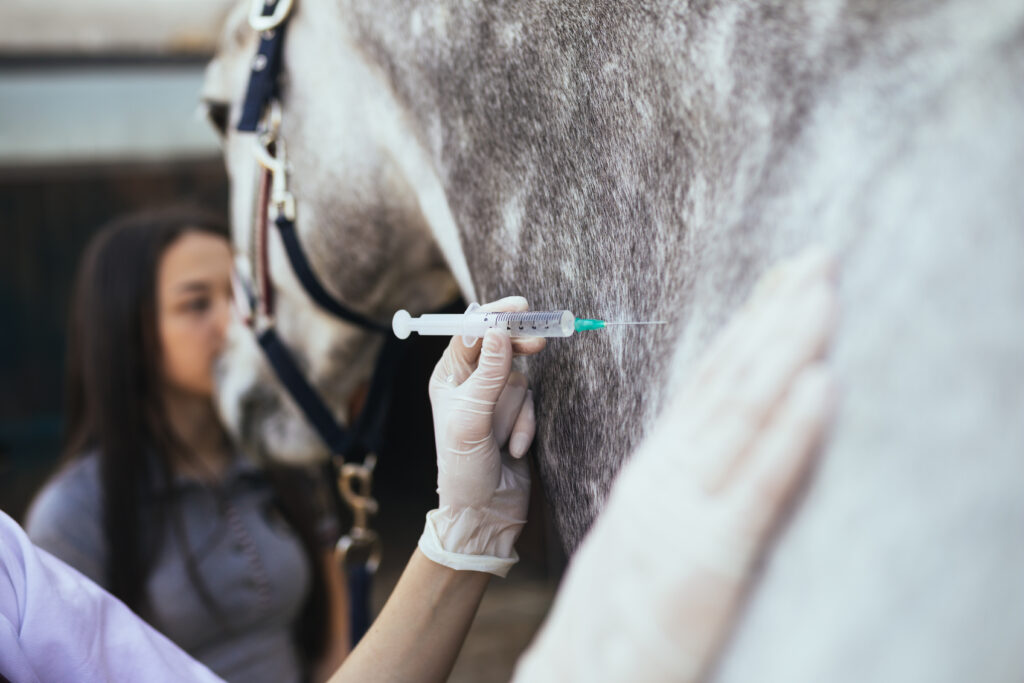
At the 2025 American Association of Equine Practitioners (AAEP) Convention, held Dec. 6-10 in Denver, Colorado, John Madigan, DVM, MS, DACVIM, ACAW, and Carrie J. Finno, DVM, PhD, DACVIM, presented the results of a survey about practitioner use of intravenous or intramuscular vitamin E-selenium supplements. At the initiation of the survey, it was unknown how often equine veterinarians administered vitamin E-selenium. The findings showed it’s widely used, with newer practitioners administering it more frequently.
Breaking Down the Survey Results
Of 285 veterinarian responses, including 17% international reach, 40% administer vitamin E-selenium 3-10 times a year and 34% administer it more than 10 times a year. Over half (52%) use injectable forms of the supplement. The primary practice areas for vitamin E-selenium use are sport horse (65%), pleasure (50%), and racing (21%).
The survey respondents justified its use for suspected deficiencies (54.5%) and performance support (28.7%). Neonatal foals comprised 61% of injectable vitamin E-selenium supplement recipients. Of the practitioners surveyed, 74.6% gave it IM and 16% IV.
Concerningly, 31% of practitioners reported adverse reactions following administration, with 65% of those being anaphylaxis. Of the anaphylactic cases, 62% recovered and 35% were fatal. Other adverse reactions included injection site swelling and pain (48%), respiratory distress (16%), and diarrhea (6%).
Despite the high incidence of adverse reactions, only 31% of veterinarians administering vitamin E-selenium injectable products discussed the risks with owners. Thirty-eight percent reported having risk mitigation protocols at the ready when giving the injection. That said, 90% of the surveyed veterinarians indicated they’d heard about adverse reactions from colleagues or through the literature.
One-third of respondents said they believed the risks of using this supplement outweigh the benefits; one-third felt the risks do not outweigh the benefits, and 28% were unsure. Finno suggested this reflects a lack of consensus in equine practice about the use of injectable vitamin E-selenium.
Considerations for Supplementation
Finno said veterinarians have safer oral alternatives than injectable vitamin E-selenium for most indications. She also noted that the vitamin E in the injectable supplement is a synthetic form and, therefore, is not absorbable by the horse, making it essentially a nonuseful “medication.” She recommended evaluating a horse’s baseline selenium and vitamin E status before using an injectable product. If there is a significant medical need to use it for a time-sensitive issue (e.g., in a pregnant mare), a veterinarian should first advise the owner of the risks, then give it IM rather than IV while having emergency protocols on hand to reverse a serious adverse reaction such as anaphylaxis. She referred practitioners to the 2024 AAEP Proceedings for oral vitamin E supplements (liquid, powder, or pellets) that can achieve results in 2-3 days (liquid) to 8-10 weeks (powder or pellets), depending on the formulation.
Citing the immediate death of an FEI Jumping horse in 2024 after receiving an IV injection of a vitamin E-selenium product along with other joint support medications, Finno said there is no reason to use vitamin E-selenium injectable products for “performance support,” because of their serious safety risks.
Related Reading
- Disease Du Jour: Noninfectious Neurologic Diseases in Horses
- Differentiating Noninfectious Neurologic Diseases in Horses
- Demystifying Equine Muscle Disease
Stay in the know! Sign up for EquiManagement’s FREE weekly newsletters to get the latest equine research, disease alerts, and vet practice updates delivered straight to your inbox.
![[Aggregator] Downloaded image for imported item #19769](https://s3.amazonaws.com/wp-s3-equimanagement.com/wp-content/uploads/2026/05/31141823/EDCC-Unbranded-11-scaled-1-768x512.jpeg)