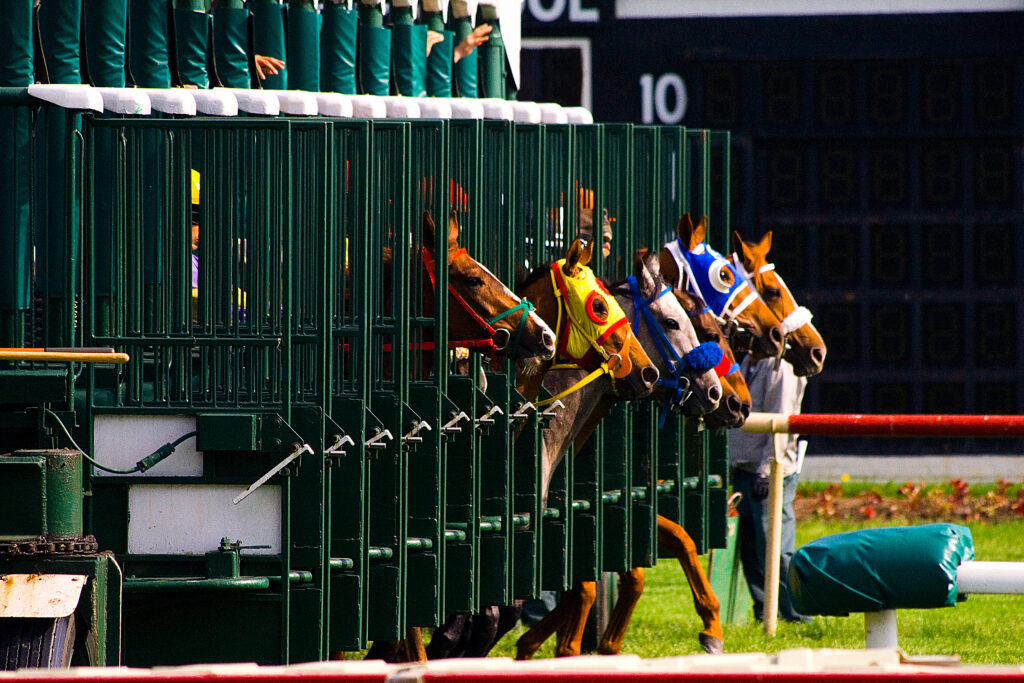
The racing industry has faced considerable scrutiny from the public regarding fatal musculoskeletal injuries (FMI), which threaten the sport’s social license to operate. According to one study, two in every 1,000 race-day starts resulted in fatalities in 2009, with values decreasing to 1.32 fatalities in every 1,000 starts in 2023. These statistics do not include fatalities that occurred during training.
According to necropsy results, about 93% of the racehorses that died from FMI had preexisting bone pathology. This suggests the horses experienced acute or chronic pathology that might not have been clinically or visually observable but could have been identifiable. One potential screening tool is an accelerometer-based inertial biometric sensor, which measures changes in the horse’s postural adjustments during the gallop. The sensor helps veterinarians assign risk scores to horses using inertial measurement units (IMU). According to the algorithm, a horse with a risk score of 5 has a 950-fold greater risk of a fatal or career-ending musculoskeletal injury compared to a horse with a risk score of 1.
Study: Can IMU Sensors Identify Racehorses at Risk for FMI?
A retrospective study conducted by researchers at Washington State University and Cornell University’s College of Veterinary Medicine, in conjunction with the New York State Gaming Commission, aimed to determine whether screening racing Thoroughbreds with accelerometer-based inertial measurement unit sensors and a specifically trained algorithm identified racehorses most at risk for FMI.
The researchers examined StrideSAFE accelerometer units used on Thoroughbreds that raced between July 25, 2021, and May 4, 2024. Races took place at 10 U.S. tracks (out of 80) during this period, and the horses wore the IMUs during every race as requested by track management. During the study period, IMUs were worn by 11,834 Thoroughbreds over 28,842 race starts. Horses wore sensors between one and 13 times. Risk scores ranged from 1 (low risk) to 6 (greatest risk). Risk scores of 6 were assigned to 118 horses (0.4% of race starts) in this study; of these, 4% had a fatal injury.
Study Findings
Age was not a significant risk factor for FMI in this study. The authors wrote, “Although 2- and 3-year-old horses were more prone to fatal injuries in terms of the percentage of horses that suffered them and the percentage of their races in which such injuries occurred when compared to 4-, 5- and 6-year-olds, horses > 6 years old actually represented the age group with the largest percentage of fatal injuries in terms of both the proportion of horses and starts in which they occurred.”
Sex was a significant risk factor, with mares less likely to have a high risk score and less likely to suffer an FMI. Race length also affected risk scores; shorter races saw more horses with risk scores of 4, 5, and 6 compared to longer distances with horse risk scores around 3.
Of 28,842 starts, 0.18% (52 horses) resulted in an FMI while sensors were in place. Most notably, 0.63% (74 horses) “suffered an FMI within 120 days of their most recent risk score assignment.” Sixty-five percent of FMIs were associated with front fetlock fractures of sesamoids, distal metacarpal condyles, or both. Fetlock fractures occurred in all horses with a risk score of 6. Seventy percent of FMIs occurred during racing, and 30% happened during training. Not all FMIs occurred in racehorses wearing a sensor, so the researchers could not draw concrete conclusions about overall FMI rate per 1,000 starts. However, they estimate that FMIs occurred in 1.05 per 1,000 starts.
The track surface is also significantly associated with FMI rate: 74% of FMIs happened on dirt, 22% on turf, and 4% on synthetic surfaces. Fifty-five percent of the study horses ran on dirt tracks, 24% ran on turf, and 21% on synthetic surfaces. Fatal injury probability was lowest on synthetic surfaces compared to dirt or turf; probability of an FMI did not differ between dirt and turf surfaces.
The authors stated that the likelihood of incurring an FMI is exponentially related to the horse’s risk score: Based on this study, a risk score of 6 is associated with 44.6 times greater probability of an FMI compared to a risk score of 1. Horses that had received a risk score of 6 while racing in the previous 120 days were significantly more likely to incur an FMI than any other horses, regardless of those horses’ highest risk scores in the previous 120 days.
Take-Home Message
Overall, these findings indicate that “the greatest percentage of FMIs are experienced by a very small percentage of the actively racing Thoroughbred population and that the more often a horse wears a sensor while racing, the better the accuracy of the assessment of its risk of incurring an FMI,” the authors wrote. Ideally, a horse should wear an IMU for at least three starts to improve identification of their risk status and mitigate FMI risk. Standing PET scans for horses with high risk scores could potentially identify impending fetlock injuries before fatalities occur.
In this study database, FMIs could decrease by 19% (from 1.05 per 1,000 starts to 0.88 per 1,000 starts) by eliminating horses with risk scores of 6 from races. The authors stressed that using IMU sensors and their algorithms are not “a diagnostic instrument but rather a ‘check engine light'” for risk assessment and screening of high-speed exercise.
Reference
McSweeney D, Want Y, Palmer SE, et al. Thoroughbreds deemed to be most at risk by inertial measurement unit sensors suffered a fatal musculoskeletal injury at a higher rate than other racehorses. JAVMA Sept 2025; DOI: 10.2460/javma.25.04.0268
Related Reading
- AAEP Research Study Finds Wearable Biometric Sensors Show Exciting Potential for Injury Detection in Racehorses
- New Technology Could Help Reduce Fatal Injuries in Horse Races
- 20 Risk Factors for Fatal Musculoskeletal Injury in Thoroughbred Racehorses
Stay in the know! Sign up for EquiManagement’s FREE weekly newsletters to get the latest equine research, disease alerts, and vet practice updates delivered straight to your inbox.