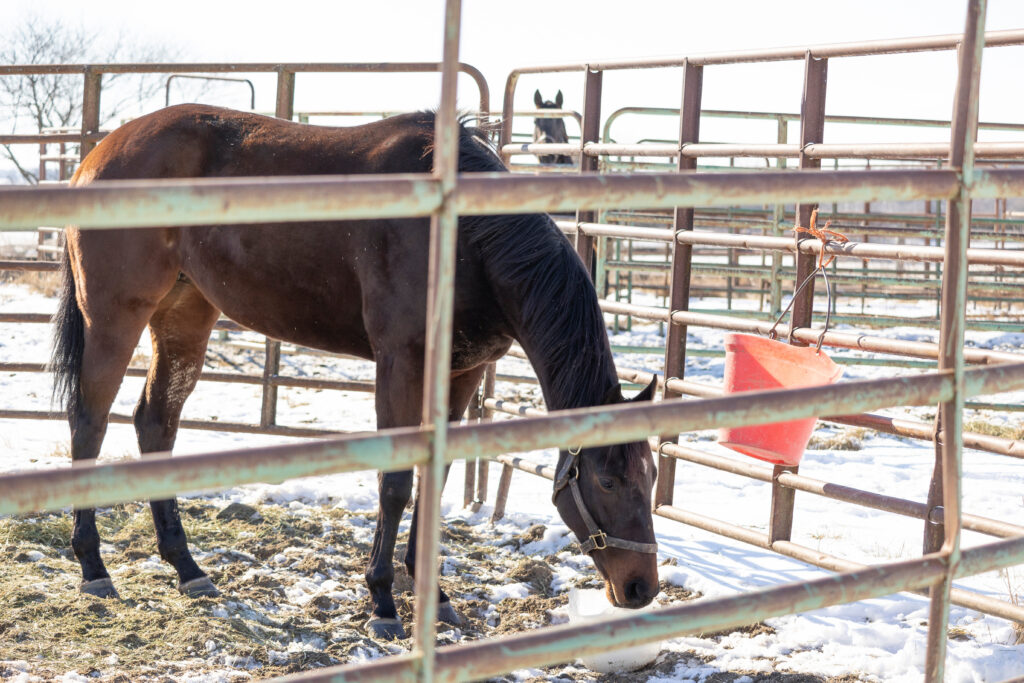
This article originally appeared in the Fall 2026 issue of EquiManagement. Sign up herefor a FREE subscription to EquiManagement’s quarterly digital or print magazine and any special issues.Ideally, all new horses to a property would be tested with a guttural pouch lavage or endoscopic exam to prevent a strangles outbreak. | Adobe Stock
At VMX 2026, Amy Stieler Stewart, DVM, PhD, DACVIM, of North Carolina State University, presented a concise synopsis about diagnosing and managing equine strangles infections.
She reminded attendees that incubation of this highly infectious bacteria takes 3-14 days, with a fever occurring about 2-3 days before shedding. This information can help veterinarians and owners implement diligent biosecurity protocols and monitoring to contain infection during an outbreak. This bacteria can survive for 4-6 weeks in water and up to a month on buckets and other equipment in cool weather. A horse infected with Streptococcus equi subsp. equi can shed for at least two to three weeks and often for six weeks; persistent carriers might shed much longer due to the presence of bacteria in the guttural pouch. Following recovery, up to 25% of horses might develop a reinfection from failure to produce or maintain protective antibodies.
Managing a Horse With Strangles
GET FREE UNLIMITED ACCESS
Register today and get FREE unlimited access to all content from EquiManagement!
Get the best from EquiManagement delivered straight to your inbox once a week! Topics include horse care, disease alerts, and vet practitioner updates.