
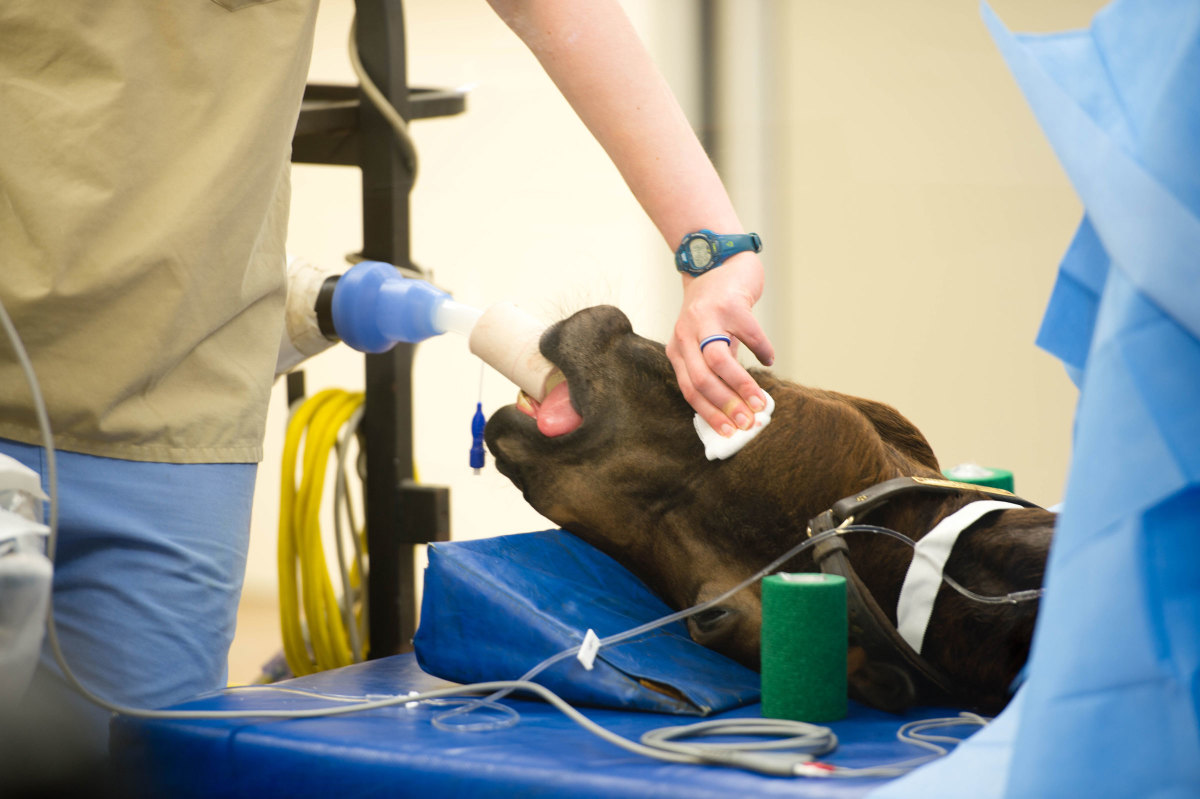
This study aimed to compare serum amyloid A (SAA) and plasma fibrinogen (fibrinogen) concentrations in the immediate post-operative period in horses undergoing exploratory celiotomy for colic unresponsive to medical management.
All horses received preoperative procaine benzylpenicillin (20 mg/kg bwt), gentamicin sulphate (6.6 mg/kg bwt) and flunixin meglumine (1.1 mg/kg bwt). Post-operatively, all horses received balanced polyionic intravenous fluids, with some also receiving a 2% lidocaine continuous rate infusion. Gentamicin sulphate and procaine benzylpenicillin were continued for 24–120 h, and flunixin meglumine (1.1 mg/kg bwt intravenously twice daily) was continued for a further for 3–5 days. [SAA] and [fibrinogen] were measured prior to surgery at admission and daily for 5 days following surgery.
In total, 300 horses were included in the study, 52.0% of which developed post-operative complications and 83.7% survived to discharge. Median SAA on days 1, 2, 3, 4 and 5 and median fibrinogen on days 3, 4 and 5 were significantly different between horses that did and did not develop post-operative complications, whilst median SAA on days 1, 4 and 5 were significantly different between horses that did and did not survive to discharge. Post-operative complications were associated with strangulating lesions and higher fibrinogen at admission. Survival to discharge was associated with lower SAA at five days post-operatively.
Bottom line: Measuring SAA daily and fibrinogen at admission might help predict the development of post-operative complications.
The authors of this study were De Cozar, M.; Sherlock, C.; Knowles, E.; Mair, T.
To read or purchase access to this article visit the Wiley online library website.
![[Aggregator] Downloaded image for imported item #19769](https://s3.amazonaws.com/wp-s3-equimanagement.com/wp-content/uploads/2026/05/31141823/EDCC-Unbranded-11-scaled-1-768x512.jpeg)