 Credit: Thinkstock
Editor’s note: This poster was presented at the ISPOR 20th Annual International Meeting, May 16-20, 2015, Philadelphia, PA, USA.
Introduction and Objectives
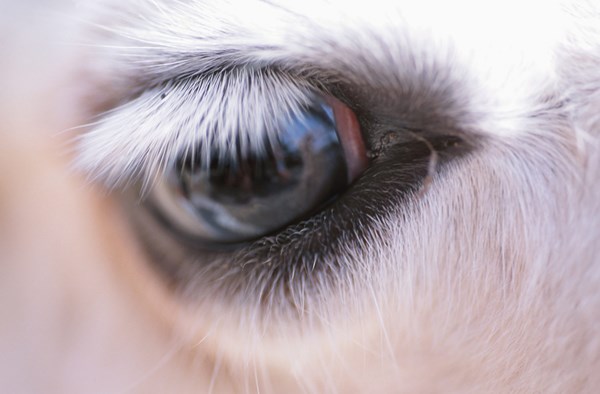
Equine recurrent uveitis (ERU), also called “moon blindness,” iridocyclitis, or periodic ophthalmia is the most common cause of blindness in horses1. Several organisms have been associated with ERU, with leptospires being the most commonly reported agent2. In general, the prognosis for eyes affected by ERU is poor, as most horses have recurrent episodes that eventually lead to vision deficits. Ocular involvements (unilateral or bilateral visual impairment or blindness) increase, irrespective of substantial treatment costs, hence reducing the value of affected horses progressively3.
• This study aimed (a) to quantify the number of horses currently affected by ERU in the U.S., thereby differentiating between ERU associated with leptospiral infection and other reasons, (b) to quantify the visual impairments with ERU, accounting for breed differences, and (c) to estimate the associated loss of value in horses currently affected by ERU in the U.S.
Conclusions
- Approximately 576,000 horses are currently affected by ERU in the U.S., from which more than 300,000 horses are or are expected to become blind in one or both eyes.
- Considering horses with ERU associated with leptospiral infection only, more than 400,000 horses are affected, with 210,000 being or becoming blind in one or both eyes.
- ERU represents a substantial economic burden which conservatively calculates to more than $ 800 MM due to the loss of horse value, not considering treatment costs. 70% of these losses (i.e., more than $560 MM) can be attributed to leptospiral ERU.
Authors
Poulsen Nautrup, Barbara; Van Vlaenderen, Ilse; Holland, Robert; Donecker, John
1. EAH-Consulting, Aachen, Germany,
2. CHESS, Ternat, Belgium,
3. Zoetis, Florham Park, NJ, USA