Because the transition from the protected student environment to the responsibility of practice can be stressful and challenging, new equine veterinary graduates often struggle with anxiety, lack of confidence, and imposter syndrome. Too often they forget how much they actually know as they strive for perfection. Building strong foundational skills for equine vets early in practice can help ease this transition and support greater confidence in clinical decision-making.
How to Develop Your Foundational Skills
Early-career veterinarians can develop a stronger foundation in clinical skills by participating in structured programs to learn skills, seeking strong mentorship, saying “yes” to opportunities to learn through practice or observation (even when they happen after hours), engaging in hands-on primary case management rather than hanging back, and learning to practice with a “spectrum of care” mentality by being creative in their diagnostic and treatment approaches rather than leaning on the “gold standard.”
The AAEP offers regular programming in Foundational Skills for equine vets. These in-person courses reinforce and advance core skills commonly used in equine practice with immersive events dedicated to equine practitioners with fewer than 10 years of experience in the field. Limited to 60 attendees and featuring a 4:1 participant-to-instructor ratio, these programs help advance skills in imaging, podiatry, reproduction, and colic. If you find yourself wanting more confidence in your skills, this is an opportunity to level up.
The Importance of Mentorship
Behind every successful equine practitioner stands at least one and often several mentors. A good mentor is an experienced veterinarian who can model expected standards of care, share their clinical reasoning, talk you through procedures with accuracy, and give you feedback in a way that lifts you up. They should be willing to gift you of their time. In return, when they offer to teach you at a moment that feels inconvenient, you should make every effort to participate with enthusiasm.
Most equine veterinarians in their first years of practice are anxious about attending emergencies, worried they will be faced with something they’ve never seen before. It’s important in these situations to know someone is always at the other end of your phone. Having a mentor to help you think through a situation can help calm your amygdala and reactivate your cortex. While driving to an emergency, you can often plan your approach and think about the different possibilities for handling the situation. In most cases, your worst fears are not realized.
Building Confidence
When you manage a few cases successfully, you’ll start to realize how much you actually know. Seeing emergencies will increase your confidence and competence faster than simply attending basic health maintenance calls for vaccines or diagnosing conditions like PPID, so don’t avoid emergency calls even though you might feel uncomfortable.
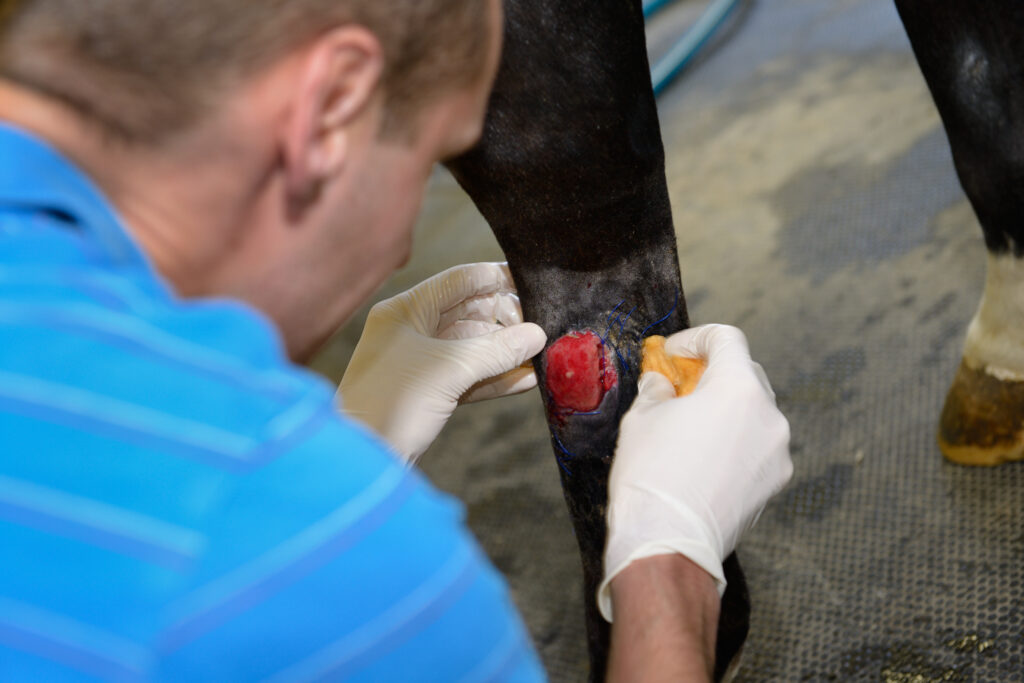
One practitioner recalled their very first emergency call in practice: “I was in my first week of practice, and in the late afternoon on Friday, a call came in to the office for a foal with a laceration on its forearm. My new boss suggested that I attend this emergency and take our technician with me. I was so nervous! I had a lot of experience with foals but now this was my first call on my own as a veterinarian. We arrived at the farm and found that it was a simple 4-inch vertically oriented skin laceration. I confidently sedated the foal and prepared all the things I would need with the technician’s help. We clipped and cleaned, and I was ready to begin suturing when the technician said very quietly, ‘Would you like to block the wound first before you begin to suture?’ I said, ‘Yes, I sure would!’ I was so grateful to her for being so kind and observant when I was so nervous. I blocked the wound, sutured it up, and then dispensed some antibiotics and wound care instructions. I worried about that wound all weekend and even called the farm to ask how it was doing. They seemed surprised and said it was fine. I felt so relieved and proud.” Overcoming your fears and finishing a few successful calls can do wonders for your confidence.
Developing Professional Skills
Learning to offer a range of diagnostic and treatment options to address client financial constraints and patient needs can be difficult at first. Communicating the many options in a way that lacks any hint of judgement isn’t difficult if you are intentional about it. In these economic times, many horse owners have less income to spend on veterinary care. Showing understanding and finding options for care can build relationships and trust with clients.
In the study entitled “Are They Ready? Trials, Tribulations, and Professional Skills Vital for New Veterinary Graduate Success,” published in Frontiers of Veterinary Science in 2021, Addie Reinhard, DVM, MS, and colleagues aimed to capture and document the new graduate veterinary experience within the United States and identify which professional skills are most important for success during the transition to practice. They wrote that self-care, conflict management, and client communication were perceived as the most important professional skills for success during that transition. New graduate veterinarians reported in the study that they were least prepared for working with clients with financial constraints and managing conflict. Developing strong communication skills is essential for building rapport and navigating difficult conversations or conflicts with clients.
Final Thoughts
Leaning into lifelong learning, developing a relationship with a mentor, and actively seeking skills training will transform your early career years. Over time, these efforts will strengthen the foundational skills for equine vets that support both clinical competence and long-term career satisfaction.
Brought to you by Bimeda.
Related Reading
- Early Career Insights: What Are MentorVet and Decade One?
- Equine Veterinary Sustainability: Supporting Equine-Track Students
- Performance Horse Ethics for Early-Career Veterinarians
Stay in the know! Sign up for EquiManagement’s FREE weekly newsletters to get the latest equine research, disease alerts, and vet practice updates delivered straight to your inbox.