In this episode of the Disease Du Jour podcast, Lauren Bookbinder, DVM, DACVIM-LA, joined us to discuss neonatal maladjustment syndrome (NMS) and foal sepsis, including causes, clinical signs, treatment options, prognosis, and more.
This episode of Disease Du Jour is brought to you by Equithrive.
What Causes Neonatal Maladjustment Syndrome?
Bookbinder explained that there are three potential etiologies for neonatal maladjustment syndrome. The first occurs in otherwise healthy fetuses that experience dystocia and hypoxemia, which leads to reperfusion injury. These foals then develop clinical signs caused by oxygen starvation to the brain, kidneys, and gastrointestinal tract. Clinical signs can take about 72 hours to develop.
The second category occurs when there’s been “a problem with the oven,” such as overt placentitis or placental insufficiency. “These are foals that really just didn’t cook appropriately for some reason,” Bookbinder said. “Sometimes we know why, and sometimes we don’t.” These foals can be premature, dysmature, or postmature.
The third category of NMS occurs in foals with complicated neurosteroid production issues at the end of parturition. “Foals are really unique because compared to other species, their adrenal gland matures really late in gestation, like in the last 24 hours before they’re supposed to be born,” she said. “This is one reason why they don’t tolerate prematurity very well compared to people.”
When foals are born before the adrenal switch has fully developed, they might be stimulated to produce cortisol, but their adrenals are only capable of producing progestationalneurohormones that keep the foal very quiet.
Clinical Signs of NMS
“Neonatal maladjustment syndrome means that multiple organ systems can be maladjusted to extrauterine life,” Bookbinder said. “The systems most at risk of that are the ones that really didn’t need to do anything in utero and all of a sudden have a big job to do.” These systems include the brain, gastrointestinal tract, urogenital system, and respiratory system.
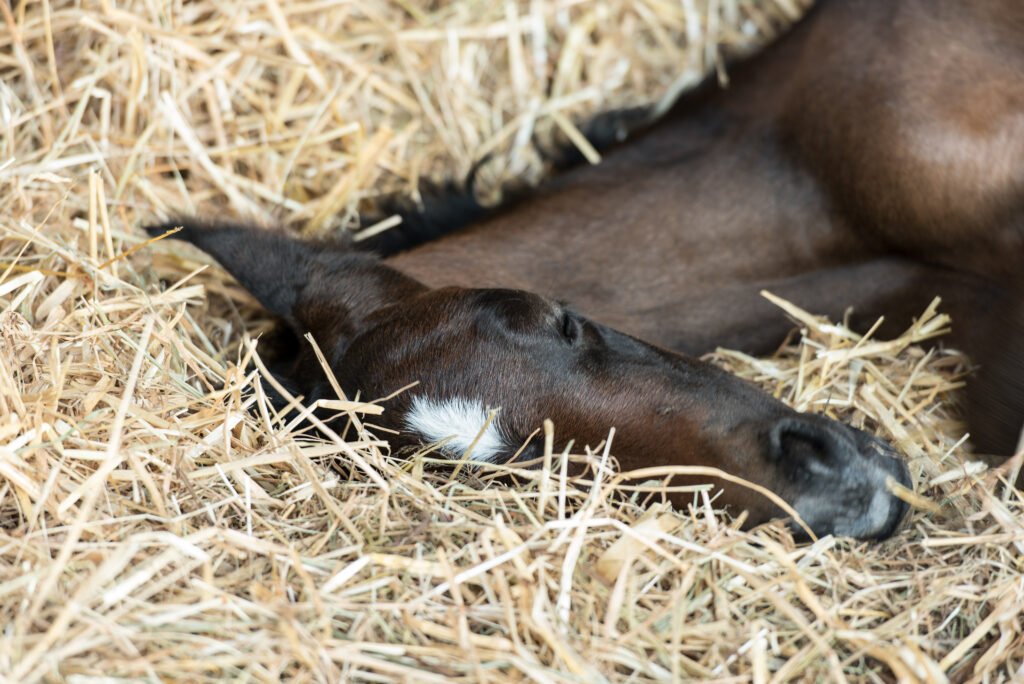
Maladjusted foals often act sleepy or lazy. They might act normal for the first 6-24 hours of life and then get progressively sleepier. Foals might lose affinity for the mare, have an inappropriate or absent suckle, become hyperreactive to stimulation, display strange vocalizations like barking, and have focal seizure activity.
Treatment Options for NMS
The Madigan Foal Squeeze technique is a famous intervention for foals with NMS. “It is most appropriate for this probably small subset of foals that truly have a neurosteroidproblem,” Bookbinder said. She said the best foals to squeeze are those that have no other risk factors for NMS—there was no dystocia, the mare doesn’t have a history of NMS foals, the clinical examination is otherwise normal, the foal is mildly affected, and there is no major concern for sepsis.
Bookbinder works in a referral hospital and typically sees more severe cases. These foals usually need nutritional, glucose, and fluid support. She said it’s important to ensure they have a normal IgG and to pay close attention to their sepsis risk. “I am pretty liberal with antimicrobials in these foals just because the outcome of sepsis can be so detrimental for the foals, and it can really affect their prognosis quite dramatically if they become septic,” she said.
Neonatal Sepsis
Foals with NMS are at an increased risk of sepsis because they often do not get enough colostrum within the appropriate time frame if they are not nursing. These foals also spend a lot of time recumbent, which means they are breathing in and exposing their belly buttons to a higher bacterial load. If their GI tract is sluggish, they can become septic from bacterial translocation.
Foals without NMS are also at risk for sepsis if their IgG is low. “There’s a race to get into this foal between bacteria in the environment and colostrum from the mare. And whoever wins that race determines if the foal becomes septic,” Bookbinder said.
She emphasized that lab tests to detect sepsis are inefficient compared to an examination by an experienced clinician who has seen a lot of foals. “There’s no 100% accurate definitive diagnosis for it,” she said. “If you think that they’re septic, then you do want to start treatment right away, and that mainstay treatment is going to be IV antibiotics.”
Bookbinder reminded listeners that plasma is better for preventing sepsis than treating it. Once the foal is septic, plasma becomes an adjunctive therapy and should never replace IV antimicrobials.
Prognosis for NMS and Sepsis
Bookbinder said about 80% of foals with NMS survive when referred and treated appropriately. Some studies report a favorable prognosis in up to 90% of these cases. If the foal becomes septic, the prognosis drops quickly to the 50-60% range. Some foals survive the initial sepsis but later develop bacterial infections in a joint, which negatively impacts their athletic potential and quality of life.
Listen to the podcast episode to learn more about NMS and neonatal sepsis.
About Dr. Lauren Bookbinder
Lauren Bookbinder, DVM, DACVIM-LA, is an assistant professor of large animal medicine at Michigan State University’s College of Veterinary Medicine. She earned her veterinary degree from Cornell University and continued her specialty training through an equine internship at B.W. Furlong and Associates and a Large Animal Internal Medicine Residency at Michigan State University.
Following this, Bookbinder was a faculty member at Tufts University’s Cummings School of Veterinary Medicine and cared for patients both in the field and at the university referral hospital.
Bookbinder has an enthusiasm for teaching and preparing students to be confident veterinarians. She is also passionate about large animal neurology, neonatology, antimicrobial stewardship, and preventive health.
Related Reading
- Madigan Foal Squeeze Technique
- Disease Du Jour: Equine Neonatal Field Care
- Research Spotlight: Equine Placentitis
Stay in the know! Sign up for EquiManagement’s FREE weekly newsletters to get the latest equine research, disease alerts, and vet practice updates delivered straight to your inbox.