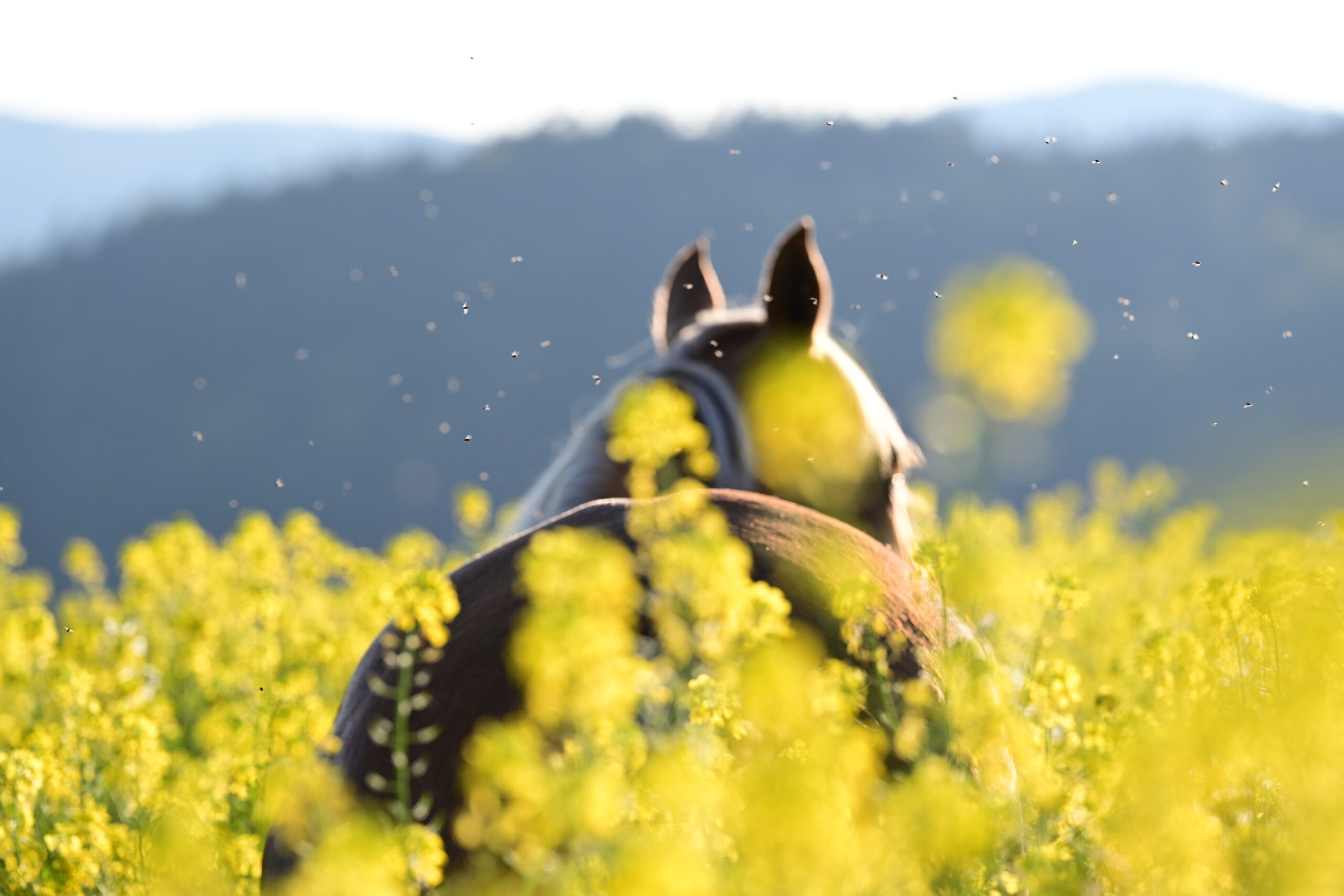
On July 28, a 24-year-old Quarter Horse gelding in Garrard County, Kentucky, tested positive for rabies. The gelding, who was unvaccinated, developed clinical signs on July 23, including head pressing, biting inanimate objects, agitation, aggression, and neurologic signs. He was euthanized. Two additional horses were exposed.
EDCC Health Watch is an Equine Network marketing program that utilizes information from the Equine Disease Communication Center (EDCC) to create and disseminate verified equine disease reports. The EDCC is an independent nonprofit organization that is supported by industry donations in order to provide open access to infectious disease information.
About Rabies
Rabies—a zoonotic disease that can be spread from animals to humans—is caused by a lyssavirus that affects the neurologic system and salivary glands. Horses are usually exposed through the bite of another rabid animal.
In horses, clinical signs of rabies are variable and can take up to 12 weeks to appear after the initial infection. Although affected horses are sometimes asymptomatic, an infected horse can show behavioral changes such as drowsiness, depression, fear, or aggression. Once clinical signs appear, there are no treatment options.
Rabies can only be diagnosed postmortem by submitting the horse’s head to a local public health laboratory to identify the rabies virus using a test called fluorescence antibody. Thus, ruling out all other potential diseases first is very important in these cases to avoid potentially unnecessary euthanasia.
Because rabies threatens both horses and the humans who handle them, the American Association of Equine Practitioners recommends rabies as a core vaccine every U.S. horse should receive. The AAEP’s vaccination guidelines recommend that adult horses receive an initial single dose, then a booster vaccination annually; foals born to vaccinated mares should receive a first vaccine dose no earlier than six months of age and a second dose four to six weeks later followed by annual vaccination; and foals of unvaccinated mares should receive a first vaccine dose at three or four months of age and should be revaccinated annually.