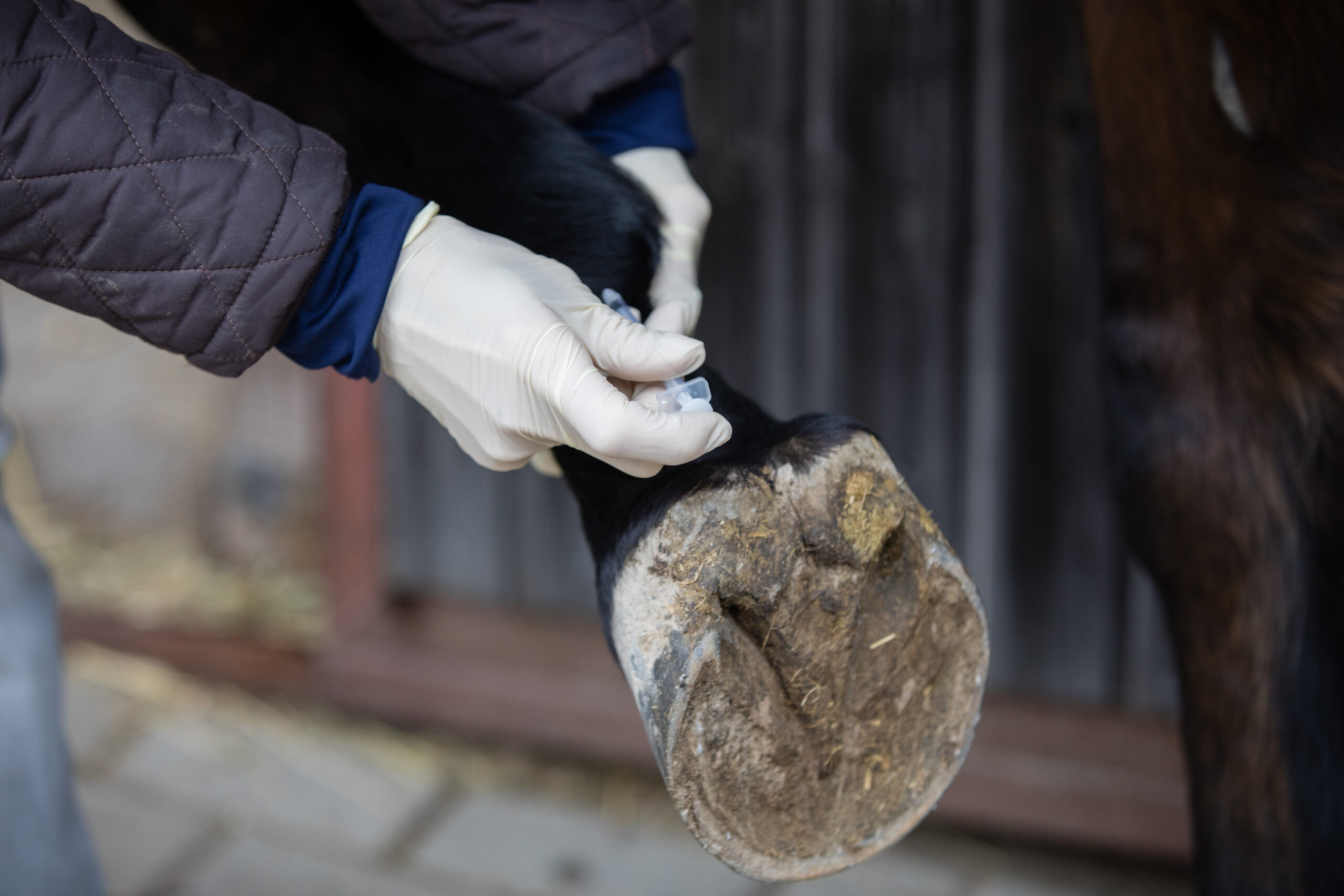
Equine Performance Labs (EPL), the team behind equicenta® CTM, announced the publication of a third peer-reviewed study on its ready-to-use, cryopreserved equine umbilical cord tissue allograft. The study, published Oct. 27, 2026, in Veterinary Medicine: Research and Reports, under in vitro test conditions detected microscopic particles and proteins that could break down using biological pathways.
The study was led by Britta S. Leise, DVM, PhD, DACVS-LA, of the Equine Health and Sports Performance Program at the LSU School of Veterinary Medicine, with Antonio P. N. Catunda, DVM, PhD, and Alicia L. Bertone, DVM, PhD, DACVS, DACVSMR. It builds on two earlier publications: a 2025 study in BMC Medicine that characterized the product’s protein content and biocompatibility in equine joints and tendons and a 2026 multicenter clinical trial in Frontiers in Veterinary Science involving 138 performance horses with 195 conditions across eight U.S. equine practices.
“Our first paper showed what’s in equicenta® CTM. Our clinical trial showed what it does for horses. This paper helps explain how it works,” said Heather Rogers, CEO, Equine Performance Labs. “Veterinarians want to understand the biology behind the products they use. Three peer-reviewed publications in about a year reflect our commitment to building this product on science.”
As Reported in the Article
The researchers used microscopy, enzyme digestion, protein assays, and nanoparticle analysis to study equicenta® CTM samples from multiple donors in the laboratory:
- A natural tissue scaffold: Microscopy revealed a fibrillar, net-like extracellular matrix that kept its structure for two weeks in a tissue-supportive environment at body temperature.
- Gradual, natural breakdown: The matrix broke down gradually when exposed to collagenase, the type of enzyme found in injured tissue, releasing collagen type I continuously over 24 hours.
- Selected proteins measured in the study: When the matrix was broken down, levels of key protective and growth-related proteins increased: alpha-2-macroglobulin (A2M) rose 2.7-fold, TIMP-2 rose 3.5-fold and insulin-like growth factor-1 (IGF-1) rose 2.3-fold, indicating these factors are stored within the scaffold.
- Low inflammatory profile: In the study, pro-inflammatory cytokines were low and decreased further after matrix extraction, while IL-1 receptor antagonist (IL-1Ra) was the most abundant anti-inflammatory cytokine measured.
- Abundant extracellular vesicles: Samples from 11 donors contained an average of about 928 billion EVs per milliliter, averaging roughly 134 nanometers in size. The vesicles carried the hallmark exosome markers CD9, CD63, CD81, and ALIX.
“The findings describe equicenta® CTM as an intricate filamentous microparticle matrix capable of serving as a scaffold for endogenous tissue repair. Biodegradation of the microparticles, including by natural-occurring collagenases, released growth factors, protective proteins, and extracellular vesicles over time. Taken together, these microscopic and biologic characteristics may explain the durable clinical responses of lame performance horses and evidence of better tissue remodeling than standard of care controls,” said Dr. Alicia Bertone. “This in vitro study gives veterinarians a clearer picture of the biology behind the clinical results we’ve reported.”
Why It Matters
Joint, tendon, and ligament injuries are a leading cause of lost training days, reduced performance, and early retirement in horses. Biologics that combine a scaffold with naturally occurring repair-related proteins are drawing growing interest as alternatives to repeated corticosteroid or NSAID treatment. This study adds a mechanistic layer to equicenta® CTM’s evolving evidence base by showing how its structure and contents may support the body’s connective tissue processes and remodeling. As with all laboratory studies, the authors note that the in vitro model cannot fully reproduce conditions in the live horse.
The study was supported by a grant from Equine Performance Labs to Louisiana State University. Per the publication, the funder did not play a role in the design, analysis, or reporting of the study.
Read the full open-access study: https://doi.org/10.2147/VMRR.S633966
2026 Multicenter Clinical Trial in Frontiers in Veterinary Science: https://doi.org/10.3389/fvets.2026.1833933
2025 Study in BMC Medicine: https://doi.org/10.1186/s12916-025-04231-7
Learn more about EPL: www.equineperformancelabs.com
equicenta® CTM is an investigational product in development. It is not approved by FDA/CVM. The findings reported are from laboratory research and do not establish safety or effectiveness for any clinical use.
About Equine Performance Labs
Equine Performance Labs (EPL), based in Austin, Texas, is developing science-driven regenerative biologics for horses. Its lead product, equicenta® CTM, is an investigational cryopreserved equine umbilical cord tissue allograft. equicenta® CTM is supported by three peer-reviewed publications, including a 138-horse multicenter controlled clinical trial.
Publication References
- Leise BS, Catunda APN, Bertone AL. Microscopic and Biological Characterization of Cryopreserved Equine Umbilical Tissue Allograft. Vet Med (Auckl). 2026;17:633966. https://doi.org/10.2147/VMRR.S633966
- Bertone AL, et al. Frontiers in Veterinary Science. 2026. https://doi.org/10.3389/fvets.2026.1833933
- Bertone AL, Reinemeyer C, Tsaprailis G, Ragland D, Leise B. Cryopreserved equine umbilical cord tissue allograft characterization and biocompatibility in vivo in musculoskeletal tissues: a controlled study. BMC Med. 2025;23(1):439. https://doi.org/10.1186/s12916-025-04231-7
Stay in the know! Sign up for EquiManagement’s FREE weekly newsletters to get the latest equine research, disease alerts, and vet practice updates delivered straight to your inbox.