The Kentucky State Veterinarian’s office reported that results of testing received earlier today (Oct. 1) from the University of Kentucky’s Veterinary Diagnostic Laboratory confirmed the diagnosis of West Nile virus having affected two additional horses in Kentucky this Summer/Fall. This brings the total to six in 2015.
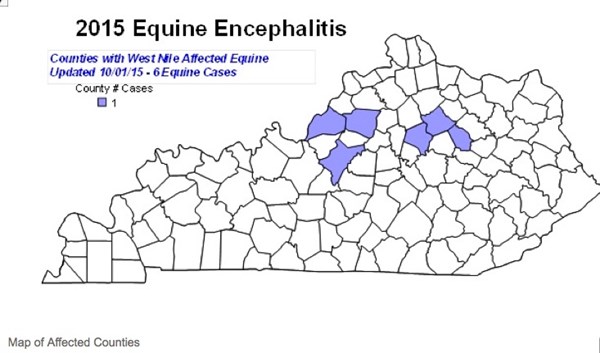 Map of WNV-affected Kentucky Counties in 2015
The diagnosis is based on detection of specific WNv IgM antibody and demonstration of compatible clinical symptoms.
The Kentucky Department of Agriculture’s West Nile web page has been updated to reflect these two additional cases (5th and 6th of the year) which are summarized below.
In Montgomery County a 5-year-old Tennessee walking horse gelding started showing clinical signs of real limb ataxia, general weakness and muscle fasiculation on and around the shoulder area on Sept. 24. The unvaccinated gelding was still alive as of Oct.
In Nelson County a 10-year-old Appaloosa stallion was reported on May 15 with intermittent recurring mild neurological abnormalities described as facial muscls fasiculation. The unvaccinated stallion continued to show recurring symptoms as of Oct.1.