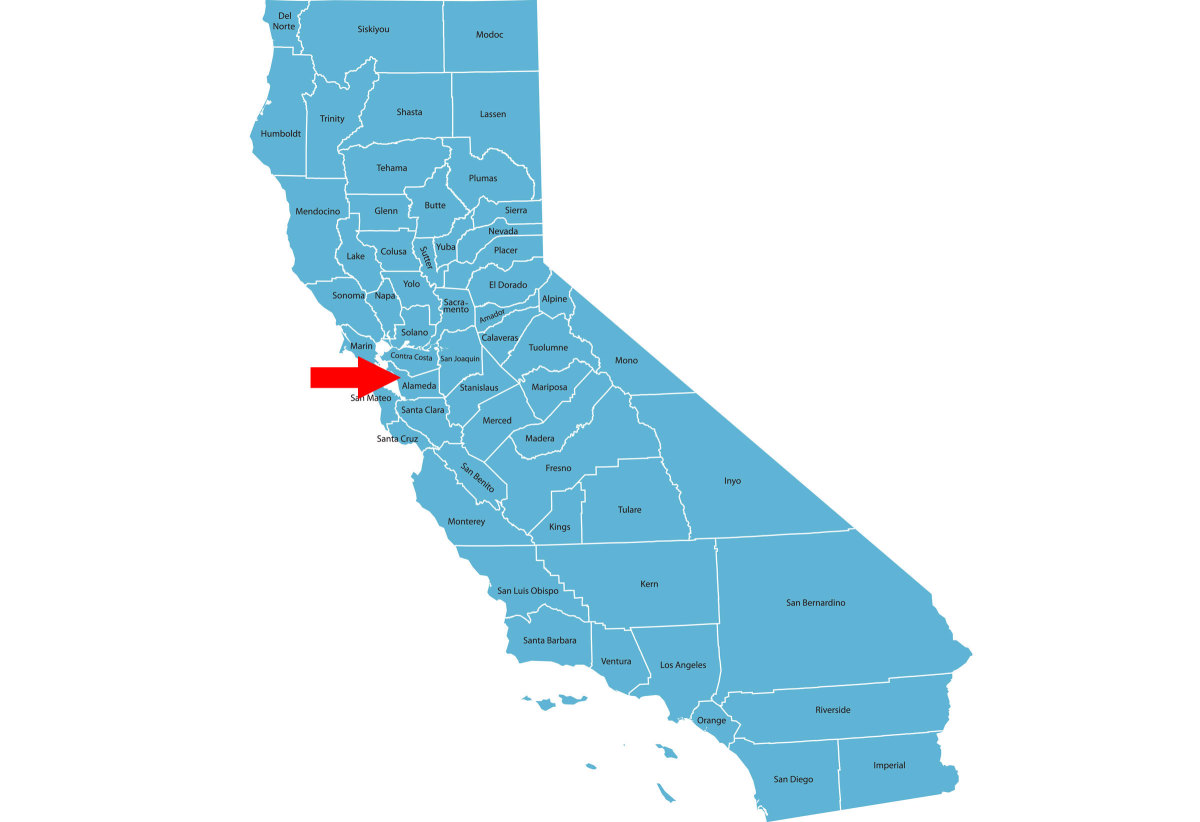
UPDATE 1/27/22 : The quarantine at the Alameda County racetrack has been released as there were no additional clinical signs or cases confirmed during the 14 days following removal of the index case from the premises. The index case remains under quarantine at her home premises in Sonoma County pending 2 consecutive negative tests 7 days apart. CDFA continues to monitor the situation closely.
The California Department of Food and Agriculture (CDFA) confirmed a case of neurologic equine herpesvirus (aka equine herpesvirus myeloencephalopathy or EHM) at a racetrack in Alameda County. The 8-year-old Thoroughbred are had onset of clinical signs on January 12 that included ataxia, proprioceptive deficits and leaning. She was confirmed positive on January 19
The mare resided at a racetrack and was transported to her home barn in Sonoma County and isolated on January 12 following the onset of clinical signs. The mare has been quarantined at her home premises and will be released following two consecutive negative tests seven days apart.
Fourteen horses from the index mare’s training barn have been isolated and quarantined, and they have been tested and confirmed negative for EHV-1. An additional 13 horses from the adjoining training barn have also been quarantined, with no additional clinical signs or cases detected at the racetrack.
CDFA conducted a site assessment and implement enhanced biosecurity measures, including twice-daily temperature monitoring. Site assessment at the racetrack confirmed no known exposure beyond the barn identified, and there has been no evidence of ongoing disease transmission.
Additional updates and information can be found here.
Information for this report was provided by the Equine Disease Communication Center.