
Strangles in Two Michigan Counties

Mecosta and Newaygo Counties in Michigan reported confirmed cases of equine strangles.

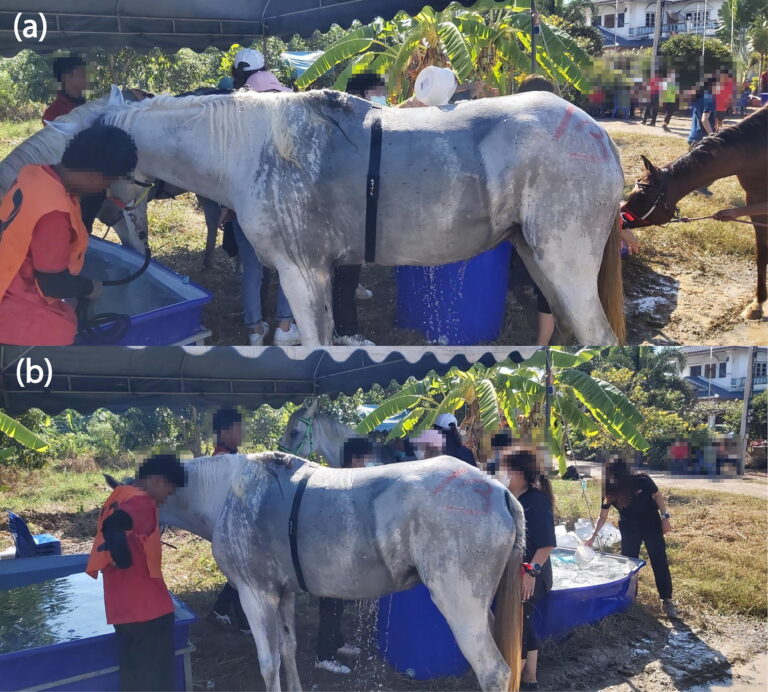
Strangles was confirmed in Mecosta and Newaygo Counties in Michigan (not photo of actual Michigan case). Amy Dragoo

The Michigan Department of Agriculture and Rural Development has confirmed positive cases of equine strangles in Mecosta and Newaygo Counties.

In Mecosta County, a 10-year-old Appaloosa mare had onset of clinical signs on November 6 that included fever and nasal discharge. The mare is recovering. There are five other suspect cases on that property and 37 horses exposed.

Strangles

Mecosta and Newaygo County, MI

Alert ID: 1896

November 19, 2020

Confirmed Case(s): Voluntary Quarantine

In Newaygo County, a 12-year-old Tennessee Walking Horse gelding was confirmed with equine strangles. He had onset of clinical signs on October 25 that included enlarged submandibular lymph nodes. The gelding is recovering.

For more information on equine strangles download this AAEP Fact Sheet.

Information for this report was provided by the Equine Disease Communication Center.
categories
tags
Trending Articles
Jockey talking to vet while standing by horse at barn
The Business of Practice: How to Evaluate and Resolve Ethical Dilemmas
Shetlandhengst
Updates on Equine Endocrinological Disorders: PPID and EMS 
[Aggregator] Downloaded image for imported item #19998
Strangles Cases Confirmed in 2 Florida Counties
Equine Veterinarian Exam Using an Ultrasound
Business Briefs: What Is Your Practice's Competitive Advantage?
POLLS AND SURVEYS
Newsletter
Get the best from EquiManagement delivered straight to your inbox once a week! Topics include horse care, disease alerts, and vet practitioner updates.

"*" indicates required fields

This field is for validation purposes and should be left unchanged.
Name*
Country*

Additional Offers

Untitled
EquiManagement
Privacy Overview

This website uses cookies so that we can provide you with the best user experience possible. Cookie information is stored in your browser and performs functions such as recognising you when you return to our website and helping our team to understand which sections of the website you find most interesting and useful.