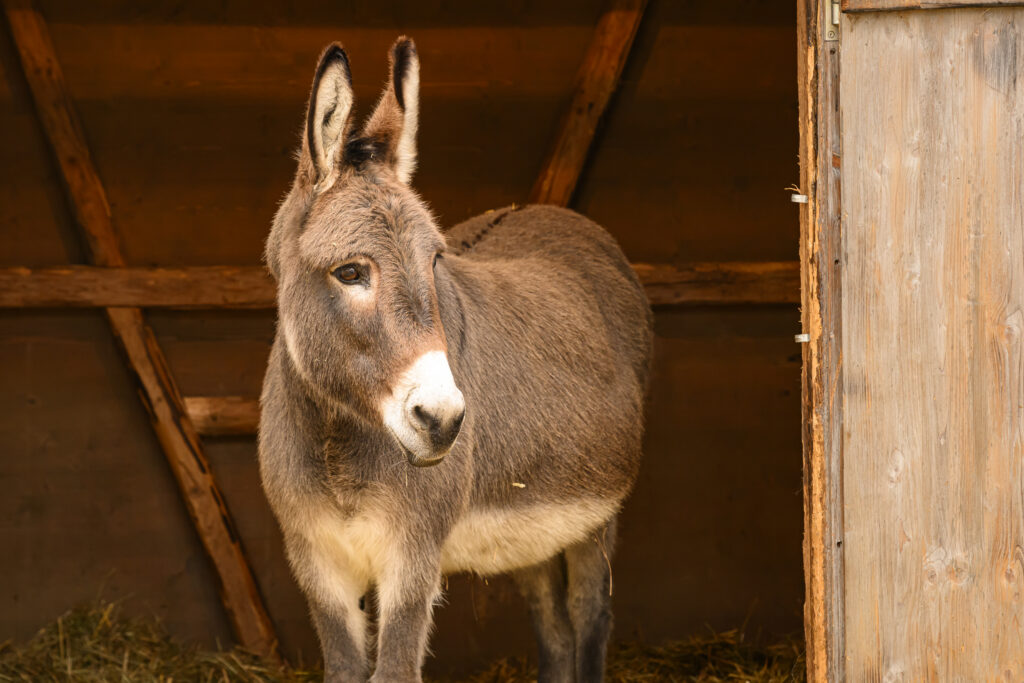
In this episode of the “Daily Vet Life” podcast, Emily Berryhill, DVM, DACVIM, associate clinical professor of Equine Internal Medicine at the University of California, Davis, School of Veterinary Medicine, shared a case involving a young donkey suffering from severe respiratory disease following transport from a Texas auction to a California sanctuary.
The patient, a 3-year-old jack, was part of a group of 15 donkeys transported roughly 40 hours from Texas to California. Within days of arrival, multiple donkeys became ill, and one of the patient’s companions had already been euthanized due to severe respiratory distress and colitis before this donkey arrived at the hospital.
The donkey presented with worsening respiratory distress, including tachypnia and a distinctive “bobbing motion” of the head while breathing. Despite the severity of illness, Berryhill explained that the donkey remained relatively bright, underscoring just how deceptive donkey behavior can be during serious disease. “Donkeys are such stoic animals,” she said. “They make you work for it to figure out what’s wrong with them.”
Initial diagnostics revealed inflammatory changes and diffuse lung abnormalities more consistent with interstitial or viral pneumonia than classic bacterial bronchopneumonia. The veterinary team initiated oxygen therapy, antimicrobials, inhaled medications, nebulization, corticosteroids, and intensive supportive care while monitoring for secondary complications.
Further testing confirmed the donkey was positive for both influenza virus and asinine herpesvirus-3 (AHV-3). Berryhill explained how influenza can be particularly devastating in donkeys, especially after stressful transport and commingling situations. “Their body just seems to have a very vehement inflammatory response, especially in animals that are really naïve,” she said.
Because another donkey in the group had already died and published reports have documented high mortality rates in donkey influenza outbreaks, the clinicians elected to administer oseltamivir (Tamiflu), despite limited donkey-specific research on the medication.
One of the more alarming developments came when the donkey developed extensive subcutaneous emphysema and pneumomediastinum. Berryhill described how the donkey eventually looked “like the fattest little marshmallow donkey ever, but it was all air.” The gas accumulation became so extensive that clinicians could no longer effectively ultrasound the lungs. “You’d go to auscult his heart or lungs, and it sounded like a Rice Krispie treat,” she recalled.
Throughout the episode, Berryhill emphasized the delicate balancing act required to treat severe inflammatory lung disease while minimizing risks associated with corticosteroid use, bacterial pneumonia, colitis, hyperlipemia, and fluid overload—all concerns that are amplified in donkeys. She also highlighted the importance of environmental management during recovery, including minimizing dust, heat, and respiratory irritants after discharge.
In summary, Berryhill reminded listeners that donkeys often appear far less sick than they truly are. “By the time you see a sick donkey, they’re often really, really quite sick,” she said. “I’m definitely an advocate for screening early and screening serially, so you can try to nip things in the bud before they become life-threatening.”
Fortunately, after 16 days of hospitalization and intensive care, the donkey recovered and was discharged to the sanctuary, along with most of the other affected donkeys in the outbreak.
To hear the full story, including Berryhill’s clinical decision-making process, treatment strategies, and additional insights into donkey care, listen to the complete podcast episode.
About Dr. Emily Berryhill
Emily Berryhill, DVM, DACVIM, is an Associate Clinical Professor of Equine Internal Medicine at the University of California, Davis, School of Veterinary Medicine. She earned her DVM at UC Davis, where she also completed a large animal internal medicine residency. Dr. Berryhill’s research focuses on equine oncology and endocrinology, with a special interest in providing veterinary care to donkeys. She loves all equids, but her No. 1 equine love will always be the cow horse.
Related Reading
- Daily Vet Life: Managing and Feeding Starved Horses
- Diagnosing Respiratory Ailments in Horses: Wash or Lavage?
- Equine Influenza Virus Infection Surveillance Data
Stay in the know! Sign up for EquiManagement’s FREE weekly newsletters to get the latest equine research, disease alerts, and vet practice updates delivered straight to your inbox.