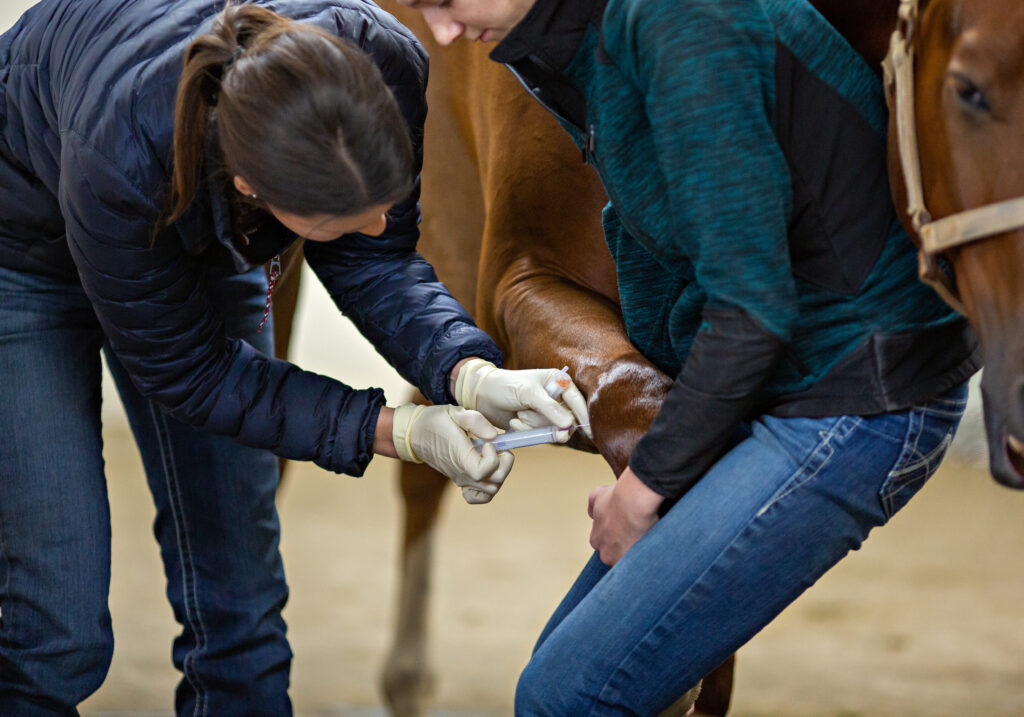
In this episode of the Disease Du Jour podcast, Charlie Barton, BVetMed, MS, DACVS-LA, discussed equine joint health and therapies, including biologics, gene therapy, and other emerging treatments.
This episode of Disease Du Jour is brought to you by Equithrive.
Narrowing Down Your Treatment Approach
When selecting an equine joint therapy, Barton considers the horse’s age, job, and response to previous treatments, as well as the client’s budget. “With a young performance horse, we’re thinking more about longevity and cartilage preservation versus that older retired horse, where we’re thinking a little bit more about just trying to keep them comfortable,” she said. “So for a younger horse, I’d be more likely to reach for a biologic.”
Barton also considers the type of joint being treated. For low-motion joints, such as the distal hock joint, she is more likely to reach for a steroid. The horse’s phenotype and metabolic status are important factors as well. If the horse has a history of laminitis, steroids might not be appropriate.
Gene Therapy for Horses
Gene therapy is an emerging approach that could change how practitioners treat equine joints in the future. “Gene therapy works by injecting the joint with a viral vector,” Barton explained. “The viral vector enters the cells of the joint, and then it makes those cells produce lots of specific therapeutic protein. The protein that’s produced is the same as what the horse will naturally produce, but in much higher concentrations.”
One example is IL-1Ra, the main protein in many biologics. IL-1Ra reduces joint inflammation and stimulates repair. “With gene therapy, you can make the cells of the joint produce that protein, and you can get very high levels compared to biologics,” Barton said. “Also, the IL-1Ra hangs around for a bit longer than if you’re injecting it in a biologic.”
Various preclinical experimental studies are underway in horses, but the research is still in the early stages. Barton noted that additional work is needed to make gene therapy more efficient and affordable.
Other Emerging Equine Joint Therapies
Barton said many exciting therapies for osteoarthritis and cartilage lesions are currently undergoing experimental studies. These include off-the-shelf allogenic biological and cellular injectable products aimed at making biologics more accessible and cost-effective. In addition, hydrogels and cartilage implants might change how veterinarians manage cartilage lesions in the future.
“The horse often acts as a translational model for human therapies,” Barton said. “It would be really exciting if we saw some of the therapies that have preclinically been used in the horse and then translated into humans move their way back to the horse and be used a little bit more clinically.”
Listen to the podcast episode to learn more about these therapies, as well as Barton’s recommendations for managing equine athletes with joint disease.
About Dr. Charlie Barton
Charlotte Barton, BVetMed, MS, DACVS-LA , earned her veterinary degree from the Royal Veterinary College in London. After completing two internships in the U.S., she undertook a surgery residency at Colorado State University, in Fort Collins. After residency, Barton stayed on at CSU as a postdoctoral fellow. Her research interests include cartilage repair techniques and gene therapy.
Related Reading
- Update on the Use of Triamcinolone as a Joint Therapy in Horses
- Equine Joint Disease Updates: PAAG and APS
- Systemic and Intra-Articular Therapies for Lame Horses
Stay in the know! Sign up for EquiManagement’s FREE weekly newsletters to get the latest equine research, disease alerts, and vet practice updates delivered straight to your inbox.