This article originally appeared in the Spring 2025 issue of EquiManagement. Sign up here for a FREE subscription to EquiManagement’s quarterly digital or print magazine and any special issues.
The equine hindgut is home to billions of bacteria and other microorganisms, their metabolites, and genomes that play vital roles in health and disease. It’s so important, the gut is now referred to as the horse’s second brain. Research shows that altering the composition of the intestinal microbiome, referred to as dysbiosis, has far-reaching effects on equine health. While leaky gut syndrome isn’t a frequent topic of discussion when addressing hindgut issues, it can negatively affect horses’ long-term health and welfare.
A Brief Overview of Leaky Gut Syndrome in Horses
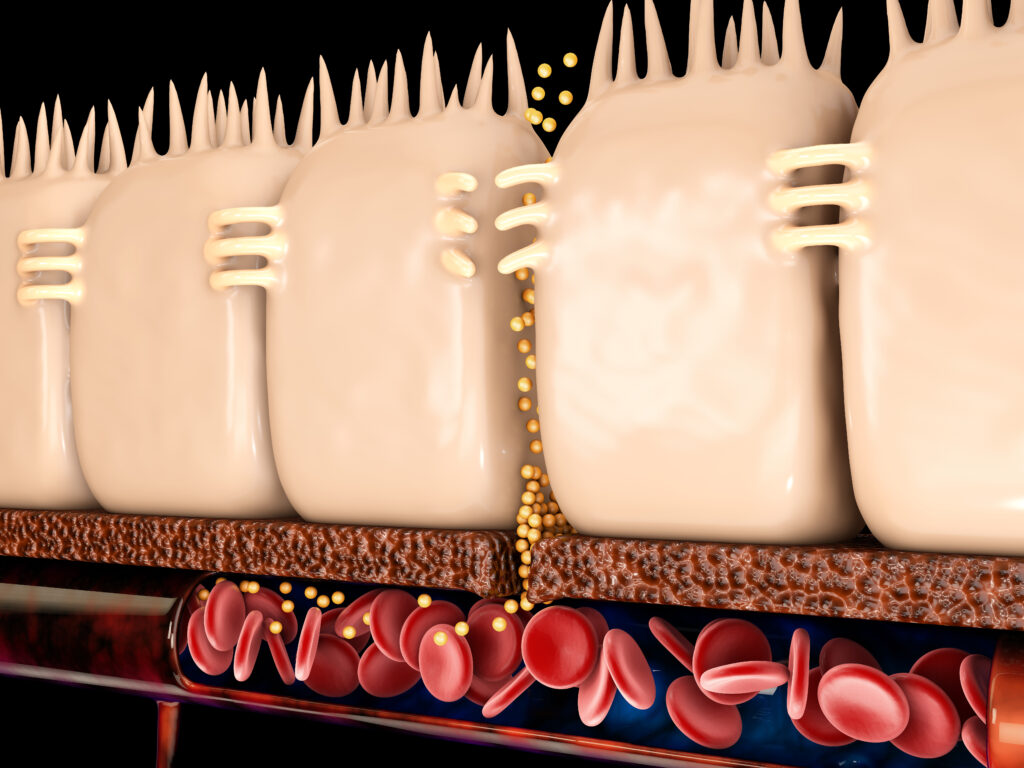
The intestinal tract lining from the small intestine to the colon is a single layer of epithelial cells linked by tight junctions. Together, the cells and tight junctions form a semipermeable barrier that regulates nutrient and water passage between the gastrointestinal tract and the horse’s systemic circulation. This barrier keeps toxins, pathogens, and antigens in the intestinal tract while allowing selective absorption of nutrients, ions, and water.
“These tight junctions are made of interlinking proteins, constructed a lot like Velcro, and the integrity of those tight junctions changes according to conditions in the gut,” explains Anthony Blikslager, DVM, PhD, DACVS, a professor of equine surgery and gastroenterology at North Carolina State University’s College of Veterinary Medicine. “Tight junctions are much tighter in the colon because the colon is very active with water absorption. In the small intestine, however, they are leakier because there is more nutrient absorption there, and these nutrients, like glucose and amino acids, are much larger than electrolytes and water.”
In some situations, those tight junctions can become overly leaky regardless of their location within the gastrointestinal tract, at which point they’re problematic, letting too much in. In severe cases, the tight junctions are so deteriorated that adjacent epithelial cells detach and shed into the lumen of the gut.
The Effects of Stress
The No. 1 cause of tight junction failure is stress-associated dysbiosis, says Blikslager: “Stress is a release of central corticosteroids that affect the body in a number of ways, including the turnover of the microbial population in the colon.”
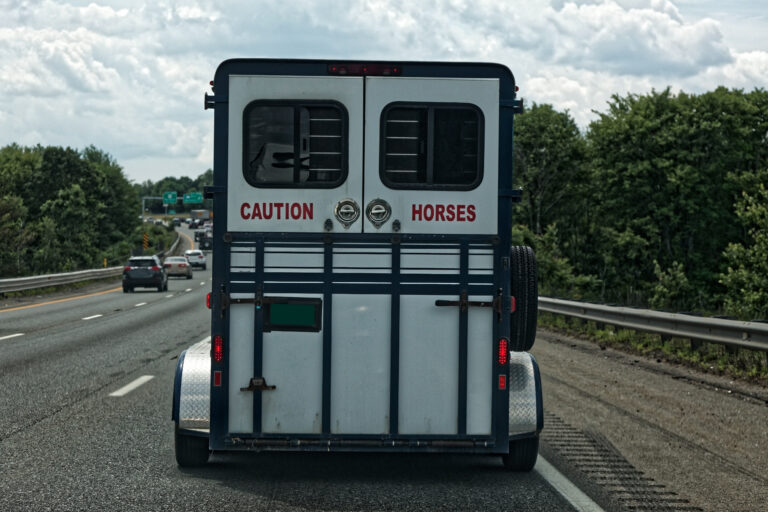
Factors that can contribute to stress and corticosteroid release include medication administration, transport, exercise, and social dynamics. The stress response causes a systemic change that impacts the microbiome in the GI tract, particularly the large intestine. Changing the microbiome’s composition can change the GI tract lining if potentially pathogenic bacteria like Salmonella gain a foothold in the microbiome, making the tight junctions and the cellular gut lining more permeable and allowing GI contents, such as other bacteria and endotoxins, to be absorbed systemically.
Springing a Leak
The clinical signs of leaky gut are vague and might include subtle signs of colic. “From the owner’s perspective, their horse isn’t as bright, alert, and responsive as normal,” says Blikslager. “Looking more carefully, they may appreciate that there is something going wrong with the gut. There can be subtle signs of pain, not eating their whole meal, standing quietly in the back of the stall, not as responsive when the owner goes to tack them up.”
Affected horses sometimes display a change in manure consistency. Fecal balls are either harder than normal or more fluid, or the horse might produce fewer piles (nine to 10 per day is normal). Just like irritable bowel syndrome in people, the signs of leaky gut are highly variable.
“It’s a lot like us just feeling lousy and how we would demonstrate that,” he adds. “When we can feel our guts churning, we wouldn’t want to train as hard either.”
A Disease of Exclusion
“These horses are not lame, and there is nothing else we can really pinpoint,” says Blikslager. “These horses are just essentially in a funk.”
Examining the stomach endoscopically might reveal problems such as stomach or duodenal ulcers. But if the vet treats problems in the stomach and sees no changes, they might want to refer for ultrasound of the intestines, particularly the colon.
“We’re primarily looking for colon wall thickness on ultrasound,” Blikslager explains. “In horses with leaky gut, the walls can be markedly thickened beyond the normal thickness of 2 millimeters or less.”
Bloodwork is overall normal, but affected horses tend to have lower neutrophil or total white blood cell counts. When the colon isn’t healthy, the white blood cells collect in the body’s small circulation, resulting in fewer WBCs in circulation. The acute phase proteins fibrinogen and serum amyloid A (SAA) might also be abnormal (high), but those changes are not specific to leaky gut.
Increased colon wall thickness on ultrasound, decreased white blood cell count, and elevated fibrinogen and SAA might suggest colitis, but Blikslager says, “When diagnosing leaky gut, you have to put the whole picture together.”
Stemming the Flow of Leaky Gut Syndrome in Horses
Diet is a key management factor in cases of leaky gut. “We’re mostly looking for a diet built on forage, grass hay, and pellets made of roughage to make sure the concentrate part is not too high, because it is irritating when it is digested,” says Blikslager. “We also need to look at what medications are they on.”
Phenylbutazone, for example, can cause ulcers in the colon (right dorsal colitis is typically associated with phenylbutazone excess or prolonged higher dose therapy) and potentially in the stomach. Changing to an NSAID that is more selective to COX-2, such as firocoxib (Equioxx), might improve clinical signs of leaky gut. Many horses are on firocoxib for this reason, and it can work for low-level pain without concern at the labeled dose for horses (Blikslager reminds practitioners to use Equioxx—not Previcox—to stay within federal law).
Veterinarians can also have owners track recent management changes or issues to identify potential stressors. Is a pasturemate bullying the horse? Has transport frequency increased recently?
“Leaky gut is all management. What these horses really need is ‘gut rest,’ which includes an easygoing diet and backing off their training schedule,” says Blikslager. “Once the horse’s demeaner improves and clinical signs resolve, then the owner can begin slowly building back up. Some owners find this process frustrating because there is no instant fix.”
A variety of products are available to facilitate this “gut rest” and support GI health, including pre- and probiotics. Alternatively, Blikslager says we can focus on butyrate, a forage metabolite the colon lining loves.
“Butyrate is a short-chain fatty acid produced by the intestinal microbiome that serves as an energy source for the enterocytes,” he says. “There is some research regarding the effect of feeding prebiotics on butyrate production, but there are no data yet saying if you feed X then it will increase butyrate by this much. But, enhancing butyrate production is another potential approach to combatting leaky gut that is currently being researched.”
Take-Home Message
Because horses are hindgut fermenters by trade, it’s important to pay attention to their hindgut health. “This is how they digest and then how they need to be managed,” says Blikslager. “They typically do better with turnout if possible, on reasonable quality grass and hay.”
To avoid leaky gut syndrome and reduced performance in horses, focus on forage first, then add a pelleted concentrate ration two to three times daily for enhanced performance.
“If you see a stressed or poorly performing horse, it’s a good bet the colon will be a little ‘leaky’ and could use a break,” Blikslager states.
Related Reading
- The Equine Gut Microbiome: A Hot Topic
- Supplement to Prevent Leaky Gut Syndrome in Traveling Horses
- New Opinions Regarding Free Fecal Water Syndrome
Stay in the know! Sign up for EquiManagement’s FREE weekly newsletters to get the latest equine research, disease alerts, and vet practice updates delivered straight to your inbox.