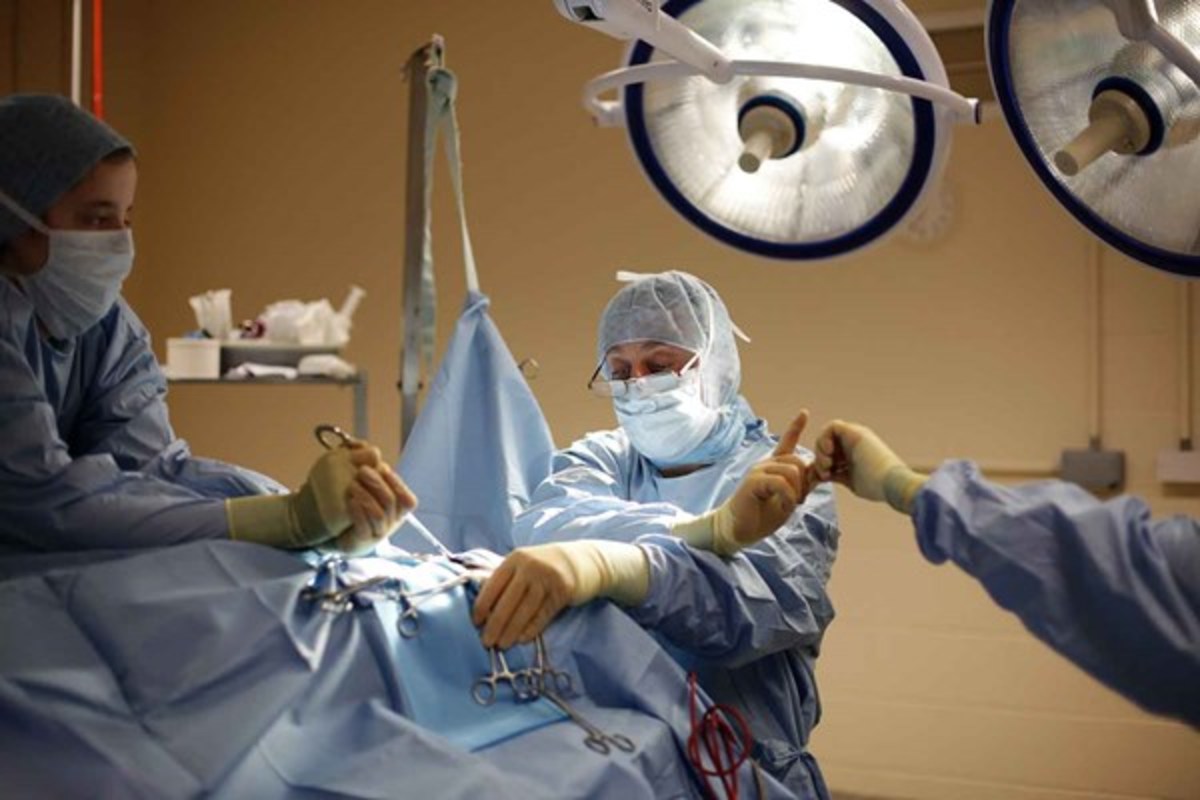
Horses undergo general anesthesia for innumerable reasons, for an emergency crisis or for an elective procedure. Precautions are usually taken to protect the horse’s eyes by removing halters and buckles, padding beneath the head, and applying lubricating ointment to the eyes intra-operatively. However, corneal abrasions still occur despite these protective measures.
A study reviewed data from 34 horses following recumbency on the operating table for non-ocular surgery [Scarabelli, S.; Timofte, D.; Malalana, F.; Bardell, D. Corneal abrasion and microbial contamination in horses following general anaesthesia for non-ocular surgery. Veterinary Anesthesia and Analgesia (2018)]. General anesthesia diminishes the normal palpebral reflex and the eyes remain somewhat open so not only is there a lack of consistent tear film to wet the eyes but tear production also decreases.
Despite intra-operative use of a paraffin-based ophthalmic ointment during surgery, six horses in the study (17.6%) developed corneal abrasions as evidenced by flourescein dye uptake 24 hours post-surgery. No horses developed deeper corneal ulcers. All horses in the study with corneal abrasions were asymptomatic; the presence of abrasion was only identified through flourescein staining.
Culture results revealed 11 different microbes associated with the abrasions, with a predominance of Gram-positive organisms, including Staphylococcus spp. and Micrococcus spp. Two fungal infections were also identified in two eyes. Some horses (about 28%) had bacteria cultured from their eyes pre-operatively; others (about 32%) cultured positive post-operatively. Bacterial cultures were positive in about 42% both pre- and post-operatively.
The greatest risk factor for developing corneal abrasions correlated with lateral recumbency; dorsal recumbency reduced the risk of corneal abrasions significantly. Equine surgeons aware of the potential for corneal abrasions can take added measures to minimize this occurrence in the operating theater and recovery stall. The authors recommended ongoing studies into the length of anesthesia as well as the recovery process and how those situations affect the incidence of corneal abrasions.
![[Aggregator] Downloaded image for imported item #19626](https://s3.amazonaws.com/wp-s3-equimanagement.com/wp-content/uploads/2026/04/08103550/EDCC-Unbranded-33-scaled-1-768x512.jpeg)
![[Aggregator] Downloaded image for imported item #18711](https://s3.amazonaws.com/wp-s3-equimanagement.com/wp-content/uploads/2025/10/20105749/EDCC-Unbranded-14-scaled-1-768x512.jpeg)