This article originally appeared in the Fall 2025 issue of EquiManagement. Sign up here for a FREE subscription to EquiManagement’s quarterly digital or print magazine and any special issues.
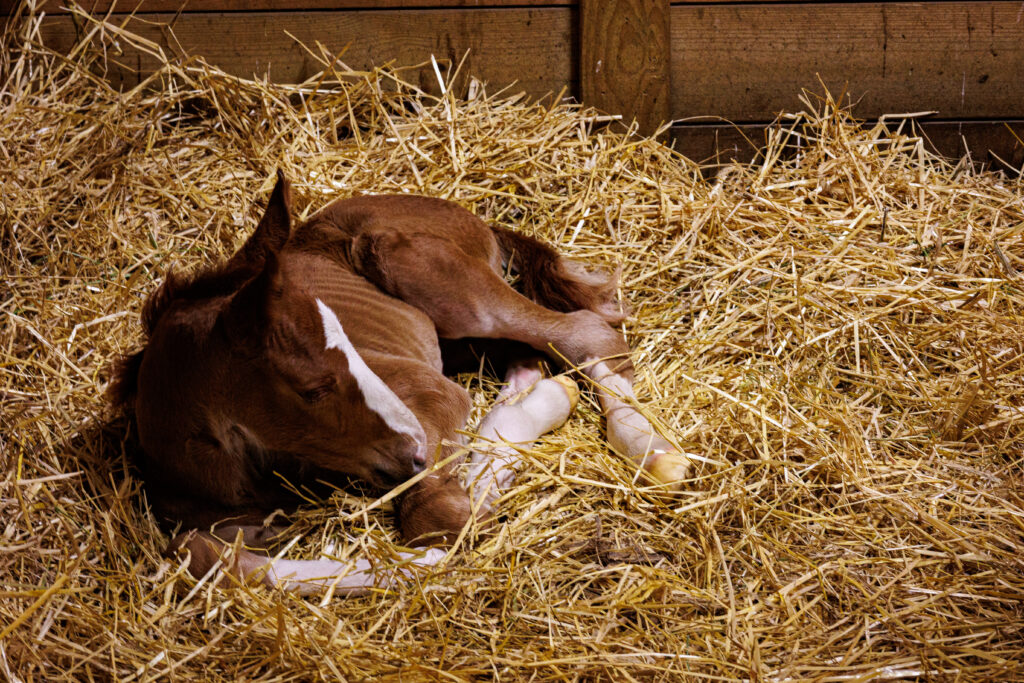
For dedicated equine practitioners, the first impulse is to do everything possible to save a horse’s life. In some situations, however, that is not always the wisest choice for the patient and its owners or caretakers. At a Gluck Equine Research seminar, internal medicine consultant Siobhan McAuliffe, MVB, DACVIM, CertRA, described situations that yield poor outcomes for sick foals. She began by noting conditions that generally have good outcomes with appropriate care:
- Dummy foals.
- Septic foals.
- Most rib fractures.
- Tendon laxity or contracture.
- Some congenital abnormalities.
Conditions With Poor Outcomes
She then listed conditions that are notable for poor outcomes. In general, any foal that does not respond well to treatment is one that will cost a lot of money and emotional heartache for all involved.
While there are exceptions to every rule, she said conditions in which it might be prudent to stop pursuing care include congenital conditions, prematurity, osteomyelitis, and septicemia.
Premature foals with floppy ears, silky hair coat, and elevated white blood cell count might be the result of placentitis. If the lungs have matured while in utero, the outcome has a better prognosis.
The dysmature foal that looks full-term but lacks osseous maturity with no ossification is one that’s difficult to manage, said McAuliffe. She noted that once the foal leaves the uterus, osseous development takes twice as long as it would in utero. It takes two months instead of one for cuboidal bones to develop properly. In the interim, the foal cannot be allowed to bear weight on the limbs, needing to be in a sling for at least two months. This leads to astronomical costs for the owner as well as the high likelihood of adverse musculoskeletal consequences such as knobby joints and lameness.
A foal with dysmature lungs that lack surfactant and have a ventilation-perfusion mismatch often experience paradoxical breathing, areas of consolidation, and hypoxia/hypercapnia. This foal needs auxiliary ventilation and intensive care, McAuliffe said.
Many congenital conditions are difficult to resolve, such as congenital cardiac abnormalities that often present at a month of age. With or without murmurs, these foals tend to have poor growth.
Cleft palate is fraught with problems, especially because surgery is associated with complications. A soft palate cleft does better than a hard cleft, although a small defect might persist that could lead to pneumonia. There is also a concern about heritability, she said.
Foals with severe and multiple rib fractures often also have lung or diaphragm damage. This can occur due to a dystocia. A dummy foal with rib fractures cannot undergo surgery. McAuliffe said multiple or severe rib fractures usually have poor outcomes. Ultrasound images of the fractures can help veterinarians counsel clients about the prognosis.
Advanced septicemia often develops because of a delay in presentation until the foal is three or four days old. It is often accompanied by failure of passive transfer. Some sequelae, such as osteomyelitis, are catastrophic. A foal this sick is likely to be a nonresponder.
Congenital cataracts in foals render them suitable for survival and possibly broodmare careers as long as they are not heritable. McAuliffe said in her experience, clients do not like dealing with eyes even when the foal might be salvageable for breeding.
Atresia coli foals do badly. A laparotomy is often necessary to confirm this diagnosis.
The prognosis for musculoskeletal issues depends on the type and severity. Severe angular limb deformities do not tend to do well, McAuliffe said. She stressed the need for clear communication about management expectations and a horse’s potential performance. In addition, it is important to educate owners about aftercare and to ensure they understand the consequences of a particular condition. A ruptured gastrocnemius muscle is usually the result of an injury incurred during foaling or from overextension as the foal chases the dam. While the foal can be saved with splinting and confinement, the prognosis for athletic function is guarded.
The outcome for a diaphragmatic hernia depends on the foal’s age and which organs pass through it.
Immune-mediated skin conditions, such as bulbous pemphigus, will affect the horse for the remainder of its life. McAuliffe recommended helping clients get past their emotions and consider the foal’s future.
Neurologic conditions such as seizures have especially disappointing outcomes if they recommence after discontinuing antiseizure medication or fail to respond to medication. A foal with localized seizures has a better prognosis, but deep brain injury is a concern with any seizure; these foals do not survive. Paradoxical respiration tends to indicate brain damage provided radiographs are normal. Anisocoria/nystagmus/strabismus signs yield a poor prognosis. A foal with blood in the cerebrospinal fluid (CSF) tends to do well as long as the fluid is not leaking out of the ears. A neurologic problem like breathing out of the guttural pouch has a poor prognosis.
Foals with poor perfusion that do not respond to treatment are challenging. Check pulse quality and arterial tone and fill in facial, metatarsal, and median arteries, McAuliffe advised. Perfusion nonresponders might be neurologically injured or septicemic. In cases where blood pressure won’t elevate, leaky blood vessels result in edema around the eyes and the proximal limbs. Cold extremities often occur in early compensated shock, with the distal extremities colder than more proximal areas. She reminded practitioners to not warm the extremities, as this defeats circulatory compensation. In addition, poor perfusion goes hand in hand with renal failure. Also consider that non-steroidal anti-inflammatories are implicated as an important cause of renal failure in foals. It is important to measure color and volume of urine output.
Treat or Euthanize?
McAuliffe stressed that if a foal needs hospitalization and round-the-clock care that owners cannot afford, it’s better to euthanize than try to manage the foal on the farm, especially one that’s short-staffed. These compromised foals use up people’s energy and can result in compassion fatigue. “If there is a case on the farm that is more recoverable, people may not be as motivated to put in the effort,” she added.
Foals being managed should show steady progression. It is important to keep an open mind about the consequences of their malady and to educate the owner accordingly, said McAuliffe. Maintain clear, ongoing, updated communications with the owner about financial costs, because cases change daily.
“This case is not about you,” she said. “Don’t let your ego take over thinking ‘I can save this foal.’ ” Sometimes, that approach is not appropriate from a welfare and financial standpoint.
Related Reading
- Daily Vet Life: A Foal with Pyloric Outflow Obstruction
- Disease Du Jour: Equine Neonatal Field Care
- Managing Pregnant Mares From Conception to Parturition
Stay in the know! Sign up for EquiManagement’s FREE weekly newsletters to get the latest equine research, disease alerts, and vet practice updates delivered straight to your inbox.