This article originally appeared in the Winter 2025 issue of EquiManagement. Sign up here for a FREE subscription to EquiManagement’s quarterly digital or print magazine and any special issues.
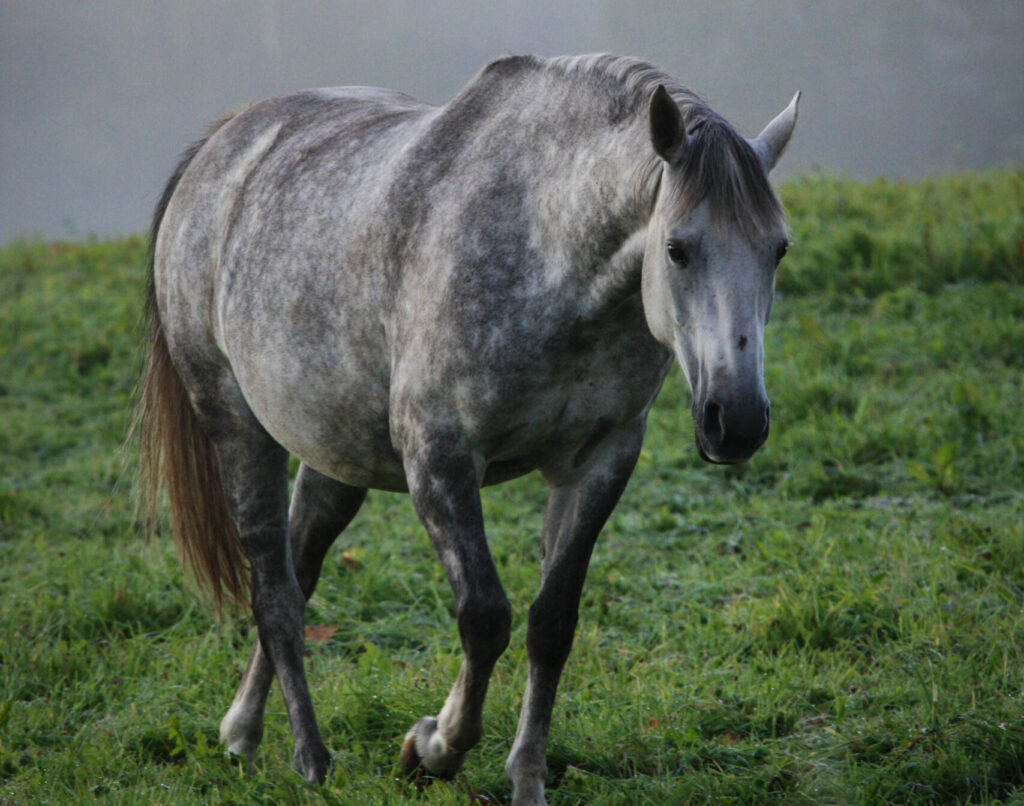
Unlike other livestock species, such as cattle, horses intended for breeding purposes aren’t typically selected based on their reproductive skills. Instead, they’re bred for performance parameters, conformation, and pedigree. Thus, fertility issues can easily arise, making the process of breeding, via natural cover or artificial insemination, frustrating.
In this article, we’ll discuss the results of three recent studies on subfertility in both mares and stallions.
Stallion Subfertility: Impaired Acrosome Exocytosis
Subfertility in stallions can be particularly challenging when the usual sperm parameters (number, motility, and morphology) are acceptable, yet pregnancy rates remain suboptimal. According to Losinno et al. (2023), 30-40% of stallions in commercial breeding programs are moderately fertile, and 8-12% are subfertile. Of those, 0.5-3% are severely subfertile, defined as less than 10% pregnancy rate/cycle, and up to 20% of subfertility cases are deemed idiopathic.
One potential, although rare, cause of stallion infertility is impaired acrosome exocytosis, first described in 1995. It is now being studied by the research group of Camilo Hernandez-Aviles, DVM, PhD, DACT, assistant professor of equine theriogenology at Texas A&M University College of Veterinary Medicine and Biomedical Sciences.
“Acrosomal exocytosis (AE) is the physiological process by which a spermatozoon undergoes molecular changes that result in the release of enzymes contained at the acrosome (spermatozoon cap) in the vicinity of the mature oocyte, to facilitate the interaction between these gametes (sperm and oocyte) during fertilization,” he explains. “Acrosome dysfunction, or IAE, occurs when sperm from an affected stallion cannot undergo AE at the same rate as sperm from fertile stallions either under in vivo conditions, resulting in subfertility, or after being stimulated under in vitro conditions.”
In the 1990s, Dickson D. Varner, DVM, MS, DACT, one of Hernandez-Aviles’ colleagues at Texas A&M, was the first to identify subfertile Thoroughbred stallions with excellent sperm quality parameters and adequate breeding management. Transmission electron microscopy revealed the stallions had a much lower proportion of sperm displaying acrosome vesiculation (only 2-4%) compared to fertile control stallions that displayed over 80% vesiculation.
“These vesiculations form between the plasma membrane of the spermatozoa and outer acrosome membrane and are characteristic during acrosome exocytosis,” Hernandez-Aviles explains.
In a subsequent study of seven subfertile Thoroughbred stallions with IAE, Brinsko and colleagues at Texas A&M University found these stallions had high cholesterol-to-phospholipid ratios (about twofold higher) in the sperm membranes and seminal plasma compared to fertile Thoroughbred stallions.
“Such results established the basis to understand the mechanism behind IAE, as cholesterol removal from the plasma membrane is a necessary step for AE to occur,” adds Hernandez-Aviles.
Terje Raudsepp, PhD, a molecular geneticist at Texas A&M University, performed a genetic analysis and identified a region on equine chromosome 13 that was highly associated with IAE: gene FKBP6 on exon 5. Her team consistently observed two single-nucleotide polymorphisms in subfertile Thoroughbred stallions but not in fertile controls or stallions from other breed registries: g.11,353,372G>A and g.11,353,436C>A. Thus, Thoroughbreds showing A/A-A/A in the gene FKBP6 displayed IAE. Additional studies in clinical cases submitted to Raudsepp’s laboratory reported this “susceptibility genotype” in nine Thoroughbred stallions from Central Kentucky, Newmarket, U.K., and Australia.
In 2022, Hernandez-Aviles et al. analyzed 1,128 semen samples from subfertile stallions and diagnosed 21 with idiopathic subfertility. Of those, eight had IAE (determined by exposure to the calcium ionophore A23187), seven of which carried the susceptibility phenotype and were Thoroughbreds. A second study by Castaneda and colleagues at Texas A&M found four of 150 Thoroughbred stallions in Central Kentucky were subfertile and carried the IAE genotype.
“These data show that the overall prevalence of IAE in Thoroughbreds occurs only rarely, in about 2-3% of the Thoroughbred stallion population but accounts for virtually 100% of cases of ‘idiopathic’ subfertility in this breed,” says Hernandez-Aviles. “In other words, all Thoroughbred stallions diagnosed with idiopathic subfertility had IAE based on analyses using the calcium ionophore A23187 and FKBP6 genotyping.”
Hernandez-Aviles says they do not perform acrosome function and genotyping analyses in every stallion they encounter with subfertility, but they will for stallions that display excellent sperm quality and breeding management yet are highly subfertile, particularly Thoroughbreds.
Hernandez-Aviles et al. are also studying the proteome (protein makeup) of sperm from fertile and subfertile Thoroughbred stallions.
“Those studies have revealed some potential candidate proteins that could help us understand how this condition results in acrosome dysfunction. Acrosomal exocytosis is still a poorly understood process in horses, and conducting studies on how the proteins in sperm from fertile and subfertile stallions differ may help us to know why these FKBP6-positive stallions are subfertile,” he explains. “We may also learn more about what happens typically in stallion sperm during and after acrosomal exocytosis.”
Through studies of the sperm proteome in these stallions, Hernandez-Aviles et al. identified two proteins that were less abundant in sperm from subfertile Thoroughbred stallions. These proteins, ARSF and ZPBP2, have relevant roles during interactions between sperm and oocyte during fertilization.
“Subfertile Thoroughbred stallions had no expression of ARSF at the acrosome region of the spermatozoon when compared to fertile stallions,” he says. “Our current studies focus on understanding the potential relationship between these proteins and the gene FKBP6, as this gene has no known role in acrosome function and is not expressed in sperm. It is only expressed in the developing spermatocyte in the testis. We are also focused on understanding the function of ARSF and ZPBP2 during the acrosomal exocytosis process.”
In non-Thoroughbred stallions, Hernandez-Aviles identified three horses with IAE, but none were carriers for the subfertile genotype FKBP6 A/A-A/A.
While the incidence of acrosome dysfunction is relatively low within the Thoroughbred stallion population and other breeds, he says it becomes relevant when trying to identify the potential causes of stallion subfertility in the face of normal conventional sperm quality assays.
“From an economic standpoint, if you think about our study in 2021, where we tested 150 stallions in Central Kentucky, the fact that we found four of those in one year suggests that every breeding season, there is the potential that one or two of these subfertile stallions may be present within the breeding pool for that region,” he adds.
Although we can now identify IAE, Hernandez-Aviles says there are no recommendations for the breeding management of these subfertile Thoroughbred stallions. “This is something we hope to change in the years to come,” he says.
“Our current focus is on understanding the mechanism behind this condition to shed light on how the acrosome function is affected in these stallions, which genes or proteins can explain this condition, and how we can potentially overcome this condition,” he adds. “We are also using these stallions as a model to understand which proteins are necessary for sperm to acquire fertilizing competence and, in the future, to develop what we call fertility biomarkers in stallions that can be used to determine potential fertility or identify causes of subfertility in horses.”
Take-Home Message: The standard breeding soundness exam might have limited utility in subfertile stallions with normal semen analysis but low fertility because they provide limited information on sperm’s functional competence. Assessing IAE might be useful in subfertility cases with normal sperm motility, morphology, DNA quality, breeding exam findings, and adequate breeding management.
Mare Subfertility: Uterine Fluid Analyses
In mares, endometritis is the leading cause of subfertility. Given the various etiologies (post-breeding-induced vs. infectious vs. chronic endometritis) and despite the gamut of treatment options, the condition continues to pose clinical challenges.
Reproductive Immunology in LVL Fluid Samples
Endometrial biopsy and cytology/culture are widely employed during breeding soundness exams, particularly in the face of subfertility. However, they have their limitations. Jennine Lection, DVM, PhD, DACT, assistant professor of theriogenology at NC State University’s College of Veterinary Medicine, and colleagues at Cornell University suggest reproductive immunology might provide an alternative technique for differentiating between a healthy endometrium, acute endometritis, and chronic endometrial fibrosis. Here, the term reproductive immunology refers to using monoclonal antibodies against equine cytokines and chemokines as a noninvasive tool for assessing acute and chronic endometritis. In their study, Lection et al. (2023) recruited 46 mares presenting for breeding management with various levels of endometrial inflammation, ranging from healthy to chronic inflammation. All mares underwent a breeding soundness examination, a uterine low-volume lavage (LVL), and uterine biopsy analyzed using the Kenney-Doig scale. The LVL fluid was centrifuged and the pellet stained with modified Giemsa for endometrial cytology.
Mares were classified as healthy (n=20), acute endometritis (n=9), or chronic endometrial fibrosis (CEF, n=17) based on cytology and biopsy results.
Twelve inflammatory markers in LVL fluid were assayed using monoclonal antibodies. Interferon-α was not detected in any samples, while interferon-y was lower in healthy mares than mares with acute endometritis and chronic endometrial fibrosis. Further, interleukin (IL)-17A, -10, -1β, tumor necrosis factor-α, and the chemokines CCL2, -3, -5, and -11 were significantly elevated in CEF compared to healthy mares. Further analysis of these markers found that CCL2 concentrations ≥ 550 pg/mL identified mares with acute or chronic endometritis.
“LVL fluid analysis allows for sampling of the entire endometrium, rather than just one location provided by a biopsy,” Lection explains. “Though biopsies are consistently performed in equine reproductive practice, our method is considered to be less invasive. Our technique offers a complementary diagnostic tool that can screen mares prior to breeding or identify mares that would benefit from uterine biopsy.”
Further, this technique can be performed within a few hours, is economic, and does not require a pathologist to interpret the results. The question is whether it can currently be used in clinical practice.
“I would start submitting samples for mares who are difficult to get in foal,” says Lection. “While we typically rely on culture, cytology, and biopsy as diagnostics, we are able to further characterize the inflammatory response based on this multiplex assay. We have since published a second study looking at inflammatory cytokine determination from endometrial swabs and cytobrushes to make the diagnostic test even more user-friendly to equine veterinarians who commonly use those techniques to take samples.”
LVL Uterine Fluid Proteome
The different types of endometritis require distinct diagnostic testing and therapeutics due to their unique etiopathogenesis. The research group of Mariana Machado-Neves, DVM, PhD, from Brazil, recently explored using proteomics on uterine fluid as a noninvasive means of understanding the molecular events of equine pregnancy establishment and maintenance, as well as pathologic processes such as endometritis.
In that study, Teixeira-Soares et al. recruited 24 Mangalarga Marchador mares that underwent artificial insemination. All mares subsequently had routine transrectal ultrasound exams following insemination to assess uterine fluid, as well as LVL, cytology, and uterine biopsies. Based on the results, mares were divided into the following groups:
- Healthy mares (n=8).
- Mares diagnosed with infectious endometritis (n=8).
- Mares diagnosed with post-breeding endometritis (n=8).
LVL fluid was analyzed via electrophoresis and mass spectroscopy, with the following proteins differentially expressed:
- Albumin was the most abundant protein in the uterine fluid of mares with infectious endometritis and healthy mares compared to mares with post-breeding endometritis.
- The polymeric immunoglobulin receptor (PIGR) was predominantly found in mares with post-breeding endometritis (11.32%) compared to healthy mares (5.95%) and mares with infectious endometritis (3.05%). This protein promotes IgA transport from plasma into the endometrial mucosa.
- Uteroglobins were highest in mares with infectious endometritis (12.4%) and healthy mares (11.85%) compared to mares with post-breeding endometritis (7.25%).
- Type 1 and 2 vanins were higher in healthy mares (6.8%) than in mares with post-breeding (3.03%) and infectious (5.79%) endometritis.
- Lipocalins were more abundant in mares with infectious endometritis (11.88%) than mares with post-breeding endometritis (3.65%) and healthy mares (6.67%).
Teixeira-Soares said this is the first description of the protein profile of uterine fluid from mares with either post-breeding or infectious endometritis. They noted clear differences in the profiles and said these results “provided valuable insights into the molecular alterations during the establishment and progression of endometritis, contributing to further identification of potential biomarkers.”
Take-Home Message: Advances in uterine fluid analyses might provide a more comprehensive view of the uterus than relying on biopsies representing a limited portion of the uterus. Reproductive immunology and proteomics might yield valuable information regarding uterine pathology, potentially differentiating between types of endometritis and guiding treatment protocols.
Related Reading
- Disease Du Jour: Subfertility in Mares
- Laser Ablation of Endometrial Cysts Can Improve Mare Pregnancy Rates
- Factors Affecting Pregnancy Rates in Mares Bred With Frozen Semen
Stay in the know! Sign up for EquiManagement’s FREE weekly newsletters to get the latest equine research, disease alerts, and vet practice updates delivered straight to your inbox.