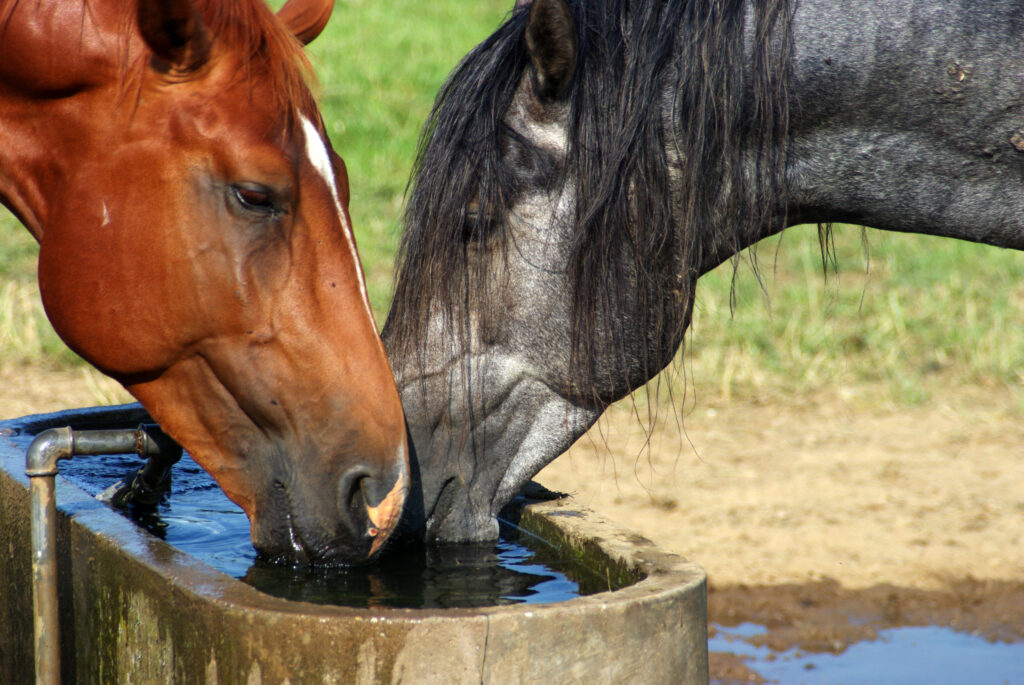
Hydration is critical to every horse’s health and performance, especially during stressful events like travel, showing, and hospitalization. At the 2025 American Association of Equine Practitioners (AAEP) Convention, Kylie Yancey, DVM, of Colorado State University, described a study assessing an effective and noninvasive option for rehydrating horses.
Previous Research
Previous research has explored methods for increasing horses’ water intake. A 2020 study using “sweet tea” (one cup of sweet feed added to the water bucket) showed improved intake compared to using peppermint extract or apple flavoring. In 2022, researchers at Louisiana State University evaluated a novel water additive (Gallagher’s Water) containing sugar, alfalfa, and electrolytes (sodium and potassium chloride; maltodextrin; calcium and magnesium citrate; zinc and copper gluconate). The horses that received this supplemented water drank 33 gallons in 72 hours compared to 20 gallons consumed by the control group.
Study: Can a Novel Water Additive Increase Voluntary Water Intake?
In this study, Yancey and colleagues examined whether the novel water additive (NWA) could increase a horse’s voluntary water intake compared to sweet tea or plain tap water. The researchers hypothesized that the NWA would result in a 10% increase in water intake on Day 1 and a 5% increase over the study period. Twelve horses aged 2-5 years were included in the five-week randomized crossover study. Each horse was offered one of three room-temperature water options for a five-day period: plain water, sweet tea, and NWA water. There was a one-week washout period between each offering. Voluntary water intake (VWI):
- Increased 50.8% for NWA compared to plain water.
- Increased 47.6% for NWA compared to sweet tea.
- Increased 5.2% for sweet tea compared to plain water.
- Manure output did not differ between the three groups.
Horses drank more than 12.5 gallons per day of the NWA water, and they remained consistently interested in the NWA throughout the test period. The sweet tea and control horses also had a positive increase in water intake throughout the study period but did not come close to the VWI for NWA water.
Take-Home Message
The horses preferred NWA to sweet tea or plain water, and they consumed it in great amounts. Yancey noted that many horses drank all the novel water as soon as it was placed in the stall. The study horses were young and confined to a stall, so boredom could account for some of the favorable interest in the NWA water. More studies with a wider range of ages and environments would be beneficial.
Researchers recommend introducing the water additive to horses prior to stressful events so they are familiar with the different taste. NWA might help mask the smell or taste of medicines. It is safe to administer up to four packets a day depending on the horse’s needs. The normal Gallagher’s Water product has sugar in it (as much as 2% of a horse’s daily sugar content), but a “no sugar added” version is now available for horses with insulin dysregulation. In summary, noninvasive tools like this novel water additive can positively influence horses’ voluntary water intake to help prevent dehydration.
Related Reading
- Research Spotlight: Preventing Heat Stress in Athletic Horses
- Commercial Feed Additive Aids in Equine Gastric Ulcer Healing
- Transport Effects on Endurance Horses
Stay in the know! Sign up for EquiManagement’s FREE weekly newsletters to get the latest equine research, disease alerts, and vet practice updates delivered straight to your inbox.