Equine back pain associated with impinging dorsal spinous processes can be challenging to manage. Many horses decline in their performance and display behavioral issues. Horses typically develop pain when an interspinous space is less than 4 mm due to bone remodeling. Surgery to resect the bone or cut the interspinous ligament can help reduce this impingement; surgical management is reportedly successful in 72-100% of patients.
Medical management strategies include interspinous and/or systemic injections of corticosteroids and analgesics. Horses return to riding in 42-86% of cases with medical management.
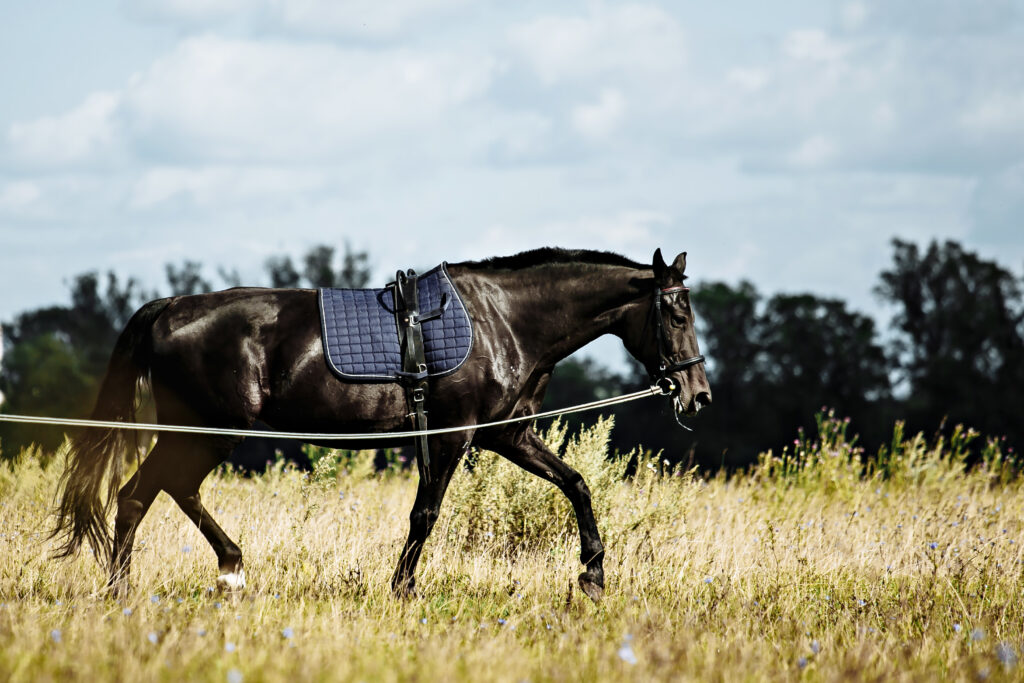
Dynamic mobilization exercises (DMEs) coupled with longeing are often incorporated into the horse’s rehabilitation program. These exercises improve the cross-sectional area of the multifidus muscles, which are important to dynamic spinal stabilization.
Study Population
In a recent study, researchers in Australia compared the success rates of different treatment modalities for overriding dorsal spinous processes (ORDSP) in returning horses to ridden work.
The researchers distributed a written questionnaire between Feb. 1-May 31, 2024, to owners of horses diagnosed with ORDSP. Fifty-one of the owners who completed the questionnaire were included in the study. Many of the horses trained in eventing (13/51) and dressage (12/51); most were Thoroughbreds (32/51) with a median age of 10 at diagnosis. Twenty-nine horses trained at a low level, and 22 trained at an intermediate to high level.
Return to Ridden Work
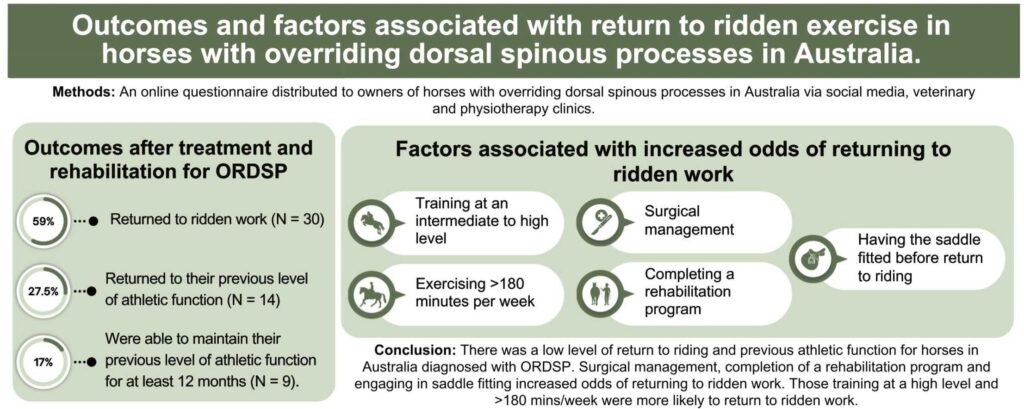
Of the 51 horses, 59% were able to return to ridden work between one and 52 weeks (median of 12 weeks):
- Return to previous level of athletics = 27% at a median time period of 27.5 weeks.
- Horses able to train at their previous athletic level for at least 12 months after treatment and rehabilitation = 17% of the total population, which includes retired horses (14/51).
- Of the horses not able to return to their previous exercise level, 64% maintained training at a lower level for 12 months.
- Some (14/51) horses were retired at the time of diagnosis, often due to veterinarian-provided advice without any intervention. All the retired horses were low-level athletes.
Only 55% of the horses in this study received veterinary treatment. Once the retired horse numbers were removed from the study, 37% returned to a previous level of athletic function, with 27% continuing this previous athletic level for 12 months.
Factors That Increase the Odds of Returning to Ridden Work
The authors identified five factors that increased the odds of a horse with ORDSP returning to ridden work after treatment and rehabilitation:
- Training at an intermediate to high level of work. These horses were more likely to receive veterinary treatment (81%) compared to low-level horses (34%).
- Exercising more than 90 minutes per week. These horses likely had improved fitness and strength. In addition, these higher-level horses had less severe signs of ORDSP at the time of diagnosis compared to low-level horses, possibly due to early recognition coupled with motivated owners seeking optimal care.
- Surgical management. All these horses also completed a rehabilitation program, with 84% returning to ridden work within a 14-week median time frame.
- Completion of a rehabilitation program for three weeks. The rehabilitation program might include pole work, in-hand or longeing work, DMEs, stretching, and/or hill work. Combinations of these exercises were implemented in 96% of the cases following a rehabilitation program. About half of the horses completed a rehabilitation program and, of these, 84% received either surgical or medical treatment and returned to ridden work. If no rehabilitation program was included in their management, only 32% returned to ridden work.
- Accurate saddle fitting following treatment. Seventy-six percent of the horses that returned to work were fitted with an appropriate saddle.
Eighty percent of horses that received medical treatment returned to ridden work in a median time frame of 12 weeks, with 60% also completing a rehabilitation program. For the seven horses treated conservatively, it took 45 weeks (median) to return to work. Three of the seven also completed a rehabilitation program.
Final Thoughts
Overall, the authors reported that data from the owner survey revealed a lower return rate to riding and a much lower return to previous athletic level compared to other studies on managing ORDSP.
Reference
Harkness GL, McGowan CM, Goff L. Survey of factors associated with return to ridden exercise in horses with overriding dorsal spinous processes in Australia. Journal of Equine Rehabilitation June 2025, vol. 3; DOI: 10.1016/j.eqre.2025.100031
Related Reading
- Conservative Management and Rehabilitation Strategies for Equine Back Pain
- Diagnostic and Treatment Modalities for Overriding Spinous Processes in Horses
- Horse Owners Share Management Approaches for Kissing Spines
Stay in the know! Sign up for EquiManagement’s FREE weekly newsletters to get the latest equine research, disease alerts, and vet practice updates delivered straight to your inbox.