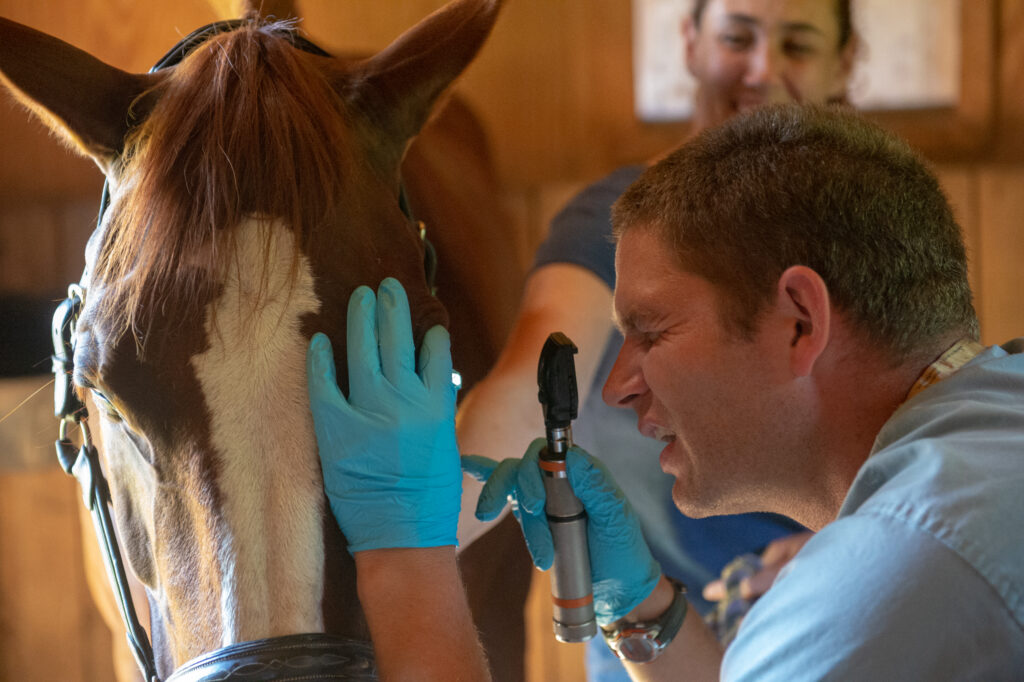
Antimicrobial resistance is not just a systemic problem in human and veterinary medicine; it is also associated with ulcerative corneal disease. Researchers at Utrecht University in the Netherlands evaluated manuka honey’s antibacterial activity with and without antibiotics commonly used to treat ulcerative keratitis in horses.
Predominant ophthalmic pathogens known to be resistant to antimicrobial drugs include Streptococcus spp., Staphylococcus spp., and Pseudomonas aeruginosa. Previous studies have reported an association between acquired antibacterial resistance and prior topical antibacterial treatment. Until now, no antibacterial resistance has been described for manuka honey, even when sub-inhibitory concentrations are used. With that in mind, the researchers assessed the efficacy of adding sterile, preservative-free manuka honey for corneal treatment because of its reported antibacterial activity as well as its antioxidant and anti-inflammatory effects.
In Vitro Study
The study was performed on bacterial isolates in vitro. First, the researchers determined the minimal inhibitory concentration (concentration that inhibits growth of the bacteria) and the minimal bactericidal concentration (concentration at which bacteria are killed) of manuka honey. Next, they tested the effect of manuka honey on the antibacterial properties of different topical antimicrobial agents, combining a subinhibitory concentration of 5% manuka honey with the following antimicrobial drugs: chloramphenicol, tetracycline, gentamicin, ofloxacin, tobramycin, cloxacillin, and fusidic acid
The authors reported that “a solution of 12% manuka honey effectively inhibited the growth of bacteria commonly found in equine ulcerative keratitis, regardless of their antimicrobial resistance profile.” (The minimal inhibitory concentration of manuka honey was 12% for all tested bacteria.) Manuka honey displayed bactericidal properties in concentrations from 8-28%, for one methicillin-resistant coagulase-negative Staphylococcus (S. sciuri).
Another important finding was that at very low concentrations of manuka honey (4%), bacterial growth seemed to be enhanced, especially for Streptococcus spp. Combining 5% manuka honey with tetracycline, chloramphenicol, or fusidic acid enhanced the antibacterial effect against Staphylococcus spp. (including methicillin-resistant isolates). The antibacterial effect of ofloxacin and cloxacillin appeared slightly reduced when combined with 5% manuka honey for several but not all bacteria. The researchers saw no effects from combining manuka honey with gentamicin or tobramycin.
Take-Home Message
The authors concluded that manuka honey has inhibitory and bactericidal activity against multi-resistant bacteria that are commonly found in equine corneal disease. It could therefore be a potential topical drug to treat infectious keratitis. It is important to conduct more studies to determine the optimal concentration of topical honey, as the tear film will dilute the formulation, and low concentrations of manuka honey could potentially be counterproductive. A clinical study would be helpful to determine if the equine eye tolerates manuka honey application; in humans, initial application can cause transient ocular stinging.
More studies both in vitro and clinically in horses might shed light on favorable applications of manuka honey to treat infected corneal ulceration.
Reference
Barvelink M, Brok B, Djajadiningrat-Laanen SC, et al. In Vitro Activity of Manuka Honey, Either Alone or in Combination With Topical Antibiotics, Against Bacteria Commonly Found in Equine Ulcerative Keratitis. Veterinary Ophthalmology Nov 2025; DOI: 10.1111/vop.70111.
Related Reading
- Corneal Cross-Linking to Treat Ulcerative Keratitis in Horses
- Antimicrobial Stewardship With Honey
- Impact of Topical Antibiotics on the Equine Ocular Microbiota
Stay in the know! Sign up for EquiManagement’s FREE weekly newsletters to get the latest equine research, disease alerts, and vet practice updates delivered straight to your inbox.