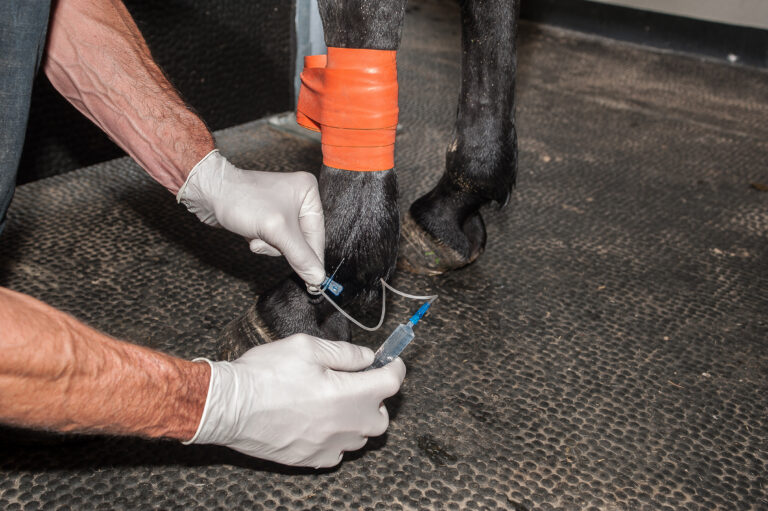
An open access article recently published in Pathogens discussed “Detection of Neospora caninum Infection in Aborted Equine Fetuses in Israel.”
Abstract
“In horses, Neospora caninum and Neospora hughesi have been associated with fetal loss, and neurological disease, respectively. This study investigated the role of Neospora spp. infection in equine abortion in Israel. The presence of anti-Neospora spp. antibodies was evaluated in 31 aborting mares by indirect fluorescent antibody test (IFAT) and the presence of parasite DNA in their aborted fetuses was evaluated by polymerase chain reaction (PCR), using two target loci (ITS1 and Nc5).
“The seroprevalence found in aborting mares was 70.9% and the prevalence by DNA detection in the aborted fetuses was 41.9%. Transplacental transmission from positive mares to their fetuses was 45.4% (10/22), while 33.3% (3/9) of fetuses of seronegative mares also tested positive for Neospora. The use of two PCR targets improved the sensitivity of parasite detection, and positive samples were identified by sequence analyses as N. caninum.
“These finding suggest that N. caninum could be a significant cause of abortion in horses, and that transplacental transmission in horses is an important way of transmission of N. caninum. The results presented here demonstrated the necessity to use several tests concurrently, including serological and molecular assays in order to confirm the involvement of Neospora in mare abortions.”
You can download the open access article here.