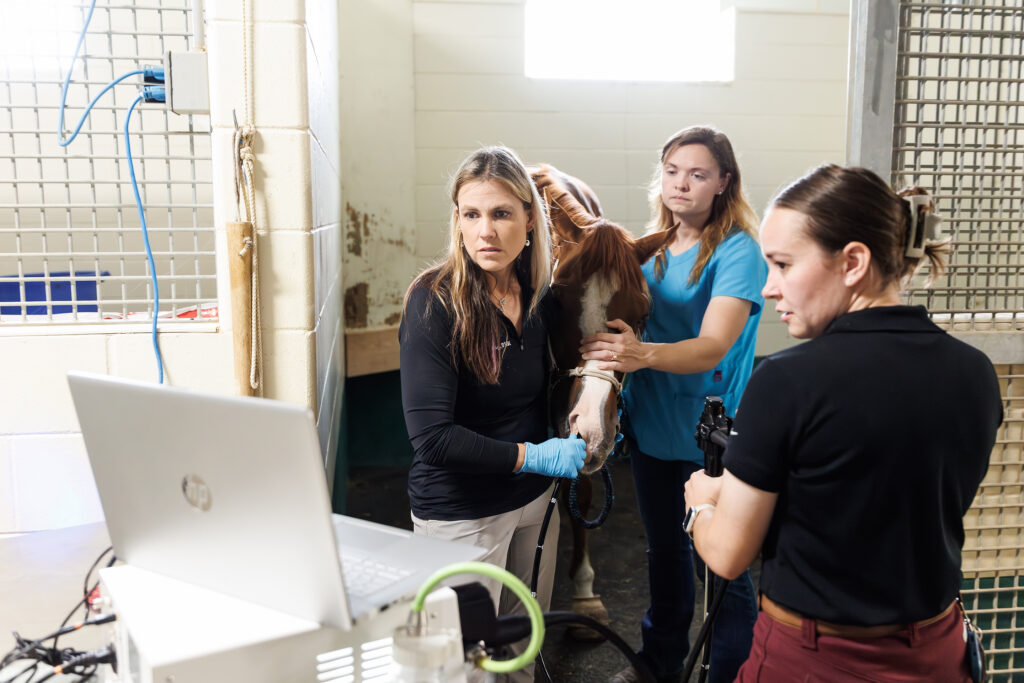
Maximizing technician utilization in equine practice is not just a smart staffing strategy; it’s also central to the long-term sustainability of the profession. In a webinar presented by Hilltop Bio, Kelly Zeytoonian, DVM, MBA, CERP, of Starwood Equine Veterinary Service and Consulting, frames technician utilization as a solution to some of the most pressing challenges facing equine veterinary medicine today: Workforce shortages, inefficiencies in delivery of care, declining work-life balance, and financial constraints.
Industry Trends Highlight Workforce Challenges
Compared to other veterinary sectors, equine practices rely disproportionately on veterinarians to generate revenue: Approximately 84% of income is directly tied to a doctor’s billable activities. This is notably higher than in companion animal or food animal practices, where technicians and ancillary services contribute more significantly to revenue streams.
At the same time, equine practitioners work more hours than their counterparts in other veterinary fields, averaging nearly 58 hours per week, yet they generate the lowest revenue per hour. This combination of long hours and relatively low efficiency creates a system that is difficult to sustain.
Compounding the issue, 42% of equine veterinarians report a desire to reduce their working hours by 10-20 hours per week, primarily due to concerns around mental health and work-life balance, said Zeytoonian. However, she pointed out, given current staffing shortages, reducing hours without structural change risks either underserved clients, increased service costs, or unrealistic hiring expectations.
“To me, the future of equine practice will really depend heavily on how we train, support, and utilize our technicians,” she said.
The veterinary technician workforce, however, presents a paradox. While demand is projected to grow (by approximately 9% through 2034), shortages persist across all sectors. Additionally, technician retention mirrors trends seen in veterinarians, with many leaving the profession within five to seven years.
Younger workers, who make up a large portion of the technician workforce, increasingly prioritize meaningful work, professional growth, and supportive environments. Without these elements, said Zeytoonian, practices risk both turnover and disengagement.
Despite workforce shortages, technician utilization in equine medicine remains low. Approximately half of practices do not routinely use technicians in ambulatory settings, and most do not involve them in after-hours emergencies, she said.
This underutilization contrasts sharply with companion animal practice, where technician and support staff numbers—and responsibilities—are significantly higher. As a result, equine veterinarians spend a substantial portion of their time on nonbillable tasks, limiting efficiency and increasing burnout risk.
Financial and Operational Benefits of Technician Utilization
Zeytoonian emphasized that increasing technician utilization is not only feasible but financially advantageous. Practices employing more support staff often report both increased gross revenue and higher veterinarian salaries.
Through her own experience, she demonstrated that working fewer days a week with additional technician support has led to increased productivity and revenue generation without negatively impacting profitability. Zeytoonian said improved efficiency allows her to offer more procedures and services within a shorter time frame.
“I can work less but have additional help, which makes me safer and more efficient, and I can share some of those responsibilities with my techs, who then feel better utilized,” she said. “It’s a win-win-win situation.”
Even modest increases in technician-led services can generate substantial revenue and offset salary increases. As a rule of thumb, a $1/hour raise requires approximately $3,000 in additional annual revenue to break even, which Zeytoonian said is an achievable target through routine services, such as bandage changes, laser therapy, recheck exams, vaccine administration, and laboratory sample collection and monitoring.
Expanding Roles: Practical Applications
Expanding technician responsibilities begins with understanding state practice acts and clearly defining allowable tasks. Once established, practices can incrementally increase technician involvement in both clinical and operational workflows.
Examples of expanded roles include:
- Conducting preliminary physical exams and collecting blood samples and vital parameters.
- Setting up equipment and assisting with diagnostic imaging.
- Administering medications, vaccinations, and intra-muscular injections.
- Placing catheters and setting up fluids.
- Wound care, foot wraps, and bandaging.
- Performing in-house lab tests, such as SAA, bacterial cultures, CBCs, fecal exams, and cytology.
- Performing aseptic preparation for procedures.
- Monitoring patients during procedures.
- Managing follow-up appointments such as metabolic panel rechecks and lab tests.
- Writing invoices, scheduling appointments, and communicating care instructions and test results to clients.
More advanced models include technician-led appointments under indirect supervision, such as recheck exams or chronic condition monitoring. These appointments maintain continuity of care while freeing veterinarians to focus on higher-level tasks.
Additionally, technician specialization, such as gaining certification to perform bodywork services, can create entirely new revenue streams for the practice.
Nonfinancial Benefits: Safety, Care, and Culture
Beyond financial gains, improved technician utilization enhances safety, patient care, and team well-being, said Zeytoonian.
Safety is a critical concern in equine practice, with injury cited as a leading reason veterinarians leave the field. Skilled technicians improve patient handling and reduce risk during procedures.
“An additional intangible benefit to me is better patient care and client communication,” she said. “A veterinarian can finish up their examination and sit at the back of the truck and have a conversation with the trainer or the owner and give them our full and undivided attention while the tech team is packing up, dispensing medications, or putting on bandages. We have that time to discuss findings and treatment plans, which enhances compliance by our owners.”
Team dynamics also benefit. Shared experiences, such as challenging cases or demanding clients, between practitioners and support staff contribute to emotional support and reduce professional isolation, said Zeytoonian.
Importantly, she added, technician support is now an expectation among associate veterinarians. Practices lacking adequate support staff might struggle to recruit and retain new graduates.
Compensation, Career Development, and Retention
Despite increasing wages, technician compensation in equine practice remains lower than in other veterinary sectors. This disparity contributes to recruitment and retention challenges.
To address this, Zeytoonian advocates for structured career pathways. Implementing tiered compensation systems based on skill acquisition rather than tenure alone provides clear advancement opportunities and incentivizes professional growth. She said this approach also fosters a collaborative culture, where team members support each other’s development to achieve higher skill levels and compensation.
Zeytoonian explained that successful implementation of expanded technician roles requires:
- Clear protocols for communication, supervision, and decision-making.
- Defined expectations for clinical scenarios and escalation thresholds.
- Dedicated scheduling for technician-led appointments.
- Client education to build trust in technician-provided services.
- Ongoing training through internal programs and industry partnerships.
Measuring outcomes is essential, she added. Practices should track productivity, revenue contributions, and employee engagement to evaluate success and refine their approach.
Take-Home Message
The future of equine practice depends on transitioning from a veterinarian-centric model to a collaborative, team-based approach. Technician utilization is not merely about efficiency, said Zeytoonian; it’s about creating a safer, more sustainable, and more rewarding work environment for everyone involved.
“If we really want our equine practices to remain viable for ourselves and our employees, it’s time that we move forward with this team model of veterinary medicine,” she said.
By investing in technician training, expanding their roles, and providing meaningful career development, practices can address workforce shortages, improve financial performance, and enhance overall quality of care.
Related Reading
- The Business of Practice: Utilizing Licensed Veterinary Technicians
- How Vet Tech Development Enhances Your Equine Practice
- So You Want to Be an Equine Veterinary Technician?
Stay in the know! Sign up for EquiManagement’s FREE weekly newsletters to get the latest equine research, disease alerts, and vet practice updates delivered straight to your inbox.