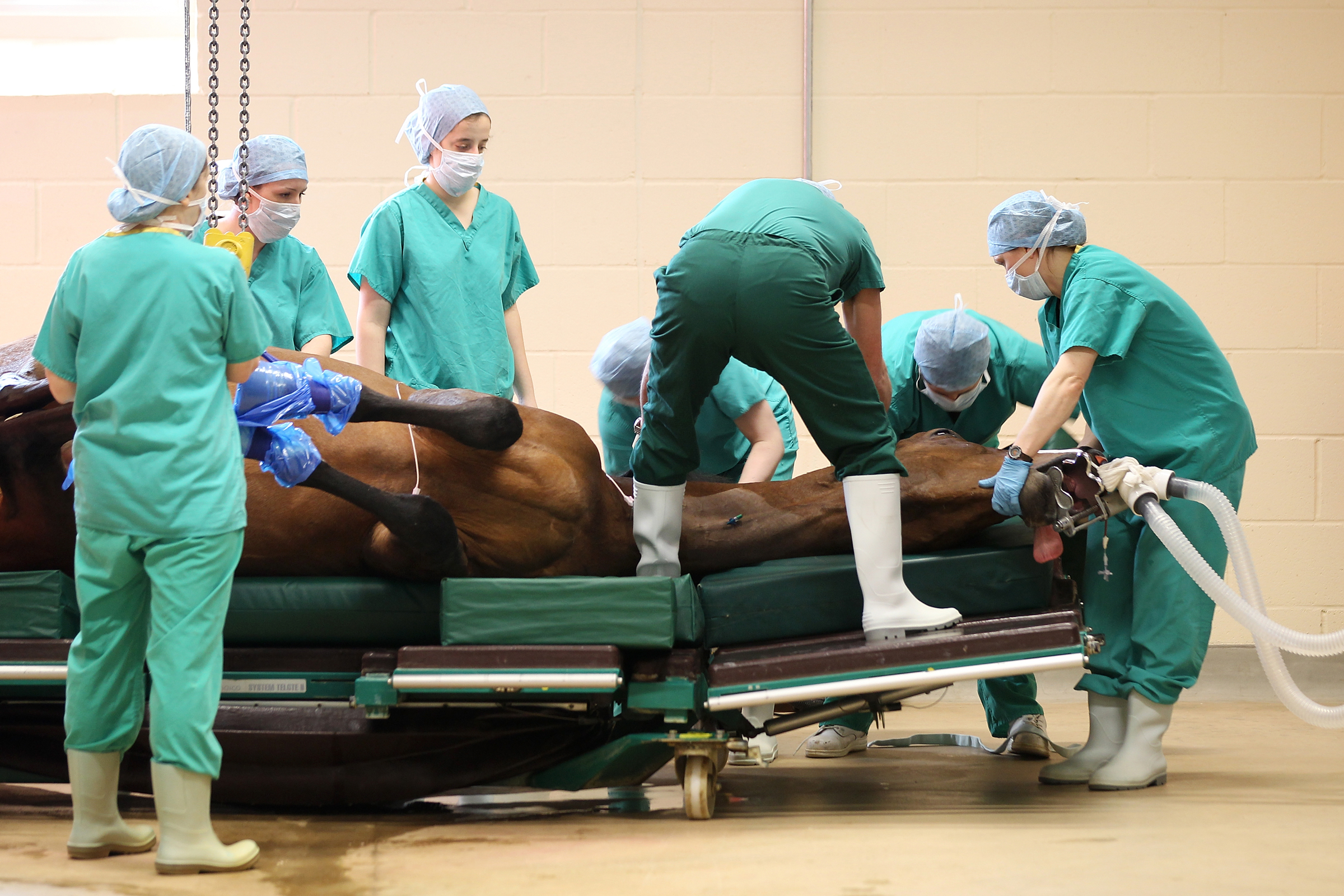
A recent research study titled “Sequential bacterial sampling of the midline incision in horses undergoing exploratory laparotomy” was published in the Equine Veterinary Journal. The article was authored by Isgren, C.M.; Salem, S.E.; Townsend, N.B.; Timofte, D.; Maddox, T.W.; and Archer, D.C.
In the study, a total of 31 horses undergoing exploratory laparotomy due to signs of colic at The University of Liverpool Equine Hospital during a 12-month period were included. Swabs from the ventral midline of all horses were collected for culture and sensitivity immediately after clipping, after aseptic preparation for surgery, after closure of the linea alba, after closure of the skin, immediately after recovery from general anaesthesia and every 48 hours post-surgery at the time of abdominal bandage changes.
A wide range of bacterial species were cultured both intra‐operatively and immediately following recovery. Following aseptic preparation of the surgical site, a positive culture was obtained from only one horse.
Of the 22 horses that underwent an enterotomy or anastomosis, 16 (73%) had a negative culture immediately following incisional closure.
Seven horses (22.6%) developed surgical site infection (SSI), but a positive culture from an intra-operative swab or immediately following recovery did not predict the development of SSI. The prevalence of a positive bacterial culture result increased over time even in the absence of SSI, likely due to bacterial recolonization of the skin.
Bottom line: Incisional contamination alone is unlikely to cause SSI in horses undergoing exploratory laparotomy.
For more information on this research visit Wiley online library.