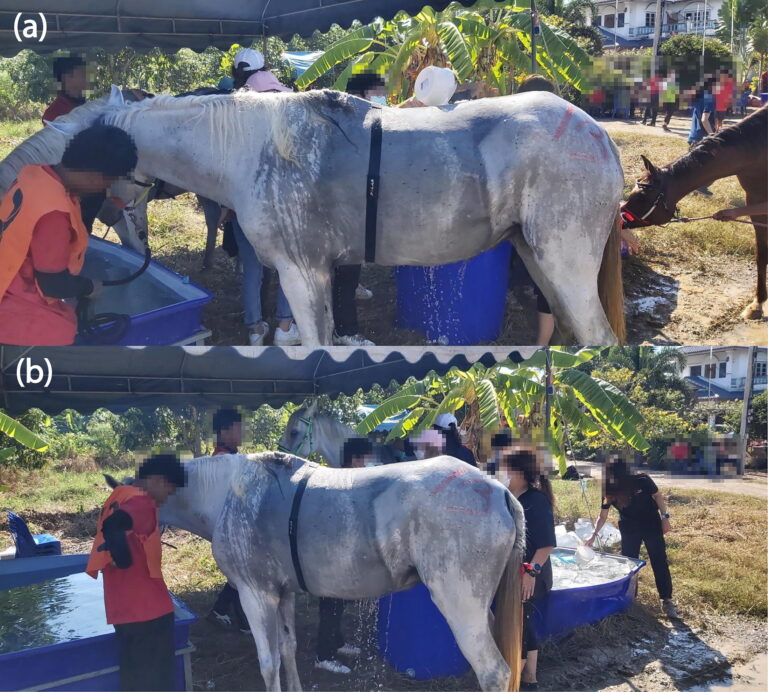
In efforts to ensure a painless, easy death for equine patients, a case study on one suffering horse used a combination cocktail to accomplish this end. The euthanasia was conducted at the Bangladesh University Veterinary Teaching Hospital using intravenous xylazine hydrochloride (0.1 mg/kg; 20mg/ml) and thiopental sodium (10 mg/kg; 25% solution) [Rahman, MA.; Rahman, MT.; Saha, M.; et al. A case report on euthanasia of a rescued horse using xylazine hydrochloride and thiopental sodium. Res. Agric. Livest. Fish Aug 2022, 9 (2): 213-219].
Common U.S. Euthanasia Drugs
Sodium pentobarbital is a common equine euthanasia drug in the United States. It can cause some level of excitement in horses that do not also receive sedation. The addition of xylazine mitigates this response. Other euthanasia drugs include potassium chloride, saturated magnesium sulfate and chloral hydrate. All of these drugs have potential adverse effects, especially if not pre-medicated with xylazine. Many countries have not approved some of these options due to the potential for violent reactions from the horse that put people at risk.
Thiopental Sodium for Equine Euthanasia
A different barbiturate, thiopental sodium, is commonly used intravenously to achieve anesthesia. The Netherlands and Belgium have approved it for euthanasia. In this study, the authors explained that they administered xylazine first, and then immediately followed with thiopental via rapid intravenous administration. Using xylazine initially might enable the use of a lower dose of thiopental. They report that palpebral reflex, lacrimation and nystagmus became absent within 2-5 seconds following thiopental administration. Respiration ceased completed within 15 seconds. Heartbeats ceased after 3 minutes and 40 seconds. Clinical death was declared within four minutes.
In summary, the authors state that this combination of xylazine and thiopental results in rapid, smooth loss of consciousness and death with no reactions or excitement. They conclude that “this is a humane and safe technique for sedating and euthanizing horses.”