This article originally appeared in the Summer 2026 issue of EquiManagement. Sign up here for a FREE subscription to EquiManagement’s quarterly digital or print magazine and any special issues.
Equine veterinary medicine has a long-standing reputation as an all-consuming vocation that demands great personal sacrifice and leaves little time for other pursuits. For passionate equestrians who choose to become horse doctors, riding and showing can quickly slip down the priority list.
But at a time when professionals value work-life balance more than ever, busy veterinarians don’t have to choose between building a sustainable career and pursuing their goals in the saddle. In fact, the two can often go hand in hand thanks to a concept called work-life integration—blending personal and professional responsibilities to increase flexibility (AAEP 2024; Fallon-O’Leary 2025). We’ve spoken with four established practitioners who’ve overcome challenges to merge their professional responsibilities with their personal riding goals.
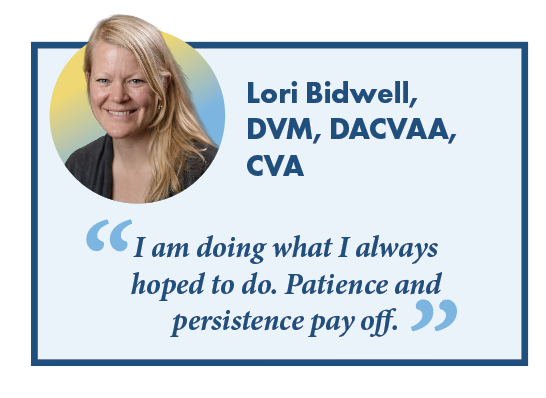
Lori Bidwell, DVM, DACVAA, CVA
Bidwell is a partner and veterinarian with East West Equine Sports Medicine, a five-doctor ambulatory practice based in Lexington, Kentucky. They serve as the official veterinarians for the fall and winter hunter/jumper circuits at the Desert International Horse Park in Thermal, California, and at the summer Great Lakes Equestrian Festival hunter/jumper circuit in Traverse City, Michigan.
Bidwell currently competes as an amateur in the 1.20 and 1.30 meter jumper divisions and co-owns a hunter/jumper breeding and training farm with her husband, fellow veterinarian Duncan Peters, DVM, MS, DACVSMR.
How do you incorporate riding into your daily life as an equine veterinarian?
Riding is the most important part of my day. For my own mental health, I try to ride every day, regardless of the work schedule. When we are at horse shows—nine months out of the year—I typically ride first thing in the morning and compete later in the day, depending on the show schedule. My husband and I handle most of the barn work when we are at horse shows. We do have a full-time farm manager in Kentucky who helps us when we are home and takes care of things when we are away.
Are competitions part of your professional workflow or time away from work?
Competition and work are almost always together for me. We work [as veterinarians] at most of the events where I compete. We are very fortunate that our life is at a horse show.
Has being a rider shaped how you practice veterinary medicine?
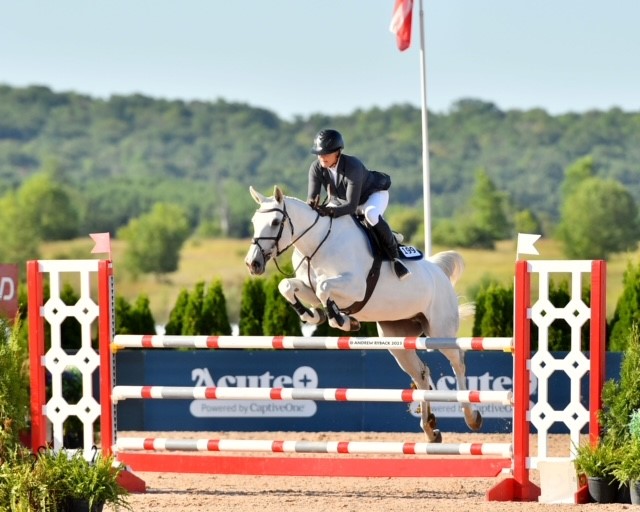
Riding has definitely helped shape my practice. I think I have a better understanding of why horses get sore or injured, and I know how to help make them comfortable. My horses have taught me so much about what they need for their mental and physical health, especially traveling long distances and being at [show] circuits for long durations.
What have you found to be the biggest professional benefits of being an equine practitioner who also rides?
Networking, having a better understanding of equine biomechanics, clients finding me relatable, and being able to travel to horse shows to work and compete. As an added benefit, much of what we do can be written off for [business] tax purposes.
Have you encountered challenges balancing riding and competing while working as a veterinarian?
Absolutely. I have a tight schedule at times, and [veterinary] emergencies (or perceived emergencies) make things challenging. I’ve learned that while riding is important to me, it is not brain surgery. I can always compete another day. I have also learned to say ‘no’ or ask an associate for help. I was diagnosed with non-Hodgkin lymphoma in 2023, and that has definitely changed my view on life. I used to run myself ragged, squeezing in riding and working crazy hours. I am very fortunate that after two-and-a-half years of chemotherapy, I am stronger now and able to step back a bit from work—thanks to very qualified veterinary associates who can do what I do, but better—and so I am focusing most of my time on riding.
Do you believe this integrated lifestyle—practicing, riding, and competing—is sustainable long-term?
Yes, very sustainable. That’s because I have learned to prioritize what is important to me. Too many veterinarians put riding at the bottom of their priorities. I understand that needs to happen when you are raising kids—but as you get older, you need to make riding happen while you have the good health to do it.
What recommendations do you have for veterinary students or new grads who aspire to practice medicine while continuing to ride?
Make it happen. I used my student loans to pay for my education, my rent, and my horse’s board. Riding helped keep me sane. I wasn’t able to compete as much through my internship, residency, or early years of practice, but I always found time to ride—even in the dark. Now, I am doing what I always hoped to do. Patience and persistence pay off.
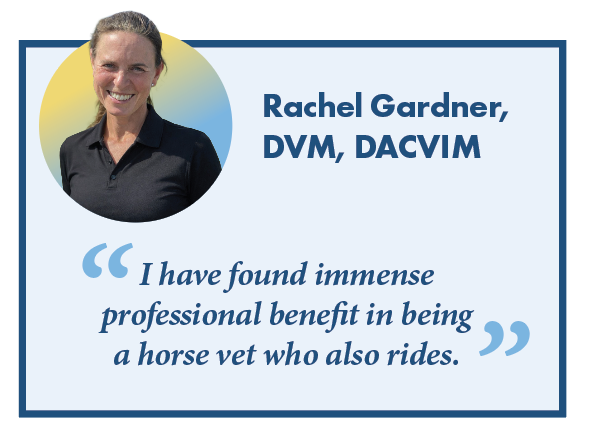
Rachel Gardner, DVM, DACVIM
Gardner is a board-certified internal medicine specialist at BW Furlong & Associates in Oldwick, New Jersey, practicing both inside the equine hospital and in an ambulatory setting. Her two retired horses and one miniature donkey live at home, where she provides all of their care herself. She boards her performance horse, Poet, at her trainer’s farm.
While her equestrian background includes jumpers, low-level eventing, polo, and a variety of other riding experiences, Gardner has found her place in the dressage ring competing as an amateur.
How do you incorporate riding into your daily life as an equine veterinarian?
Since my days are frequently unpredictable, I plan to ride after work and on the weekends. It is subject to change based on work and emergencies, which always come first, so I never have a consistent riding schedule. My trainer’s farm is close to our hospital, so if I’m called for an emergency, I can hop off and get there quickly. I’m fortunate to have a trainer who is understanding, works with my unpredictable schedule, and is committed to helping me achieve my goals despite these limitations.
Are competitions a part of your professional workflow or time away from work?
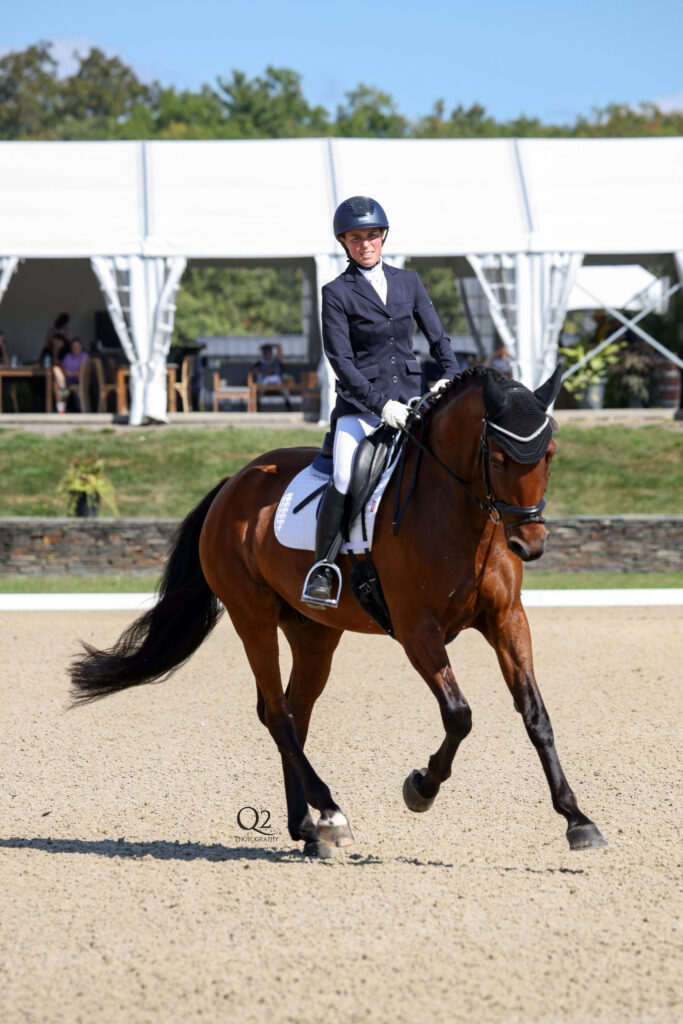
I do not go to competitions with the intent to work; however, I always prefer to have my truck and equipment with me so that I can work if the need arises. [At horse shows], I find myself surrounded by incredible clients, riders, and trainers who are conscientious and respectful of my time and my own needs, which makes it easy, and incredibly fun, to be both a competitor and a veterinarian.
Has being a rider shaped how you practice veterinary medicine?
Yes, absolutely. It has given me a much deeper understanding of what goes into a competition horse and has given me more drive to see my clients succeed … even when they are beating me in the show ring!
What have you found to be the biggest professional benefits of being an equine practitioner who also rides?
I have found immense professional benefit in being a horse vet who also rides. I think many clients recognize that I have a deep understanding of the time, effort, expertise, and financial resources that have gone into their equine partner to get them to where they are. I have also gained many wonderful and dedicated clients through my riding experiences and at competitions.
Have you encountered challenges balancing riding and competing while working as a vet?
The three biggest challenges that I have while balancing riding and competing with working as a vet are time, time, and time! It can definitely be difficult to fit everything in. The other challenge I face is when my own horse is injured or requires treatment. You’ve heard, “the cobbler’s children have no shoes,” right?
Do you believe this integrated lifestyle is sustainable long-term?
I have demonstrated that it is. I’ve been a veterinarian for 25 years and at my current practice since I finished my residency 21 years ago. I did not ride regularly during vet school, my internship, or residency but have been since starting in practice.
What recommendations do you have for veterinary students or new grads who aspire to practice medicine while continuing to ride?
I live by the phrase “work hard, play hard.” I am fortunate to own and ride horses, but I have worked—and continue to work—very hard to make it happen.
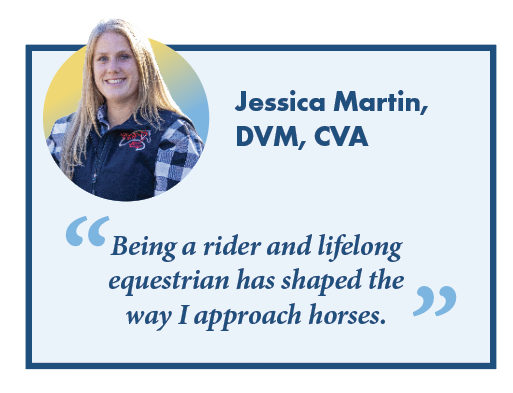
Jessica Martin, DVM, CVA
Martin is an associate veterinarian at Mountain Pointe Equine Veterinary Services, a three-doctor equine ambulatory practice based in Long Valley, New Jersey. Her professional interests include equine dentistry and chiropractic care.
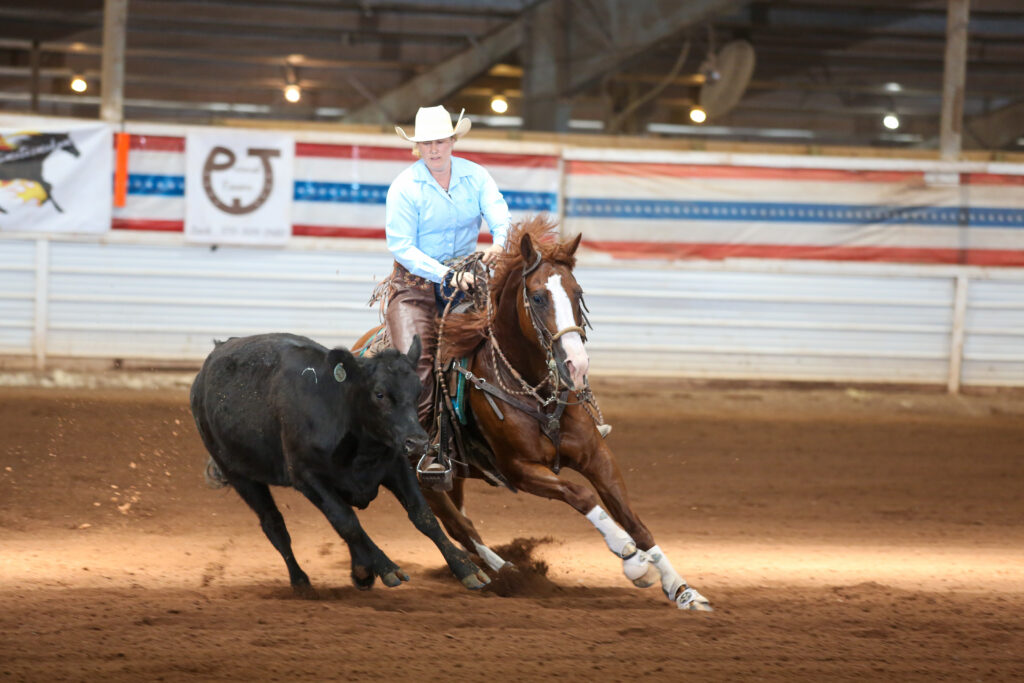
An avid equestrian since age 4, Martin has competed across multiple disciplines, currently as a nonprofessional within the National Reined Cow Horse Association. She also serves as a board member of her local organization, the Atlantic Reined Cow Horse Association.
How do you incorporate riding into your daily life as an equine veterinarian?
I make riding a priority and schedule rides throughout my week depending on my work schedule. Our practice shares an on-call schedule with a neighboring practice [as part of an emergency cooperative], which has helped provide our veterinarians with more time off on evenings and weekends. I keep my horse boarded nearby and do most of the training myself. I don’t have access to cattle at the boarding facility, but our practice’s four-day workweek allows me to trailer my horse regularly for lessons and cattle practice.
Are competitions a part of your professional workflow or time away from work?
I try to schedule competitions as time away from work. That said, if a veterinary emergency arises that needs immediate attention, I typically jump in to assist and stabilize the horse.
Has being a rider shaped how you practice veterinary medicine?
Being a rider and lifelong equestrian has shaped the way I approach horses and given me a more realistic perspective. It’s given me patience and understanding of equine behavior and what makes horses thrive. It’s also helped me connect with clients, understand their goals and setbacks, and provide real-life examples and feedback on treatments and medications that I’ve personally used.
What have you found to be the biggest professional benefits of being an equine practitioner who also rides?
The main benefits that I have found are being relatable to clients and networking. Through my personal riding and competitions, I have formed many relationships that have developed into trusting client relationships.
Have you encountered challenges balancing riding and competing while working as a veterinarian?
There can be challenges when you have personal relationships with clients, such as maintaining appropriate boundaries at both boarding facilities and competitions. The most common is the “while you’re here” scenario, when a horse owner might ask for medical advice or veterinary services during your personal time. I’ve worked hard to maintain boundaries, which includes redirecting these clients to schedule an appointment for evaluation through our office. I emphasize that their horse will receive the best care and attention when there is scheduled time to do so, with access to my skilled technicians and all the appropriate equipment.
Do you believe this integrated lifestyle is sustainable long-term?
I do believe that this lifestyle is sustainable long-term, depending on priorities. These priorities can shift throughout a veterinarian’s lifetime, depending on both job and family demands. While I can continue this lifestyle, there can be ebbs and flows of burnout in both sectors. This is natural—and, in my opinion, perfectly acceptable—to allow focus and priorities to shift. What keeps me moving forward is the passion that I have for the sport, the group of amazing individuals with whom I compete, and the positive influence that riding has on my daily mental health.
What recommendations do you have for veterinary students or new grads who aspire to practice medicine while continuing to ride?
Define what your own personal boundaries are early on, and stick to them. This will allow you to protect your personal time for training and competition. Be open to forming respectful relationships within your competitive space that may grow into professional relationships. At the end of the day, remember that the reason we are all here is for the love of the horse.
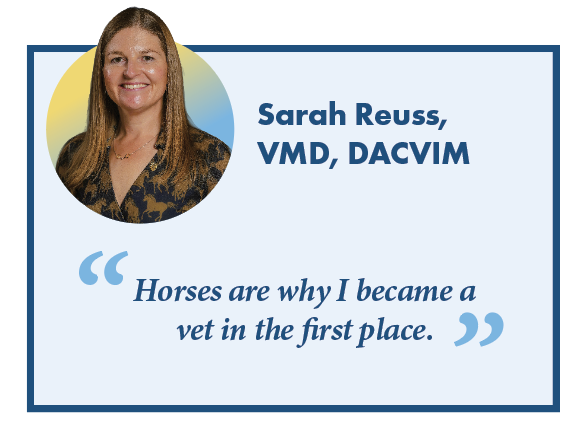
Sarah Reuss, VMD, DACVIM
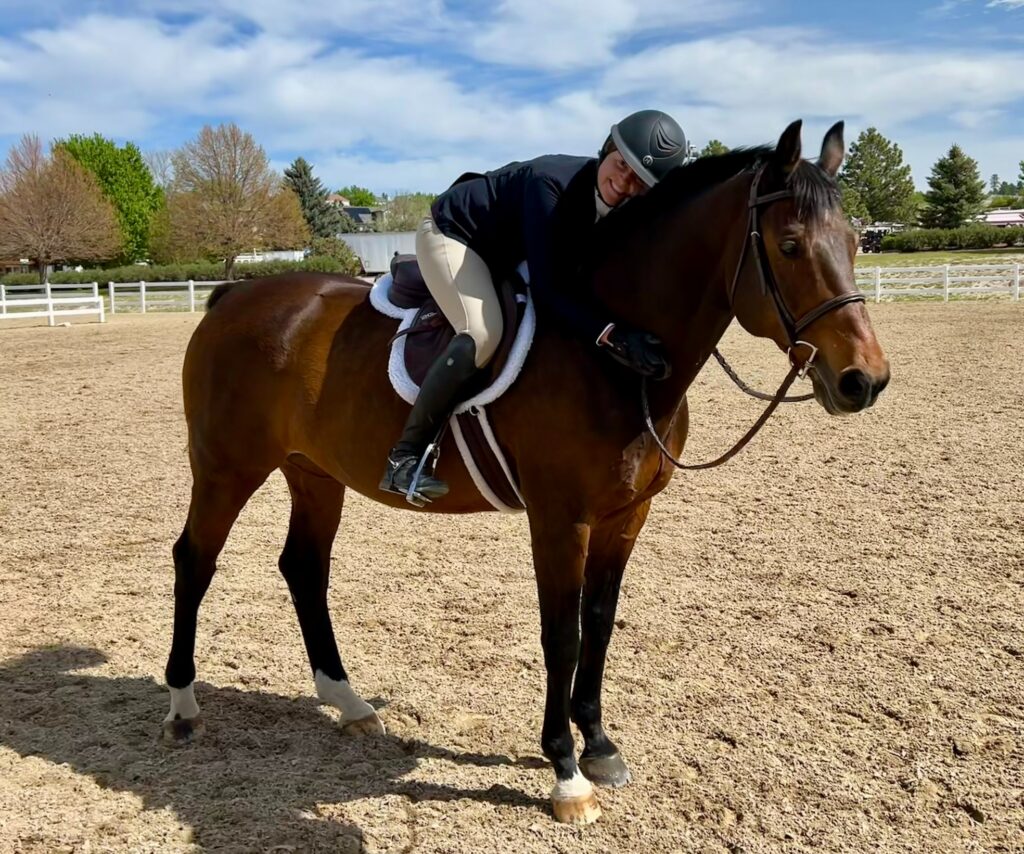
Reuss works as an equine internal medicine specialist and technical veterinarian at Boehringer Ingelheim while also serving as President of the American Association of Equine Practitioners (AAEP). Throughout her veterinary career, she has held roles in both private practice and academia. In the saddle, Reuss is an amateur hunter/jumper rider who competes at local horse shows a few times a year.
How do you incorporate riding into your daily life as an equine veterinarian?
Riding is my very necessary stress relief. I usually ride late afternoons as my transition from “work brain” to “off-duty brain.” I’m fortunate to have an indoor [arena] at my barn, so even in the winter I’m able to ride in the evenings. I try to take a lesson at least once a week. In years past, I have done some winter showing, but the past two years my work travel schedule hasn’t allowed that. My horse Chile is boarded at a local training barn, so if I am out of town or unable to ride, he is still taken care of, which is huge for me. I also still own a retired 25-year-old Dutch Warmblood mare, Vortex, who lives with another veterinarian in her retirement pasture.
Are competitions a part of your professional workflow or time away from work?
Horse shows are mostly my personal time, although I do use them to network. Occasionally, I may be asked to consult on a case, but in general I’m only there spending money, not making any! I do often have my laptop with me, so in between classes I can still get work done.
Has being a rider shaped how you practice veterinary medicine?
Definitely! Having watched horses move for many decades helps when evaluating lame and neurologic cases. And having ridden myself helps me understand what an owner might be trying to describe that they feel under saddle.
What have you found to be the biggest professional benefits of being an equine practitioner who also rides?
I do think being a veterinarian who rides and is obsessed with her own horse allows me to be more relatable and empathetic to owners. I understand the worry that comes along with loving such big, fragile creatures.
Have you encountered challenges balancing riding and competing while working as a vet?
I’m fortunate that my trainer and barn owner have always been protective of my time. At the barn I am Sarah, not Dr. Reuss. But it is easy to get dragged into work when you’re trying to just enjoy your own horse. For me, not currently being in private practice definitely helps. There’s only so much vet work I can do when I don’t have a fully stocked vet truck with me. Mostly, I can triage. I’m always happy to help in a true emergency or, more often, to guide my fellow horse owners on whether something is truly an emergency or if they can wait until the following day to make an appointment. But those boundaries are important.
Do you believe this integrated lifestyle is sustainable long-term?
Absolutely, it’s possible, just don’t expect it to be perfect! Recognize that your ability to balance it all might ebb and flow over time. I didn’t ride at all during my internship and residency. Then there was a period where I was able to show a lot, and that was great. But with my role as AAEP President right now on top of a busy full-time job, I’m allowing myself to not feel pressured to show. That’s probably the hardest part. As veterinarians, most of us are pretty type A and are always pushing ourselves to do more. But it’s OK to sometimes take a step back. I now allow myself to have days when I just groom and snuggle or get on and walk. At the end of the day, horses are why I became a vet in the first place, so I just want to be around them.
What recommendations do you have for veterinary students or new grads who aspire to practice medicine while continuing to ride?
Don’t let anyone tell you it isn’t possible. I know I absolutely heard that throughout my entire education, and it’s just not true. Yes, there are times that it’s hard to find the balance. But I’d argue equine practice gives you some flexibility in your schedule that might be harder to find in a 9-to-5 office job. And no one at work has ever questioned me if I take time off for a horse show or a vet appointment of my own.
Final Thoughts
Bidwell, Gardner, Martin, and Reuss have shed light on the realities of navigating equestrian sport while pursuing a career in equine medicine. Some veterinarians want clear boundaries and a structured schedule that allow them to ride and show their horse on their own personal time. Others find that integrating their professional lives with their time at the barn or in the show ring leads to a more efficient and flexible routine. In either case, most equine practitioners start as passionate, devoted equestrians before pursuing their veterinary studies and careers. For many, staying active in the saddle is a nonnegotiable that requires not only dedication and a strong sense of priorities, but also a supportive and flexible practice that values veterinary satisfaction and retention.
Related Reading
- Opening Doors: What You Can Do With a Veterinary Degree
- Early Career Insights: Making a Four-Day Workweek Work for You
- Are You Burned Out in Equine Practice?
Stay in the know! Sign up for EquiManagement’s FREE weekly newsletters to get the latest equine research, disease alerts, and vet practice updates delivered straight to your inbox.