Over many years and research studies, the top reasons veterinarians avoid or leave equine practice include the lifestyle, required work hours, the need to provide emergency service, and low compensation. The 2026 AVMA Economic State of the Veterinary Profession report shows equine practitioners work an average of 54.8 hours per week, the highest among veterinarians other than those pursuing advanced education such as internships and residencies.
In recent years, efforts have been made to introduce new paradigms in equine practice. Many equine veterinary clinics have responded to the shortage of new graduates joining the profession’s ranks by offering more flexible work schedules, sharing emergency duty through cooperatives, shortening expected work hours, and increasing compensation. The AAEP launched an initiative in 2022 to ensure the sustainability of equine practice, focusing on practice culture, compensation, after-hours responsibilities, internships, and veterinary students. The efforts appear to be paying off. In 2025, 7.8% of new veterinary school graduates chose to begin work as an equine associate or intern. This figure is almost 2 percentage points higher than in 2023 and 2024.
Unfortunately, some new graduates still have experiences that cause them to leave equine practice. As one intern lamented, “Honestly, I am hoping and excited to be treated like a doctor once I finish my internship. The clinic I’m working at currently is understaffed, so they’re using their interns to cover hospital technical roles, which was not what we were promised initially with the internship. I currently just feel used and pretty jaded. I’m hoping I can continue in equine practice and find my love again for the horses.”
“This is exactly what we do not want to happen to young vets,” replied Laura DuVall Molony, DVM, an equine vet for 31 years and owner of Georgia Equine Veterinary Services. “May you find your spark again. It’s a wonderful profession!”
Another equine practice owner chimed in with support: “You will get past this one with more wisdom than you can appreciate right now,” she said. “My first equine job 15 years ago had every red flag you could imagine, including diversion of controlled substances. You have to remember that these are issues with individuals and not with an entire industry. Going forward, you are going to be much sharper at spotting things that may be problematic, and if you stay in it, you have a chance to make a positive change everywhere you go. I, for one, am happy to have you as a colleague today and tomorrow.”
Meaningful Mentorship
Average burnout scores for associates across all types of private practice have decreased year over year since 2021, according to the 2026 AVMA report. Wellness and mentoring initiatives have become mainstream to support veterinarians’ mental health. Programs such as MentorVet and Decade One have provided early-career veterinarians with opportunities to network with peers in the industry.
Most veterinary school graduates are eager to have mentorship as they join equine practice. In the 2024 AVMA Economic State of the Equine Veterinary Profession report, 92% of respondents said mentorship was a reason they accepted a job offer, followed by the people (84%). As diagnostics have become more advanced and clients have become more knowledgeable, the expectations of equine veterinarians’ skill sets have increased. New graduates often need mentoring to feel prepared to satisfy these increased requirements.
Debt and Income
Starting associate salaries in the equine field, which just six years ago averaged $57,952, have increased steadily year over year. In 2025, graduates entering equine associate positions right out of veterinary school, without an internship, reported an average starting salary of $95,611. Equine interns continue to receive about $10,000 less compensation than companion animal interns, but these figures have risen sharply in recent years. In 2020, equine interns’ salaries averaged $30,867, but by 2024 they had risen to $44,822.
Educational debt is burdensome for many veterinary graduates, with only about 18% of students graduating without debt, according to the 2026 AVMA report. In 2025, 39.7% of graduating veterinarians had a veterinary school debt burden of $200,000 or more, with 5.9% having a debt of $400,000 or more. As new regulations for federal graduate debt begin, total debt will be limited to $200,000, which could potentially decrease the number of veterinary school applicants. Despite the increase in salaries for equine associates, the debt-to-income ratio is still high. Many new entrants are concerned about their ability to afford to pay their loans while also having a well-balanced life.
“The industry has made strides, but the pay is low and educational debt is high,” said Abby Reilly, a fourth-year student at Virginia Maryland College of Veterinary Medicine. “I am concerned about that for some of my friends.”
Work-Life Balance
Some new graduates entering equine practice are apprehensive. They are concerned about the possibility of long hours and lack of time for a life outside work, especially as it relates to having children. Emergency duty causes anxiety as they worry that they won’t know what to do in certain situations.
One veterinarian wrote, “I worry about a lack of work-life balance beyond paying your dues your first year, inability to have a family especially in a small practice, ProSal pay being confusing and sometimes inadequate, lack of room to progress in the field, availability of jobs because there are lots of equine jobs, but everyone seemingly wants a seasoned vet and not someone within their first few years.”
Many freshly minted veterinarians are eager to enter equine practice. “I’m super excited to get to do what I’ve always wanted to do,” said Reilly, who graduates in May 2026 and will be entering an internship at a midsized equine practice in Pennsylvania. “I really care about horses, and I feel a strong need to help horses and their people.” She said the only trepidation she has is imposter syndrome.
Self-Doubt
Benjamin Sykes, BVMS, MS, MBA, Dipl. ACVIM, PhD, FHEA, graduated several decades ago in Australia. He never intended to be an equine veterinarian, yet wound up one of the world’s leading researchers and experts in equine gastric ulcer syndrome. “Not coming from a horse background, I remember driving up the driveway to my first job outside of the safety net of working in a clinic-resident vet for the biggest privately owned breeding farm in the southern hemisphere (about 400 foals/year),” he said. “Cue serious imposter syndrome and some serious self-dialogue needed to get to the end of the driveway and check in for work. I quickly learnt that I knew stuff they didn’t know and vice versa. And that you don’t have to be from an equine background to succeed in equine practice.”
Imposter syndrome is certainly present for many, if not most, new graduates, but it might help to know that most professionals question their skills and knowledge at some point.
“In 2019, I was excited about getting outside on the road, getting to know the barns in the area, getting my own truck and tech,” said Leanne Fowler, DVM, CVA. “I was nervous about being alone and not knowing what to do, with limited access to mentorship, after an internship in a hospital dealing with very different types of cases.”
Those with a strong background in the horse world are often confident about their ability to fit in and thrive in this environment. “I was excited to get to return back to the focal point of my life,” said Kaycie Hatcher, DVM, who graduated in 2023. “I grew up in the equine industry and rode horses to put myself through school. Being outside with them, smelling them, and getting sun truly does feel like a therapy session. Getting the chance to work collaboratively with trainers on the vet side was honestly super exciting. I still feel like it’s a big honor to take problem horses and help them succeed. Being able to listen to both humans and people and translate that into better care and happy outcomes fills my cup. As a practice owner, the challenge of business drives me forward pretty hard. I want to have a successful, thriving business and show the young guns that equine medicine can be done well and with good quality of life (still working on that part).”
Take-Home Message
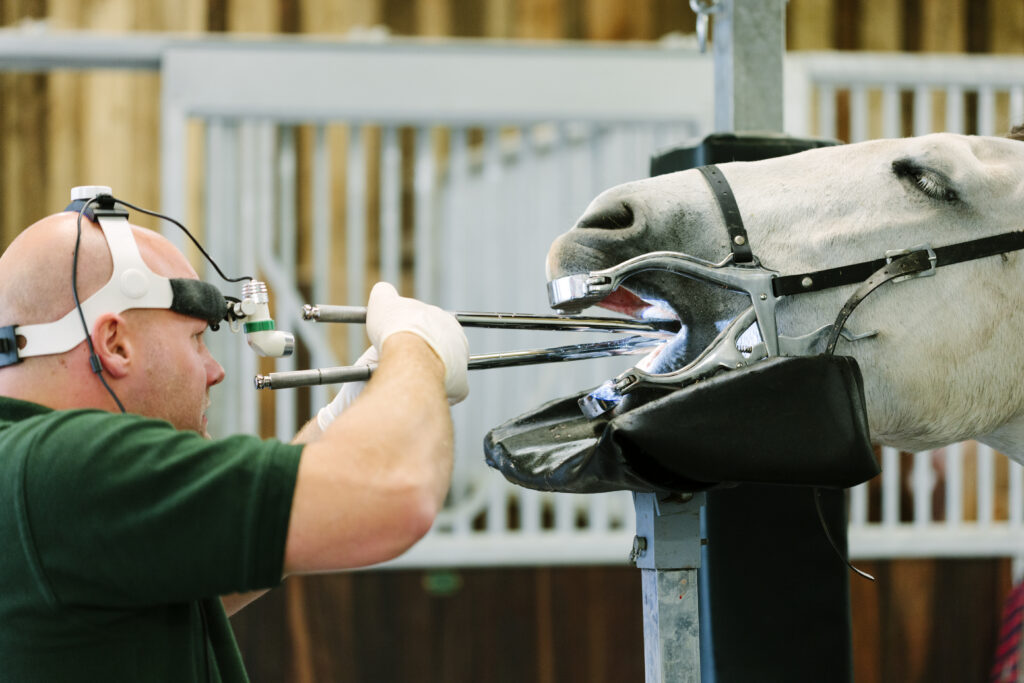
Early-career equine veterinarians join a cadre of experienced practitioners who chose equine practice despite its challenges. The ability to work with and care for horses daily, while having the intellectual challenge of diagnosing complex problems, makes the career one that is easy to love. Most horse doctors have a strong passion for these majestic, athletic animals and enjoy spending their days interacting with them. The job also often means an opportunity to work outdoors and visit a variety of beautiful farms, meeting and forming relationships with others who love horses. The profession also offers a bountiful variety of cases and the opportunity to focus on particular aspects of equine health, such as sports medicine, dentistry, or emergency medicine.
Most doctors are, at heart, problem-solvers, and the challenge of sorting out a diagnosis and providing effective treatment can be intensely rewarding. The feeling of making a positive difference for horses and the people who love them makes an equine veterinarian’s role special. For those who thrive on independence and lifestyle flexibility, being a practice owner can be particularly rewarding. For those who have chosen a career optimizing equine health and performance, “Do what you love, and you’ll never work a day in your life.”
Related Reading
- The Business of Practice: Current State of the Equine Veterinary Industry
- Affording New Paradigms in Equine Practice
- Equine Veterinary Sustainability: Supporting Equine-Track Students
Stay in the know! Sign up for EquiManagement’s FREE weekly newsletters to get the latest equine research, disease alerts, and vet practice updates delivered straight to your inbox.