This article originally appeared in the Fall 2026 issue of EquiManagement. Sign up here for a FREE subscription to EquiManagement’s quarterly digital or print magazine and any special issues.

Uncertainty is the word that best describes the first half of 2026. From weather extremes to war to affordability to AI-related job losses, people have a lot on their minds. In April, the University of Michigan’s Consumer Sentiment value was reported as the lowest since the pandemic. In 2025, full-time workers had median weekly earnings of $1,204, and inflation has affected the buying power of those dollars. From 2020-2024, food prices increased by 23.6%, transportation costs increased by 34.4%, and housing increased by 23%.
However, the stock market reached new highs, and the wealthy grew wealthier. In 2024, the top 20% earned more income (52.2% of the total) than the rest of the population combined. As of early 2026, the top 1% of U.S. households hold approximately 30% of total household wealth, with their share of national income estimated at around 20%. Households with annual incomes of $170,000 to $190,000 are in the top 20%. Though the National Foundation for Credit Counseling predicted financial stress will reach an all-time high in the first quarter of 2026, consumer spending grew for higher-income Americans over the last year, while growth slowed sharply for lower- and middle-income households.
For many equine practices, a large portion of their clients fall into higher income brackets. The 2023 American Horse Council report revealed that 70% of horse owners earn more than $75,000 per year, with 15% earning $75,000-$99,999, 22% earning $100,000-$149,999, and 33% earning $150,000 or more. The 2025 American Horse Publications survey reported 51.1% of horse owners had income over $100,000, with 11.3% of those earning $250,000 or more. Clearly, equine veterinary medicine is blessed by having clients with fewer financial constraints than many pet owners.
Breaking Down the Numbers
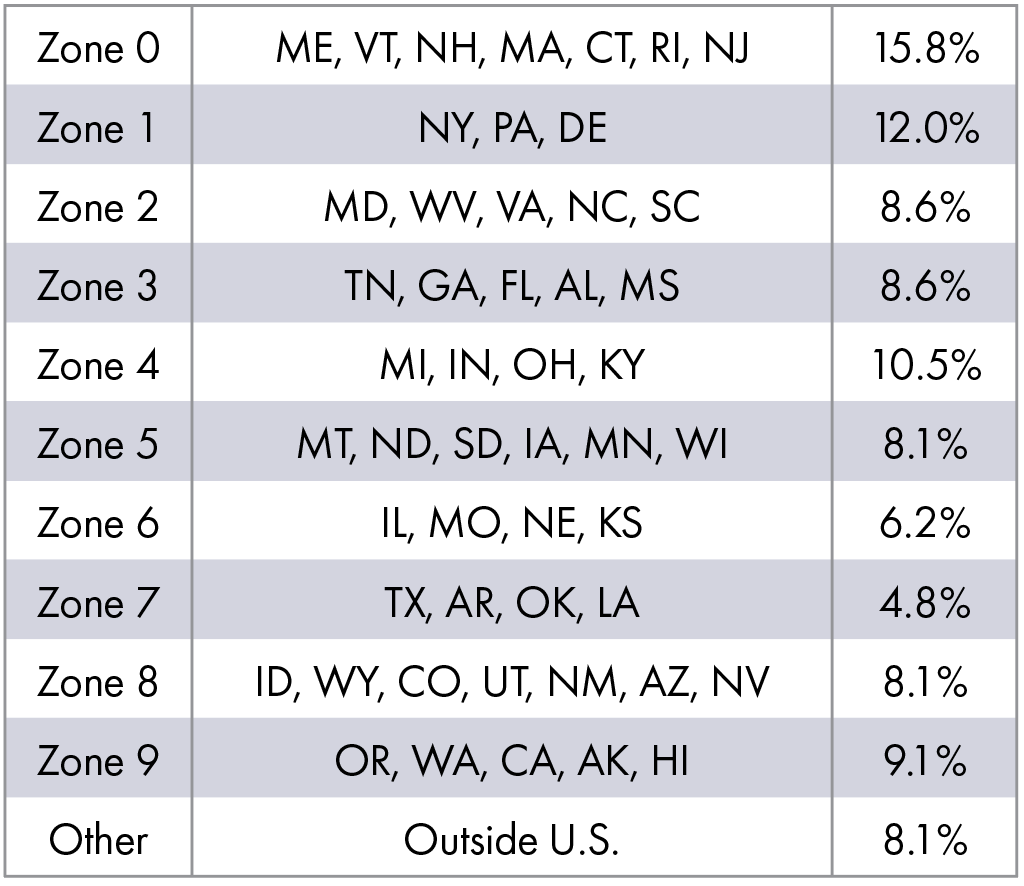
We prepared a survey to see what effect the ongoing challenges in 2026 are having on equine veterinary practices. The six-question survey was distributed on the closed Facebook groups Equine Vet-2-Vet and AAEP Member Vet Talk, and 209 equine veterinarians responded over a 20-day period in April.
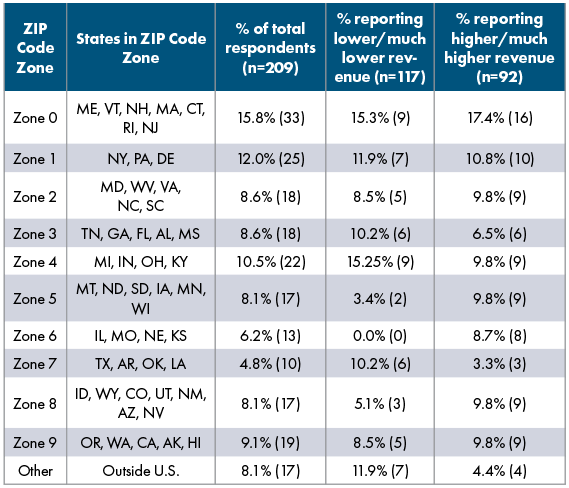
The results indicated participation across geographic regions, although ZIP Code Zone 7, which includes Texas, the No. 1 state for horse population according to the American Horse Council’s 2023 study, had the least number of respondents at 4.8%. Veterinarians from outside the U.S. represented 8.1% of the respondents.
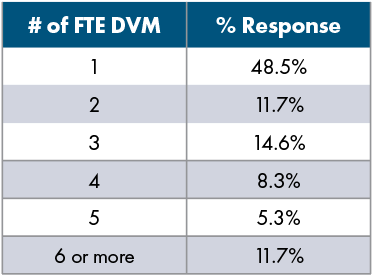
When asked how many full-time equivalent (FTE) veterinarians worked at their practice, nearly half of respondents indicated one. The next most frequent response (14.6%) was three.
Because sports medicine is a significant source of income for many practices, we asked: “Is the majority of your practice revenue derived from sports medicine?” Responses indicated:
- Yes, 22%
- About half, 27.8%
- No, 50.2%
We wanted to determine reliance on sports medicine income to see how practice revenue production in the first quarter of 2025 compared to the first quarter of 2026 as economic uncertainty increased. Because wealthier clients are often involved in competition with their mounts, sports medicine revenue was posited as unlikely to be affected.
A little over half (54.4%) of those respondents who indicated most of their revenue came from sports medicine saw higher revenue production in Q1 of 2026 compared to Q1 of 2025. Of those respondents who said sports medicine was not the source of most revenue, just 37.7% reported higher revenue. Half of those respondents who indicated about 50% of their revenue came from sports medicine saw higher earnings in Q1 of 2026 compared to 2025. Overall, 28.8% of respondents reported lower revenue production.
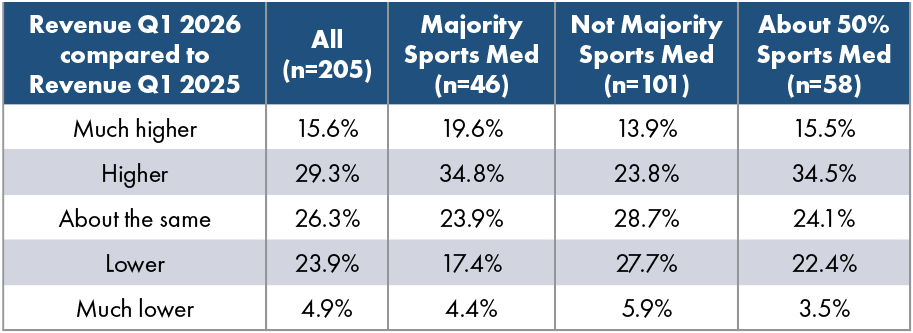
Of the 59 respondents that reported lower revenue in the first quarter of 2026 versus 2025, five noted they were on maternity or medical leave.
Overall, performing primarily sports medicine services seemed somewhat protective against lower revenue production in 2026.
When asked “Are you experiencing any client reluctance to spend on diagnostics or treatment or other veterinary care for their horse(s),” most respondents (61.5%) indicated seeing a little reluctance. Very few (4.8%) felt they were seeing solid resistance. Those with at least half their revenue produced by sports medicine services were more likely to experience no resistance.
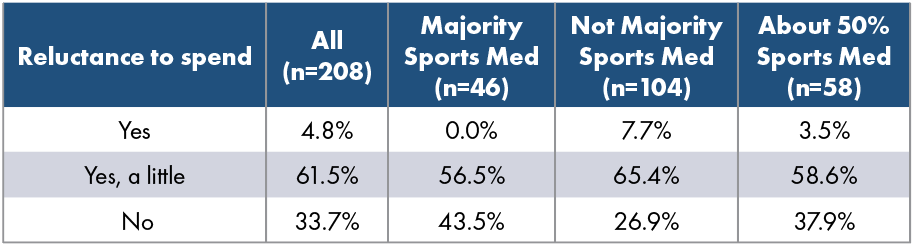
One respondent commented, “I have found in my remote geographic area, primary care vets are reluctant to introduce gold standards for fear of clients saying no. When I as the alternative medicine consult mention gold standard diagnostics and treatment, the clients have been more receptive than primary care vets expect.” Another noted, “Discussions are more intense, with less immediate ‘just do all the things’ attitude.”
When looking only at the 59 respondents that had lower or much lower revenue in Q1 of 2026 than Q1 of 2025, certain regions were overrepresented. A higher percentage of participants in Zones 3, 4, and 7 as well as respondents outside of the U.S. reported lower or much lower revenue than other zones compared to their portion of the total respondents. Certain regions were also overrepresented when considering the 92 respondents that had higher or much higher revenue in Q1 of 2026 than 2025. A greater percentage from Zones 0, 2, 5, 6, and 8 reported higher or much higher revenue than other zones compared to their portion of the total respondents.
Of the cohort that had lower revenue in Q1 of 2026 than 2025, 10.2% were seeing a lot of client reluctance to spend, 74.6% were seeing a little reluctance, and just 15.3% were seeing none. Of those that had higher or much higher revenue, just 2.2% reported clear reluctance to spend, 50.1% a little reluctance, and 47.3% no client reluctance.
Practice size by number of full-time equivalent veterinarians did not seem to have much impact on revenue. However, it showed that smaller practices were somewhat overrepresented among those who reported higher revenue production. This could reflect a tendency for smaller practices to be ambulatory only rather than supporting a hospital, where economic instability could lower referrals for high-dollar surgeries, procedures, or inpatient care. The respondents from practices with six or more FTE veterinarians were mildly overrepresented in reporting lower revenue production, which could support this hypothesis.
Take-Home Message
As equine veterinarians and their staff continue to meet client and patient needs in 2026, it is good to know many are continuing to grow their revenue despite recent economic challenges. For those seeing a decrease in revenue, finding more efficient ways to deliver services will be important in lowering costs while maintaining patient care. Utilization of technicians and staff for tasks that do not require a veterinarian could help ease financial strain. Adopting new technologies to deliver care through telemedicine could help clients under financial stress. Offering a spectrum of care can allow horse owners to feel seen and supported during hard times.
Related Reading
- The Business of Practice: Current State of the Equine Veterinary Industry
- The Cost of Public Judgment in Veterinary Medicine
- Strengthening Social License to Practice Equine Medicine
Stay in the know! Sign up for EquiManagement’s FREE weekly newsletters to get the latest equine research, disease alerts, and vet practice updates delivered straight to your inbox.