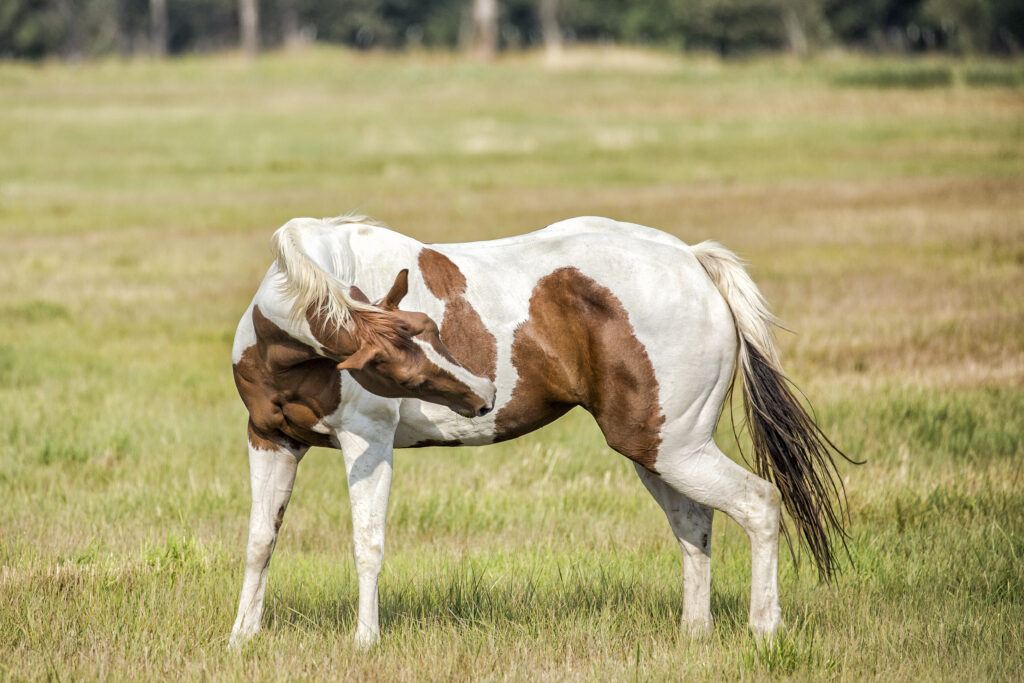
In September 2024, a 16-year-old Paint mare presented to the University of California, Davis, veterinary hospital showing signs of what initially appeared to be colic. She had been vaccinated the day prior by the veterinary school’s ambulatory service and developed signs of abdominal discomfort that failed to resolve with initial field treatment.
Upon admission, the mare underwent a standard colic workup, including nasogastric intubation, a belly tap, and abdominal imaging. While these diagnostics revealed no obvious gastrointestinal cause, her bloodwork told a different story. Most striking was a packed cell volume (PCV) of 77%—more than double the normal range—indicating polycythemia. Additionally, the mare was azotemic, with rising creatinine levels suggesting compromised kidney function. At that point, the case was transferred to Rana Bozorgmanesh, BSc, BVetMed, Dipl. ACVIM, MRCVS, and the internal medicine service team for further investigation.
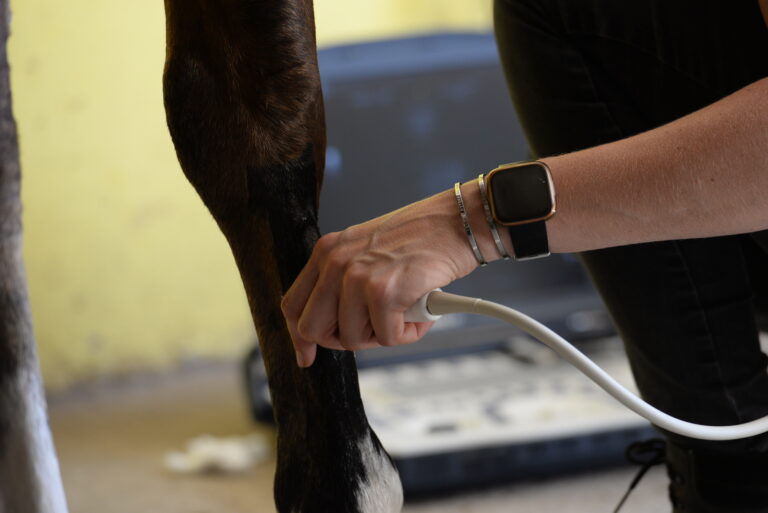
A full diagnostic workup, including blood panels, urinalysis, and ultrasound of the kidneys and urinary tract, failed to identify a clear underlying cause. Despite aggressive fluid therapy, both the elevated PCV and kidney values persisted, prompting Bozorgmanesh and her team to broaden their list of differential diagnoses.
To distinguish between primary and secondary causes of polycythemia, the team performed a bone marrow aspirate. Results ruled out neoplasia but confirmed abnormal overproduction of red blood cells. With no clear explanation, the clinicians revisited the mare’s recent history, particularly the timing of vaccination and her known tendency for mild post-vaccine reactions.
Bozorgmanesh said a review of historical literature revealed that experimentally induced anaphylaxis in horses had, in rare instances, led to marked increases in hematocrit. This finding helped her team connect the dots: The mare was likely experiencing an atypical anaphylactic reaction to vaccination. The elevation in red blood cells had caused hyperviscosity syndrome, impairing blood flow and placing strain on the kidneys.
“I always say the kidneys are like the princesses of the body,” she said. “They don’t like too much blood pressure, they don’t like too little blood pressure, they’re very particular about how they’re treated. If the blood is too viscous, that will upset them as well. So that was kind of our working diagnosis: Polycythemia secondary to anaphylaxis with a secondary azotemia as a result of hyperviscosity syndrome.”
To address suspected anaphylaxis, the clinicians administered antihistamines and an H2 blocker to suppress the histamine-driven inflammatory response. Her red blood cell count, however, remained high.
“There’s one way to decrease red blood cell count and one way that they treat polycythemia in humans, which is essentially bloodletting,” said Bozorgmanesh.
So her team removed eight liters of blood while administering intravenous fluids to reduce blood viscosity and improve circulation. Within a day, the mare’s creatinine levels and hematocrit began to decline, and her PCV dropped to a safer range. She was also placed on an anticoagulant to reduce the risk of clot formation.
After approximately one week of hospitalization and continued monitoring, the mare made a full recovery. Long-term management includes checking titers for various diseases before vaccinating and performing vaccinations under hospital supervision if needed.
“If titers are adequate, then we won’t vaccinate because she would have enough circulating antibodies to be protective,” Bozorgmanesh explained.
She emphasized that this case should not discourage routine vaccination, as the benefits far outweigh the risks. Instead, it highlights the importance of a systematic, thorough diagnostic approach, especially when faced with atypical presentations.
As of April 2026, the mare has not experienced any other complications associated with this case.
About Dr. Rana Bozorgmanesh
Rana Bozorgmanesh, BSc, BVetMed, Dipl. ACVIM, MRCVS, is an associate professor of clinical equine internal medicine at the University of California, Davis, School of Veterinary Medicine. Her focus is on equine internal medicine with a special interest in critical cases, including the critical broodmare and neonate.
Related Reading
- Daily Vet Life: Show Jumper Undergoes Life-Saving Colic Surgery
- Daily Vet Life: Working Up a Warmblood With MFM
- Daily Vet Life: Surgical Correction of Wry Nose
Stay in the know! Sign up for EquiManagement’s FREE weekly newsletters to get the latest equine research, disease alerts, and vet practice updates delivered straight to your inbox.
![[Aggregator] Downloaded image for imported item #18383](https://s3.amazonaws.com/wp-s3-equimanagement.com/wp-content/uploads/2025/09/30141253/EDCC-Unbranded-29-scaled-1-768x512.jpeg)