In this episode of the Disease Du Jour podcast, Jurica Tršan, DVM, DACVIM (LAIM), joined us to discuss Potomac horse fever. He reviewed the disease’s etiology and pathogenesis, geographic range, and clinical presentation, as well as the role of diagnostic testing and vaccination.
This episode of Disease Du Jour is brought to you by Bimeda.
Etiology and Pathogenesis of Potomac Horse Fever
Tršan explained that Potomac horse fever (PHF) is caused by obligate intra-cellular Gram-negative bacteria. “The long-recognized agents are Neorickettsia risticii, formerly known as Ehrlichia risticii,” he said. “But in the early 2020s, a second species, Neorickettsia findlayensis, was formally recognized as a cause of clinically identical disease.”
The pathogen lacks classical lipopolysaccharide, Tršan explained, which matters clinically because the endotoxemia seen in severe PHF cases is a consequence of mucosal barrier failure and translocation of the Gram-negative gut flora, not the rickettsia itself.
Neorickettsia risticii is an obligate endosymbiont of the trematodes, and it’s carried vertically through every stage of the fluke’s life cycle, he explained. The freshwater snail is the first intermediate host to become infected by the sporocyst. Sporocysts develop into cercariae, which shed into the water and infect aquatic insects. The insects are eaten by bats and birds, which are the definitive hosts.
“The horse is the accidental dead-end host, which basically has an incubation period of 10-18 days,” Tršan explained. The parasite enters the horse’s system through oral ingestion of water, insects, or contaminated feed.
Once the organism enters the horse, it replicates within the equine monocytes, tissue macrophages, mast cells, and intestinal crypts of epithelial cells. Infected monocytes disseminate systemically and target tissue in the large intestine. Lesions are most severe in the cecum and large colon, and the main clinical sign of the disease is diarrhea. Horses often go on to develop severe colitis. In pregnant mares, transplacental infection can cause delayed fetal loss.
Geographic Range
Tršan said the disease’s true geographic range is not known, largely because serologic surveys have produced false positives.
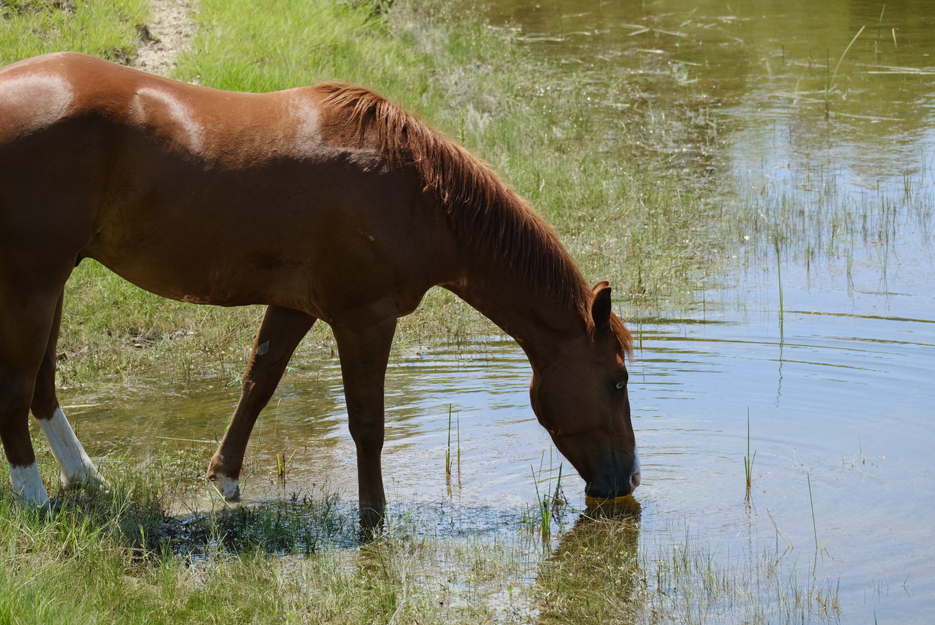
“ The risk does not follow state lines. It follows freshwater habitat capable of supporting the snail-fluke-insect cycle,” he said. “The biggest risk factor is the proximity roughly around 5 miles to a freshwater source or to irrigated pasture. And that explains why the disease shows up in places that feel epidemiologically improbable, like Northern California or Oregon.”
Diagnosing Potomac Horse Fever
Tršan explained that the provisional diagnosis for PHF is epidemiologic plus clinical. “You have a febrile horse in season on or near property with fresh water or irrigated pasture with colitis, unexplained fever, or acute laminitis, this is enough to start therapy or at least a working diagnosis,” he said. Waiting for a definitive diagnosis to begin therapy can “cost the feet,” because of the high risk of laminitis associated with PHF (20-40%).
PCR testing is the gold standard for obtaining a definitive diagnosis. Tršan submits both EDTA whole blood and fresh feces. “The bacterial DNA is detectable in blood roughly 7-21 days post-infection and in feces roughly 11-16 days,” he said. “Blood often turns positive first, so paired sampling meaningfully raises sensitivity of the test.”
Tršan stressed the importance of always pursuing confirmation, even if the horse is responding to treatment. PHF is clinically indistinguishable from contagious diseases like Salmonella and coronavirus, and confirming a diagnosis allows farm owners to relax biosecurity protocols.
The Role of Vaccination
Available vaccines for PHF are adjuvanted, whole-cell products sold alone or in combination with rabies. AAEP classifies PHF vaccination as risk-based rather than core.
“These vaccines do provide 78% protection against homologous challenge, so in experimental ponies against its own strain,” Tršan said. “But in the field, we have failure of vaccination fairly commonly.”
He noted that horses do not produce high titer levels in the blood from vaccination compared to natural exposure to the disease.
“The other big issue with the vaccine, is the strain heterogeneity compounds it,” he said. “More than 14 strains are recognized with strain-specific antigens. There’s no current vaccine which contains Neorickettsia findlayensis antigen at all.”
The common clinical claim is that vaccinated horses experience milder disease and recover faster, but this hasn’t been demonstrated in controlled studies, Tršan said.
”Given a partially effective vaccine against a disease with 20-40% percent laminitis risk, the calculus turns entirely to exposure probability,” he said.
He recommends vaccination for horses on properties with confirmed prior PHF cases and horses in recognized endemic areas with fresh water or irrigated pasture within a few miles. Vaccination should be considered for horses traveling to endemic areas during the summer and for high-value horses, he said.
In low-risk regions, the default recommendation is not to vaccinate, because vaccination degrades serologic diagnostics. “In a low-prevalence area, that is a real diagnostic cost for a very little protective return,” he said. He also emphasized that vaccination never removes PHF from the differential list.
Listen to the podcast episode to learn more about PHF, including treatment and management options, surveillance strategies, and more.
About Dr. Jurica Tršan
Jurica Tršan, DVM, DACVIM (LAIM), is a visiting assistant professor of large animal internal medicine and emergency and critical care at Purdue University. He earned his DVM degree in 2017 from the University of Zagreb, Croatia, and then completed an equine rotating internship at Utrecht University in the Netherlands and a residency in Large Animal Internal Medicine with an equine emphasis at the University of California, Davis.
Board-certified by the American College of Veterinary Internal Medicine, Tršan served as a large animal internal medicine veterinarian at the Purdue University Veterinary Hospital before accepting his current position.
Related Reading
- Why Horse Owners and Vets Need to Rethink Bug Season in 2026
- Daily Vet Life: Inside a West Nile Virus Case
- Disease Du Jour: Pigeon Fever in Horses
Stay in the know! Sign up for EquiManagement’s FREE weekly newsletters to get the latest equine research, disease alerts, and vet practice updates delivered straight to your inbox.