Researchers are learning more about how to recognize and manage equine glandular gastric disease (EGGD), a form of equine gastric ulcer syndrome (EGUS). At the 2025 American Association of Equine Practitioner’s Convention in Denver, Colorado, Ben Sykes, BSc, BVMS, MS, MBA, DACVIM, PhD, FHEA, presented updates on this condition.
EGGD Treatment Objectives
Treatment of EGGD is somewhat of a misnomer, since there is ~40% prevalence of refractory disease. While 92% of treated horses improve, only 62% “heal.” EGGD is considered an inflammatory and erosive disease, rather than one that develops true ulcerative pathology. Sykes noted that while not necessarily visible, underlying subclinical gastritis is still present in some horses even after visible healing. The primary treatment objective is to suppress and control the worst of the disease rather than attempt to “cure” it.
Controlling EGGD requires managing all factors in the horse’s life. Sykes stressed the importance of treating the whole horse; only targeting ulcerative disease does not necessarily eliminate the inciting causes, such as stress from musculoskeletal pain. For example, musculoskeletal pain and back disease, or behavioral stressors, increase a horse’s risk of being a poor responder to ulcer treatment, no matter the chosen therapy for EGGD. Sykes said in his practice, more than 50% of horses that present for gastroscopy have musculoskeletal disease as a primary cause of the horse’s clinical presentation of undesirable behavior. Musculoskeletal pain might incite gastrointestinal disease and the associated clinical signs, but the two diseases go hand in hand.
Pharmaceutical Treatment Options for EGGD
When comparing EGGD treatment options, Sykes said there is no overall difference between oral omeprazole (OMP at 4 mg/kg) + oral sucralfate (SUC at 15-20 mg/kg bid); oral misoprostol (3-5 ug/kg bid); and extended-release injectable omeprazole (ERIO). Given this, the combination of omeprazole (OMP) and sucralfate (SUC) seems to be a reasonable choice for front-line management of EGGD. Although not formally studied, adding misoprostol to this combination might provide even greater efficacy. Because food affects OMP absorption, a practical protocol involves giving OMP before 6 a.m., giving SUC 30 minutes later to coat the stomach, and feeding 2-5 minutes later. The horse’s stomach acid during feeding activates OMP. (Previous suggestions of waiting an hour after administering OMP are not necessary, Sykes said. Instead, feeding can resume after 30 minutes.)
Misoprostol can be given at or just after feeding to avoid interference with OMP activation, with a second dose given in the afternoon. Misoprostol is an acid suppressant that acts on receptors in the parietal cells to achieve prostanoid effects (similar to prostaglandins) such as enhancing the muco-bicarbonate layer. After an initial lag time of a couple of hours, misoprostol provides four hours of acid suppression. Administering an afternoon dose (10-12 hours after the morning OMP) potentially extends the acid suppression achieved with omeprazole.
Long-Term Management and Acid Suppression
Sykes noted that if a clinical response and gastroscopic resolution are seen at four weeks, it is possible to move on to long-term management. He suggested thinking of EGGD as a quiescent inflammatory gastritis that is not healed yet is not visible with gastroscopy. He stressed that there is little to no association between endoscopic resolution and resolution of clinical signs as described by horse owners. Instead, he recommends focusing on making a horse feel better rather than making the stomach look perfect. The best approach is to concentrate efforts on mucosal barrier fortification and the muco-bicarbonate layer by ensuring the glandular lining and its protective mechanisms stay intact and optimized.
It is best to reexamine the horse while it is receiving treatment to devise a plan. If the treatment is working, but visual healing has not been achieved, continue it for another four weeks. ESGD is a useful marker for gauging the efficacy of acid suppression; if suppression is good, acid injury to the squamous mucosa should heal within four weeks. If squamous mucosal lesions remain or the horse’s response is suboptimal, the strategy must change (greater acid suppression is required to heal glandular mucosa than squamous mucosa). Acid suppression strategies include:
- Adjusting the timing of oral OMP dosing to ensure it is given before 6 a.m..
- Enforcing feed restrictions by fasting horses through the night before giving OMP.
- Increasing the dose of oral OMP.
- Considering alternative formulations.
Alternative Treatment Options
Sykes typically doesn’t treat with pharmaceuticals beyond eight-twelve weeks, instead favoring shifting to a long-term management approach in such cases. If the horse hasn’t shown sufficient improvement after four weeks, alternative treatment options might prove beneficial instead of or in conjunction with OMP + SUC:
- Esomeprazole (ESO) is twice as potent as OMP (4 mg/kg ESO = 8 mg/kg OMP).
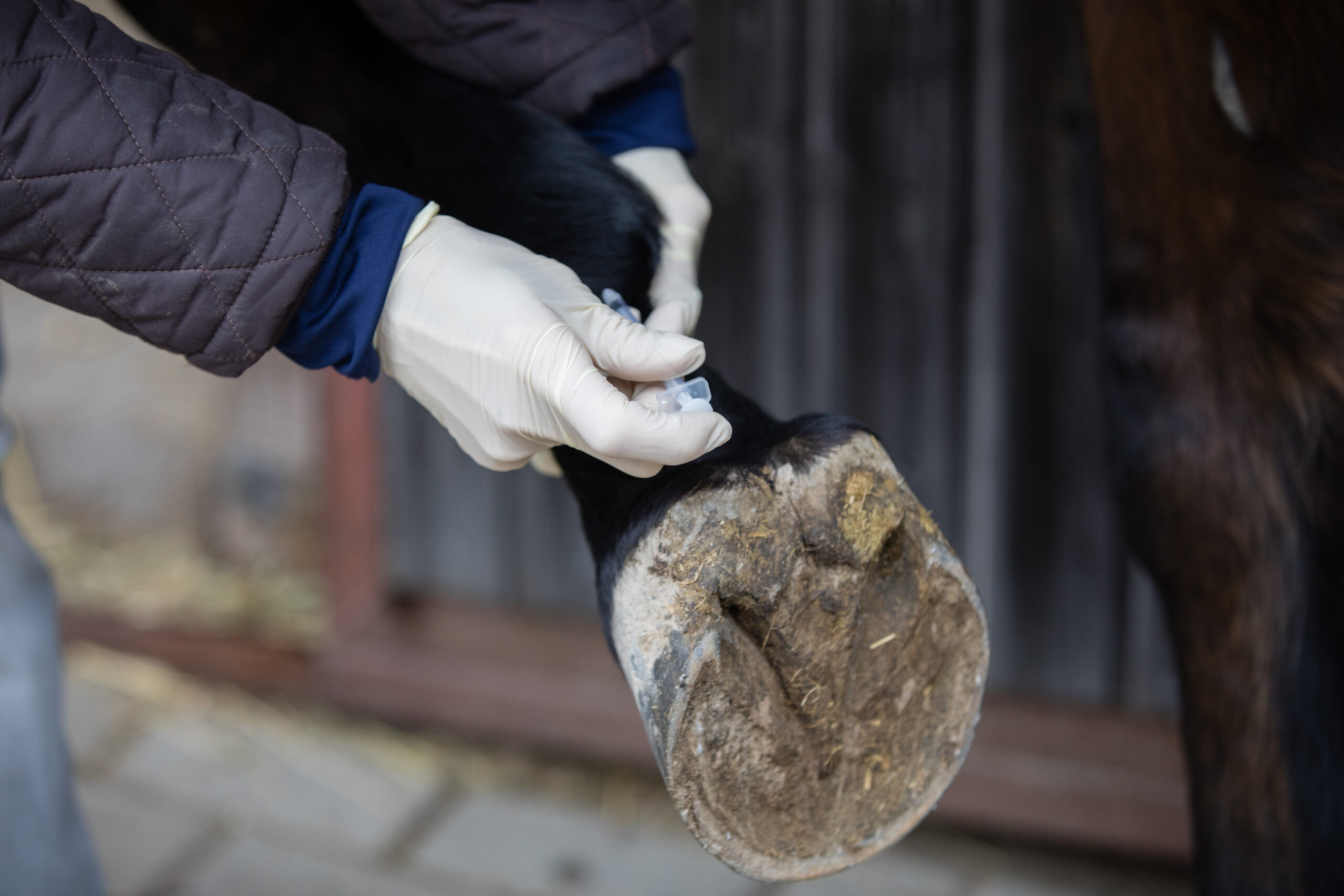
- For refractory EGGD, extended-release injectable OMP given every 5 days for 5 doses provides a similar response as seen with oral OMP + SUC. Do not split the dose of ERIO into multiple muscle areas because it is a sustained release formulation, so it is important to administer the entire 20 ml dose in one muscle area, and the skin must be aseptically prepared before injection to reduce the risk of injection site abscessation.
Other alternatives support pharmacologic treatment and management strategies:
- Use mucosal barrier protectants: sucralfate, pectin-lecithin, magnesium oxide.
- Include alfalfa in the diet as an acid buffer.
- Control the diet by restricting carbohydrates (grain) to less than 1 gram/kg/meal body weight.
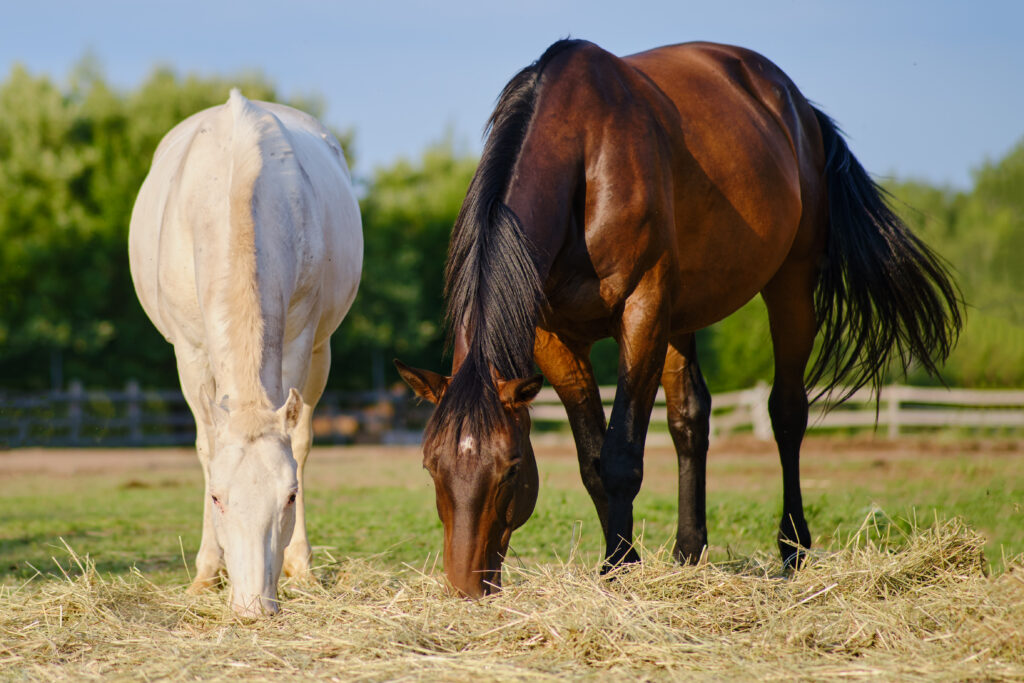
- Provide the 3 Fs: Freedom, Friends, and Forage. Modify the horse’s interactions with its environment. With good well-being, Sykes said it is possible to achieve good gastric health.
Take-Home Message
Instead of just focusing on treating glandular lesions, veterinarians and owners should aim to manage horses with EGGD so they feel better, even if the stomach itself does not always “heal” with pharmaceutical treatment.
Related Reading
- Disease Du Jour: Diagnosing and Managing Gastric Ulcers
- Updates on Treatment of Equine Gastric Disease
- The Hindgut’s Role in Racehorse Health
Stay in the know! Sign up for EquiManagement’s FREE weekly newsletters to get the latest equine research, disease alerts, and vet practice updates delivered straight to your inbox.