This article originally appeared in the Spring 2026 issue of EquiManagement. Sign up here for a FREE subscription to EquiManagement’s quarterly digital or print magazine and any special issues.
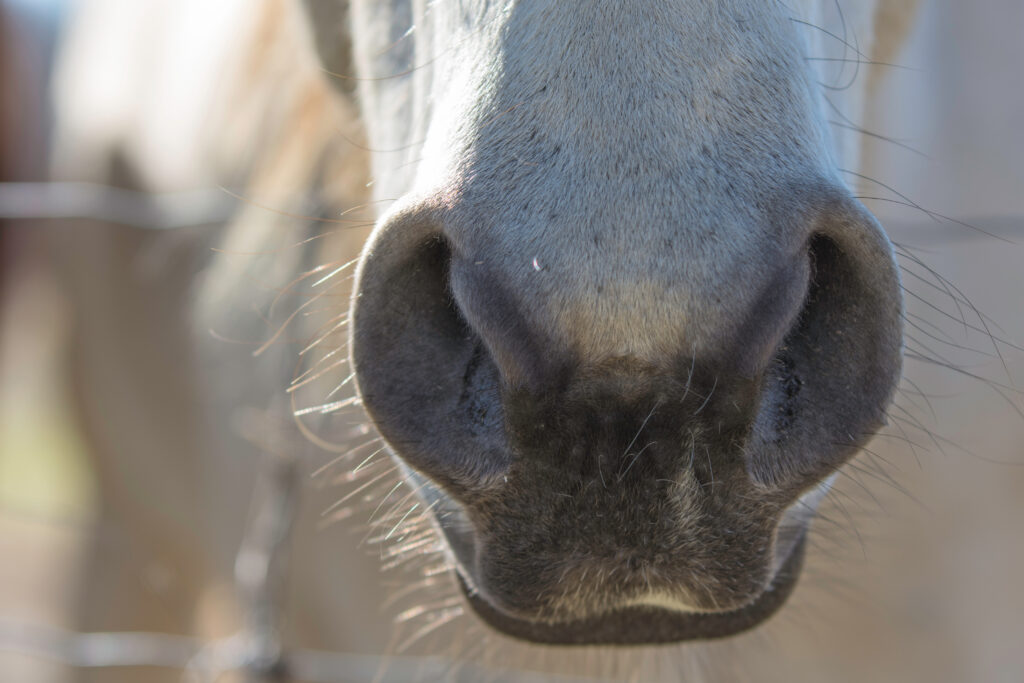
Streptococcus equi is an incredibly infectious bacteria in horses, with one drop of pus reported to be infective to 1,000 horses, Andrew Waller, PhD, Chief Scientific Officer of Intervacc AB, explained during a 2025 Gluck Equine Research Center veterinary science seminar. All S. equi strains are closely related, but the population of S. equi changes in waves as new, “fitter” strains evolve and spread.
S. equi is found in 72% of respiratory infections in horses. It is important to minimize the risk of strangles in herds—especially for horses congregating at events. Both direct and indirect contact (e.g., nose-to-nose; shared water, feed, and tack; passersby who touch horses) can transmit infective material. Biosecurity at events and upon return to home stabling are critical to prevent an outbreak. Like many other infectious diseases, vaccination is an important management strategy. To date, however, strangles vaccines have not been without significant side effects and concerns over efficacy.
Strangvac: A Subunit Strangles Vaccine
The European vaccine company Intervacc AB has developed Strangvac, a subunit strangles vaccine created using recombinant fusion protein technology with seven important S. equi surface proteins. The vaccine contains no live bacteria or bacterial DNA and no M-protein associated with purpura hemorrhagica. The absence of bacterial DNA prevents the vaccine from interfering with strangles diagnostic tests in vaccinated horses.
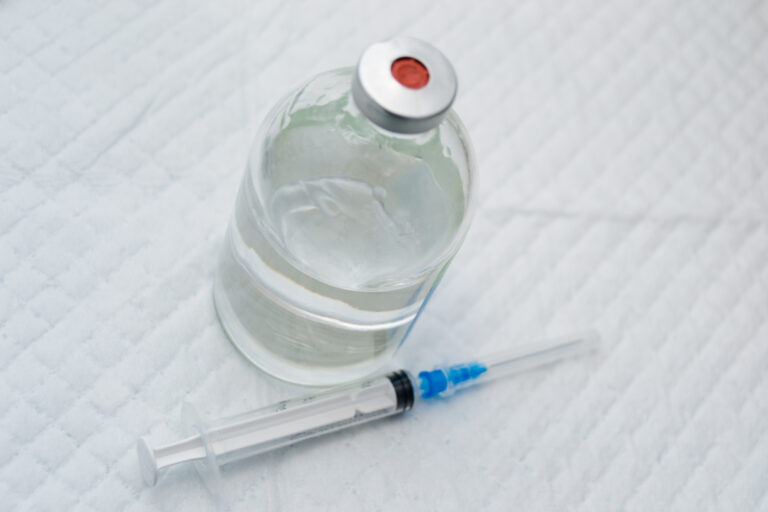
Strangvac is given intramuscularly to elicit a broad immune response targeting all known global strains of S. equi. Antibody concentrations increase within seven days of the first dose. Three doses are given initially, spaced out every two months. During an outbreak, horses should be vaccinated as soon as possible, receive a second dose in four weeks, and get a third dose two to three months later. Boosters are recommended every 6-12 months. The vaccine does not eliminate clinical signs in all vaccinated animals, but two doses delay onset and reduce disease severity. Three doses of Strangvac provide greater protection through both an antibody response and possibly a cell-mediated immune response that reduces S. equi infection of the head and neck lymph nodes.
Adverse reactions from the vaccine are transient and similar to that seen with other vaccines: Elevated temperature, stiff neck, and mild fever for two to three days, most resolving within a week. In Europe, a safety profile based on 15,000 horses shows it to be very safe and well-tolerated.
Strangvac Case Studies
In case studies described by Waller:
- In Sweden, 17 healthy horses were immunized 23 days after the first signs of disease in an outbreak of three horses. They received subsequent doses 28 and 112 days later. None of these horses developed strangles.
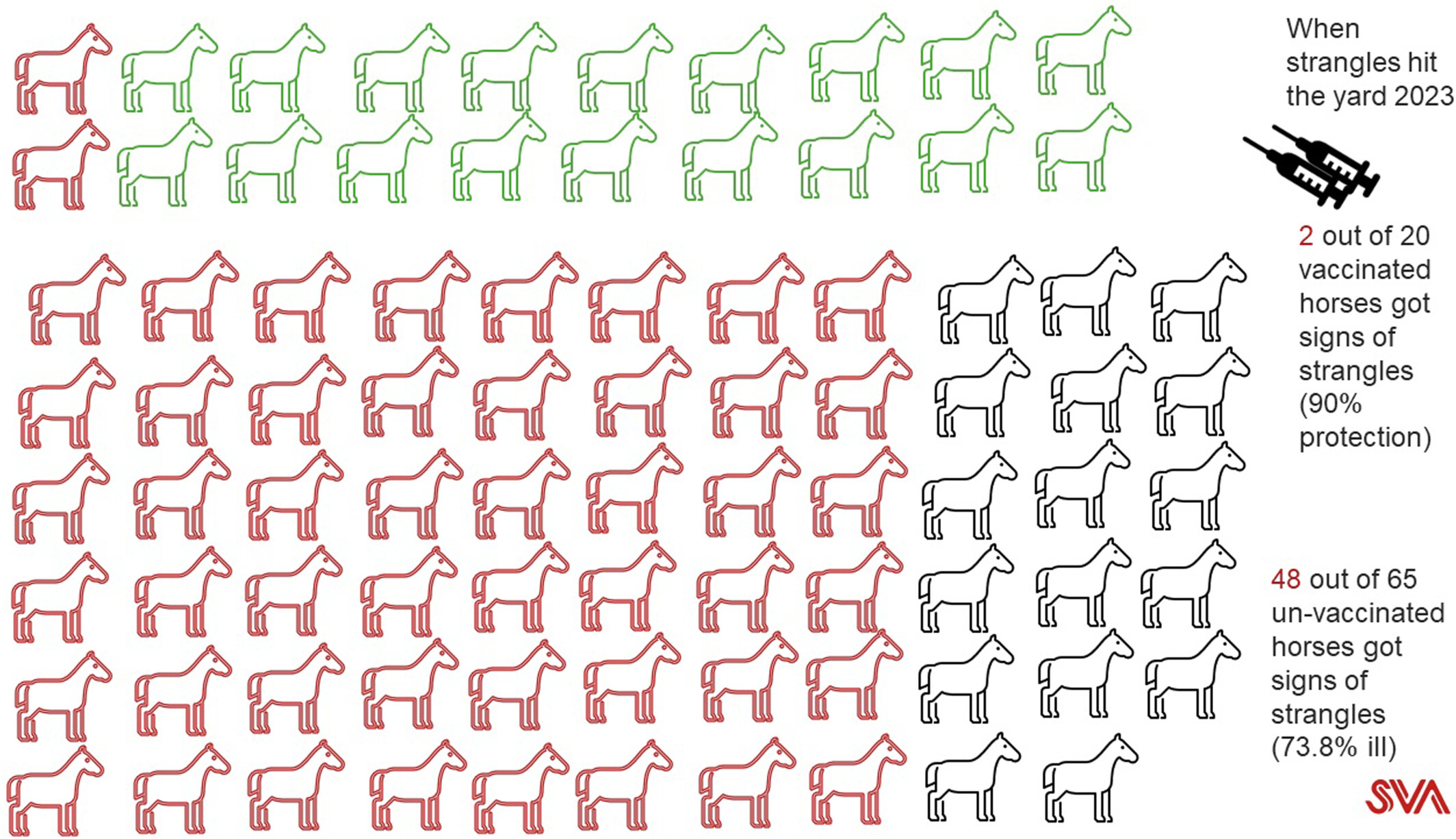
- Also in Sweden, 74% of nonvaccinated horses (48/65) developed strangles, but only 10% (2/20) of those vaccinated with Strangvac developed infection.
- In Germany, 13 healthy horses moved from a farm with a strangles outbreak to a new premises. There they received two doses of Strangvac four weeks apart and two weeks later were moved back to the original farm. They did not develop strangles.
- In Austria, 18 healthy horses were vaccinated following identification of index cases, and none developed strangles.
- In the U.K., 32 horses were diagnosed with strangles and two died; none of the five vaccinated horses got sick with strangles.
- An off-label use of Strangvac in Germany helped resolve S. zooepidemicus endometritis in two mares that had been refractory to getting pregnant. After two doses in one mare and one dose in another, both were culture negative and one became pregnant soon after.
One interesting result came from a study by Grondahl et al. (2025) in that 88% (15/17) of vaccinated carriers cleared infection. However, this study did not include an unvaccinated control group, and it is known that carriers can clear without vaccination. More data are necessary to support the possibility of carrier clearance.
Strangvac Distribution
Intervacc has launched this vaccine in 18 countries in the U.K. and the EU since 2022. Dechra has put in for a permit to distribute the vaccine in the United States. It is not yet authorized for sale or distribution in the U.S., but the process for USDA approval is ongoing.
Reference
Rendle D, Bowen M, Cavalleri J, et al. Strangles vaccination: A current European Perspective. Equine Veterinary Education Aug. 2024; DOI: 10.1111/eve.14032
Related Reading
- Exercise’s Effects on Respiratory Pathogen Detection in Healthy Horses
- Diagnosing Respiratory Ailments in Horses: Wash or Lavage?
- Preventing Strangles Outbreaks in Horses
Stay in the know! Sign up for EquiManagement’s FREE weekly newsletters to get the latest equine research, disease alerts, and vet practice updates delivered straight to your inbox.