This article originally appeared in the Spring 2026 issue of EquiManagement. Sign up here for a FREE subscription to EquiManagement’s quarterly digital or print magazine and any special issues.
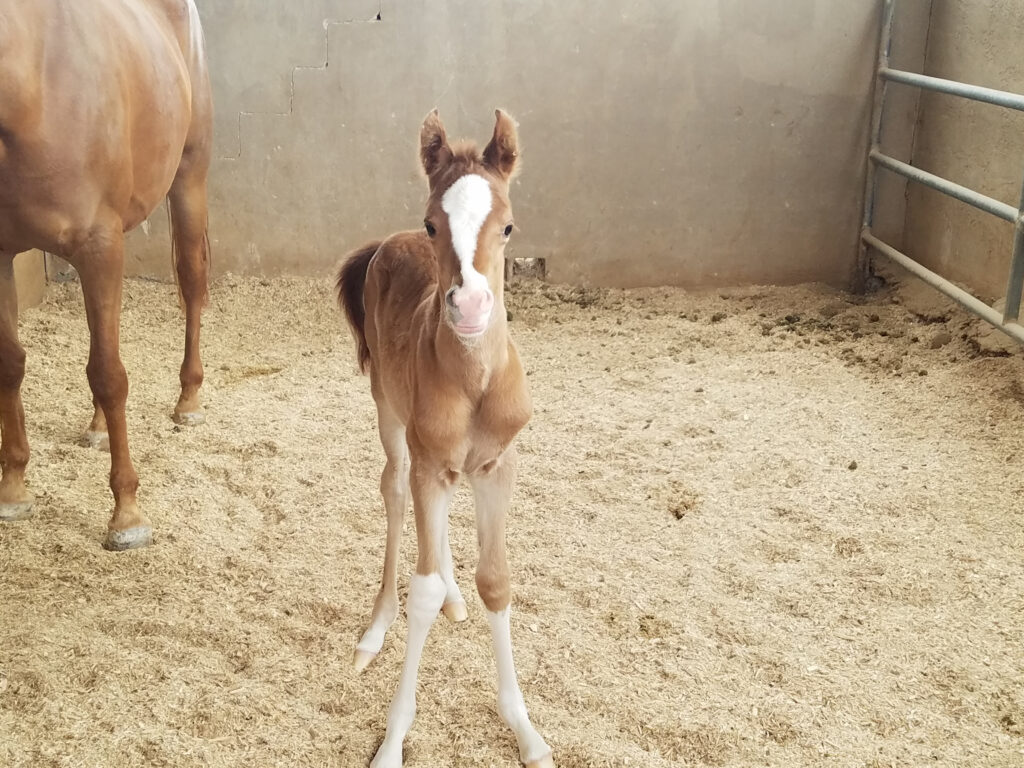
During a presentation at the 2025 American Association of Equine Practitioners Convention, Matthew Coleridge, BVMS, MS, DACVS, from Hagyard Equine Medical Institute, in Lexington, Kentucky, described how veterinary surgeons can place distal lateral third metacarpal/tarsal transphyseal screws in foals in field settings to manage angular limb deformities.
Most acquired angular limb deformities (ALDs) that Coleridge and colleagues treat are secondary to physitis of the carpus or fetlock, occurring on the medial aspect of the limb.
If conservative management (i.e., farriery, mare nutrition, exercise) of physitis fails, transphyseal bridging might slow the growth of the normal part of the physis and allow the abnormal part to catch up.
Transphyseal Screw Technique
Coleridge’s preferred technique for transphyseal bridging is the transphyseal screw—an effective, cosmetic procedure with a low complication rate.
Traditionally, Coleridge and colleagues placed transphyseal screws in surgical conditions under full general anesthesia with drapes and a sterile field. In 2017, mainly in response to client requests, they started performing the procedure on the farm and have since improved the technique greatly. The surgical technique begins with proper preparation: two good assistants and a stall the truck can drive right up to. After anesthetizing with ketamine and xylazine intravenously, position the foal in the doorway and clip and scrub with betadine. A gas sterilized drill and steam-sterilized surgical pack, along with a scalpel blade, suture, and a small table, are the only equipment needed.
“Create a 1-centimeter horizontal or vertical incision above the fetlock, avoiding blood vessels,” said Coleridge. “Create a 3.2-millimeter thread hole through the physis. Note that the growth plate is harder than cortical bone, so when you feel the drill pop through the growth plate, you’re good. Then place the 4.5-millimeter self-tapping screw through the thread hole.”
Next, take radiographs to ensure the screw is long enough. Once confirmed, close the incision with a simple interrupted pattern using 3-0 Vicryl Rapide. Bandage the limb with a sterile 4×4 covered with Vetrap, which will be left on for four to six days.
Coleridge and colleagues collected data on 1,468 foals (49 to 131 days old) over the past three years. They placed 2,168 screws, primarily in the forelimb fetlocks. Almost 50% of foals were treated bilaterally.
“Complications occurred only rarely, including two broken drill bits,” said Coleridge. “These foals were shipped to the hospital where the drill bits were removed and a new screw placed.
Final Thoughts
“This is a quick, safe procedure that uses minimal drugs,” he said. “It is far less stressful on the mare and foal than transporting them to a hospital, and they are never separated. The foals’ recoveries are smooth, occurring freely in the stall with a dam like waking up in the morning.”
Related Reading
- A Novel Approach to Managing Angular Limb Deformities in Foals
- Daily Vet Life: Surgical Correction of Wry Nose
- Daily Vet Life: A Foal with Pyloric Outflow Obstruction
Stay in the know! Sign up for EquiManagement’s FREE weekly newsletters to get the latest equine research, disease alerts, and vet practice updates delivered straight to your inbox.