With multidrug resistance genes percolating through microbial populations and a lack of new antimicrobials, researchers are looking for treatment options based on existing compounds. Identifying and developing new antimicrobial drugs is time-consuming and costly; it can take up to 20 years and billions of dollars to ready a product for market. In addition, many drugs in testing have a high failure rate. As such, researchers are now mining for new chemical compounds in understudied niches to pioneer novel therapeutics.
Research on Artificial Sweeteners
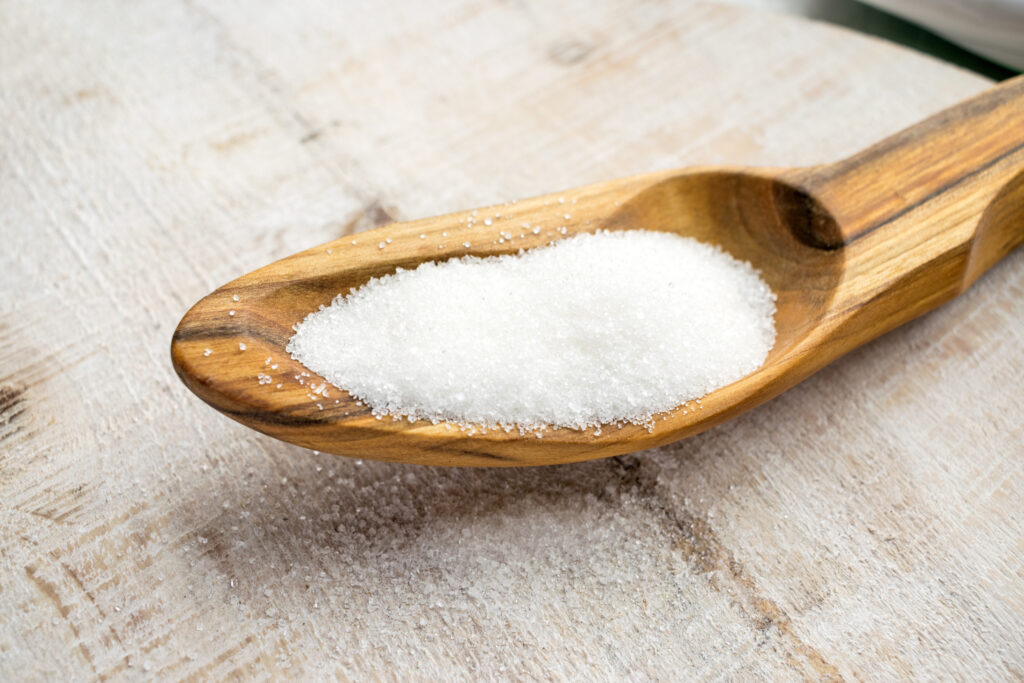
In one study, researchers evaluated three artificial sweeteners—saccharin, cyclamate, and acesulfame-K (ace-K)—for their growth inhibitory effect on specific pathogens, including Acinetobacter baumannii, Pseudomonas aeruginosa, Enterococcus faecalis, and Klebsiella pneumoniae. These microbes have multidrug-resistant properties and are resistant to some of the most powerful “last-resort” antimicrobials.
The authors explain that artificial sweetener (AS) degrades only slightly as it moves through the gastrointestinal tract into wastewater. Its presence in wastewater influences the behavior of environmental bacteria with the potential to “facilitate the exchange of associated antibiotic-resistant genes.” The fact that these substances exert biological activities on bacteria makes them an attractive resource to investigate. In this study, the researchers looked at the effects of ace-K on the gut microbiome, individual bacterial species, and a wound model.
Effects of Ace-K
Much of the study focused on ace-K’s effects on P. aeruginosa and A. baumannii. The researchers discovered that ace-K:
- Has potent anti-biofilm activity at subinhibitory concentrations.
- Can disrupt established biofilms.
- Has a range of antimicrobial activities, including complete growth inhibition of some pathogens.
- Triggers distinct responses in different bacteria, including in a dose-dependent manner.
- Influences bacterial cell membrane integrity to cause loss of native morphology to bulge, with increased permeability leading to cell lysis and death.
- Inhibits pathogen motility and dissemination through the body by disrupting morphology.
- Can disable a pathogen’s ability to acquire exogenous antibiotic-resistant genes.
- Can increase sensitivity to different antibiotics, including carbapenems, by allowing drug penetration of pathogens’ cell membranes, even when ace-K is given at sublethal concentrations.
- Has a broad spectrum of antimicrobial activity through its interference with pathogen membrane stability.
In one portion of the study, the researchers examined ace-K’s therapeutic potential to prevent or treat infection in infected burn or physical trauma wounds using a porcine ex vivo skin model. After a single one-hour treatment with ace-K used as an augmented gauze dressing, bacteria reduced significantly. Bacterial reduction (1.86 log) exceeded that achieved in comparative samples with chlorhexidine-based wound antiseptics (1.27 log reduction). Ace-K also potentiated polymyxin B activity in vitro and in the ex vivo wound model to further amplify favorable results.
Final Thoughts
Previous FDA studies demonstrate approval and safety at high concentrations of ace-K, with no impact on the immune system. The authors concluded that more studies will help “explore the clinical potential of artificial sweeteners, particularly in a wound setting, and to facilitate sensitization of pathogens to existing antimicrobial agents.”
Reference
de Dios R, Proctor CR, Maslova E, et al. Artificial sweeteners inhibit multidrug-resistant pathogen growth and potentiate antibiotic activity. EMBO Molecular Medicine Jan 2023, vol. 15(1); DOI: 10.15252/emmm.202216397
Related Reading
- Antimicrobial Resistance in Equine Practice: An Overview of the Problem
- Quorum Sensing Inhibitors: A New Alternative to Antibiotics
- Merging Equine Clinical Practice and Antimicrobial Stewardship
Stay in the know! Sign up for EquiManagement’s FREE weekly newsletters to get the latest equine research, disease alerts, and vet practice updates delivered straight to your inbox.