Horses undergoing high-intensity exertional exercise in hot climates are at risk of exercise-induced heat exhaustion, which can adversely affect aerobic exercise performance. Human studies show that pre-exercise cooling lowers core temperature and heart rate during exercise, reduces sweating, and improves endurance. However, pre-exercise cooling in humans does not have the same beneficial effects for short-term exercise.
Study: Pre-Exercise Cooling for Thoroughbreds in Hot Climates
Thoroughbreds run at high intensities for short durations, less than three minutes. Researchers in Japan examined the potential beneficial effects of cooling Thoroughbreds before warmup in hot climates. Specifically, they wanted to see if this cooling could mitigate weight loss and body temperature increases at the end of short-duration exercise.
The study involved six trained, healthy Thoroughbreds in a crossover design so all horses experienced the same variables. The horses were conditioned twice a week for four weeks and walked an hour a day for five days the week prior to the experiment.
The experiment included three possible pretreatments, and each horse underwent all three, with a one-week interval between experiments. Following pretreatment, they were warmed up prior to the main exercise by cantering at 22 mph for 30 seconds on a 6% incline, followed by five minutes of walking. Then they completed the main exercise, exercising for 30 minutes on a treadmill with a 6% incline in a hot and humid environment. They were exercised to the point of exhaustion within 2 minutes; exhaustion was determined when the horse could not maintain position at the front of the treadmill.
The three pretreatments were:
- 30-minute walk on a treadmill at 3.8 mph on 6% incline = WALK.
- 30 minutes of standing at rest in a horse stock with no cooling = REST.
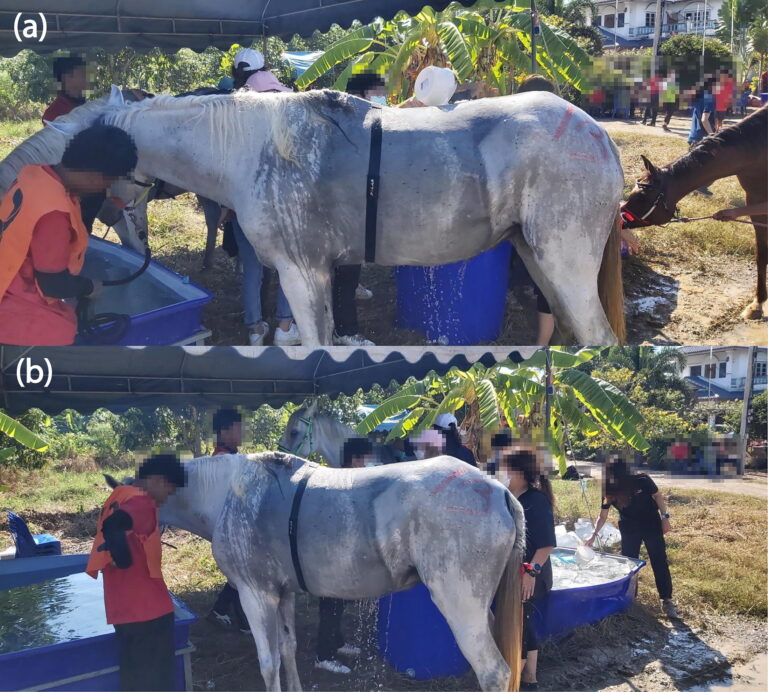
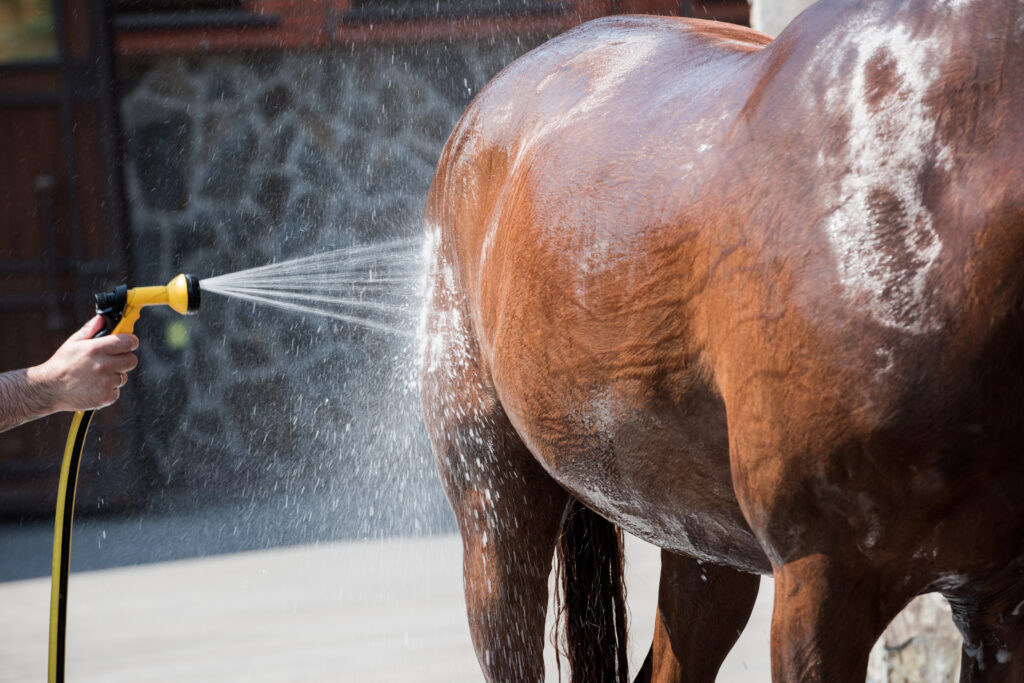
- 10-minute continuous pre-cooling tap water shower at 79 degrees Fahrenheit using five shower hoses = SHOWER.
All horses received a continuous washdown for 10 minutes with tap water following each experimental session.
The researchers measured the horses’ body weights before each pretreatment and after main exercise to determine weight loss. They assessed their heart rates, plasma lactate, and pulmonary arterial temperatures before and after pretreatment and after warmup and main exercise.
The results showed:
- Body weight loss for showered horses was significantly less than for the walked and rested horses.
- Pulmonary artery temperatures for walked horses were significantly higher after pretreatment, warmup, and main exercise than for the rested and showered horses.
- There were no significant differences in heart rate, plasma lactate, or run time in any of the horses.
- Pre-exercise cooling did not affect run times, but it did prevent weight loss and body temperature elevation without effects on performance.
Take-Home Message
Pre-cooling has the potential to limit horses’ fluid losses due to sweat, which mitigates weight loss. The study demonstrated that “a short, moderate-intensity warm-up was sufficient after pre-exercise cooling in hot environments, and additional warming-up or body temperature increases through walking were unnecessary for improved performance.” The authors concluded: “Pre-exercise cooling in hot environments prevented weight loss and body temperature elevation without affecting performance. Pre-exercise cooling may help maintain a horse’s physical condition in hot environments.”
Reference
Ohmura H, Ebisuda Y, Takahashi Y, Mukai K. Effects of pre-exercise cooling in hot environments on performance and physiologic responses in Thoroughbred horses. Journal of Equine Science 2025, vol. 36, no. 1, pp. 19-23; DOI: 10.1294/jes.36.19
Related Reading
- Disease Du Jour: Heat Stress and Stroke in Horses
- Research Spotlight: Preventing Heat Stress in Athletic Horses
- Pre-Loading with Electrolytes
Stay in the know! Sign up for EquiManagement’s FREE weekly newsletters to get the latest equine research, disease alerts, and vet practice updates delivered straight to your inbox.