This article originally appeared in the Fall 2026 issue of EquiManagement. Sign up here for a FREE subscription to EquiManagement’s quarterly digital or print magazine and any special issues.
Pituitary pars intermedia dysfunction (PPID) remains one of the most commonly diagnosed endocrine disorders in aging horses, yet questions about prognosis, disease progression, and treatment response continue to evolve. Recent research is providing insights into how PPID affects long-term health and life expectancy, while also helping veterinarians better understand how pergolide influences diagnostic testing and disease control.
Life Expectancy and Health Risks in PPID Horses
About 20% of horses older than 15 develop PPID, which can lead to a number of secondary problems. Nearly 77% of horses with PPID also develop insulin dysregulation (ID).
In a retrospective study, researchers at Purdue’s College of Veterinary Medicine reviewed medical records from 1996-2024 of 132 horses diagnosed with PPID. The diagnosis was based on elevated adrenocorticotropic hormone (ACTH) levels at rest or challenged with thyrotropin-releasing hormone (TRH) stimulation testing and on clinical signs and/or necropsy results. The researchers matched these records by age and breed with 274 controls.
Many abnormalities reportedly develop secondary to PPID: hypertrichosis, muscle atrophy, impaired athletic and reproductive performance, abnormal sweating, recurrent infections, desmitis, increased susceptibility to endoparasites and corneal ulcers, polyuria and polydipsia, lethargy, abnormal behavior, insulin dysregulation, and increased risk for hyperinsulinemia-associated laminitis (HAL), to name a few.
The authors noted that the presence of comorbidities can influence whether an owner will elect to treat a horse for PPID, even if the medical condition is linked to it. “Information regarding the frequency and type of comorbidities experienced by horses diagnosed with PPID would be of significant benefit to equine veterinarians who must regularly help clients navigate treatment decisions in horses with PPID,” they wrote.
The study results identified important factors about horses with PPID:
- Horses with PPID had more medical events than controls (median of 7 vs. 5).
- PPID horses had fewer medical events in the year before PPID diagnosis compared to after diagnosis (median of 0.5 vs. 1.5).
- The researchers reported no significant difference between hyperinsulinemia-associated laminitis events in PPID vs. control groups. Horses with PPID that became laminitic did not experience more frequent recurrences than controls that developed laminitis.
- High fecal egg counts did not differ significantly between PPID and control horses.
- Survival results show that horses with PPID alive at the end of the study were older than surviving controls (median of 24 vs. 20 years). Age of euthanasia was similar between PPID and control horses (median of 26 vs. 24 years).
- Reasons for euthanasia of PPID horses included colic (29.4%); nonemergency quality-of-life concerns (not HAL-related, 26.5%); other reasons (20.6%); HAL (11.8%); or being down and unable to rise (11.8%). PPID itself was a reason for euthanasia in 2 of 34 (5.9%). Control horses were euthanized for colic (39.4%); nonemergency quality-of-life concerns (18.2%); being unable to rise (12.1%); and HAL (6%).
Take-Home Message
The authors stated that medical events such as high fecal egg counts, insulin dysregulation, corneal ulceration, desmitis, and subsolar abscesses are not exclusively attributable to a PPID diagnosis and should be managed individually and appropriately.
PPID horses receiving treatment are not euthanized at a younger age than non-PPID horses, but they do have more medical events per year. Horses with PPID are more likely to be prescribed non-steroidal anti-inflammatories and to experience hyperinsulinemia-associated laminitis, poor wound healing, and dental issues. Reasons for euthanasia did not differ significantly between PPID and control horses.
Stapley E, Gillespie-Harmon C, Waxman S, et al. Horses diagnosed with pituitary pars intermedia dysfunction do not have shorter life expectancies but experience more medical events during their lifetime. JAVMA Dec 2025; DOI: 10.22460/javma.25.08.0533
Pergolide’s Effect on Normalizing TRH Stimulation Test Results for PPID Horses
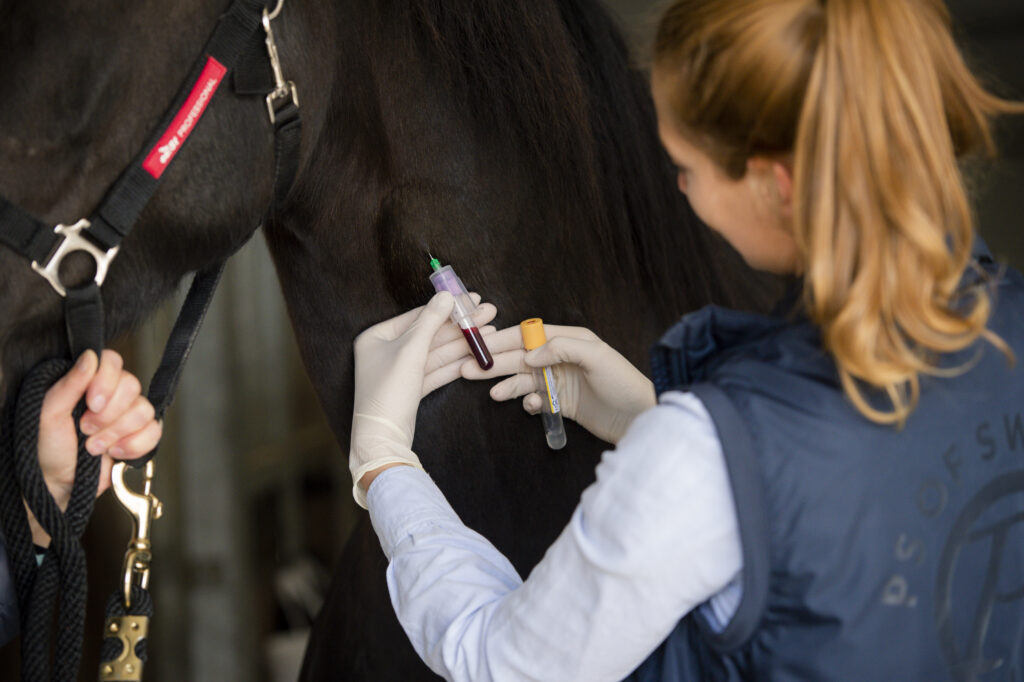
One of the best methods to test a horse for PPID is the thyrotropin-releasing hormone stimulation test that compares ACTH concentrations before administering TRH and 10 minutes after. A PPID horse receiving pergolide for 100 days typically has lower ACTH concentrations at both time points—0 and 10 minutes—in this test.
However, researchers have asked, “Do repeat TRH stimulation tests following treatment with pergolide provide a valid means of assessing response to medical therapy?” One paper found that 88% (56/64) of pergolide-treated horses had a decreased response to TRH after 100 days of treatment, but only 24% (9/38) with positive pretreatment TRH stimulation tests normalized following treatment. Equivocal outcomes were noted in 34% (13/38).
In a recent paper, veterinarians at multiple universities in Berlin, Germany, asked the question: Will ACTH concentrations at 10 minutes following administration of TRH normalize along with positive clinical responses?
The conclusions from this recent study found no significant differences between 0 and 10 minutes between horses that improved clinically on pergolide and those that did not. In other words, the results from TRH stimulation testing do not correspond to a horse’s clinical improvement.
“The TRH stimulation test should be used with caution to assess treatment response and adjustment of the pergolide dose,” the authors stated.
Durham AE. The effect of pergolide mesylate on adrenocorticotropic hormone responses to exogenous thyrotropin releasing hormone in horses. Vet J 2022; DOI: 10.1016/j.tvjl.2022.105831
Drozdzewska K, Merle R, Gehlen H. Does Pergolide Normalize TRH Stimulation Test in Horses with PPID? 2025
Related Reading
- Daily Vet Life: Cracking an Unusual Endocrine Case
- Researchers Assess Health and Disease in U.S. Senior Horses
- Updates on Equine Endocrinological Disorders: PPID and EMS
Stay in the know! Sign up for EquiManagement’s FREE weekly newsletters to get the latest equine research, disease alerts, and vet practice updates delivered straight to your inbox.