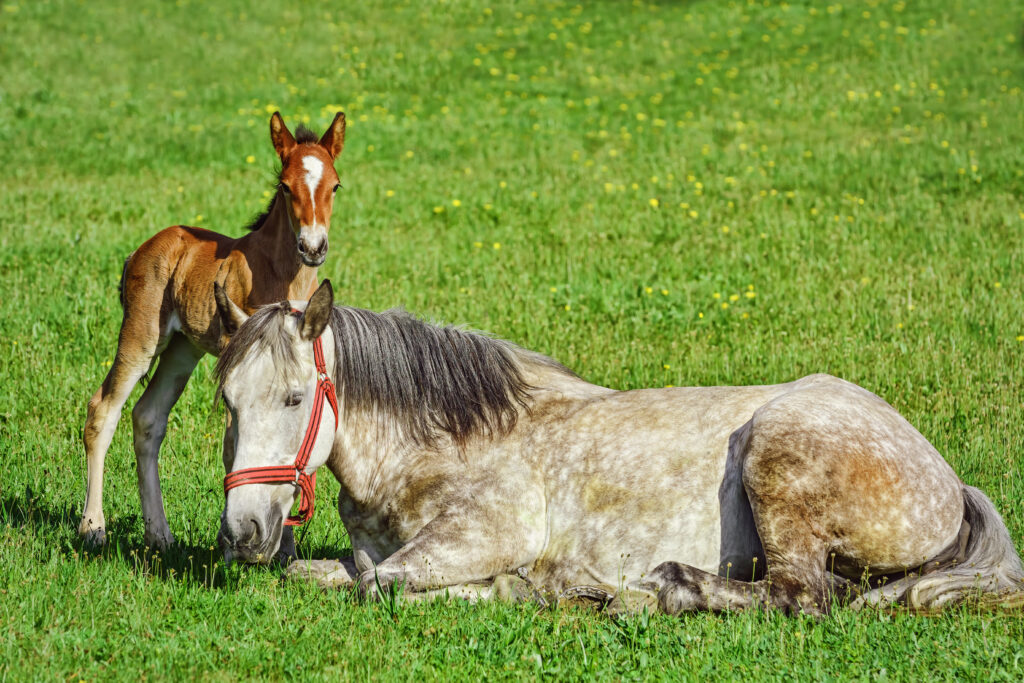
Broodmares are at increased risk of gastrointestinal colic. However, researchers have not previously investigated colic risk factors specific to this population. A prospective, nested case-control study aimed to investigate horse- and management-level risk factors for postpartum colic in a cohort of Thoroughbred broodmares in the United Kingdom and Ireland.
Twenty-nine Thoroughbred stud farms in the U.K. and Ireland participated in the study. Researchers followed 1,044 mares over the 2021 and/or 2022 foaling seasons, collecting data on signalment, medical, and management history for postpartum colic mares and matched (3:1) controls. They conducted multivariable analysis using conditional logistic regression.
Due to strong collinearity between days postpartum and time spent stabled, the researchers built two multivariable models. The following factors were associated with increased risk of postpartum colic:
- Days postpartum (Model 1: OR 0.9, 95% CI 0.8–0.9; p < 0.001). Colic risk was highest immediately postpartum, with a reduction in the likelihood of colic up to 50 days after foaling.
- Increasing hours stabled (Model 2: OR 1.2, 95% CI 1.1–1.3; p < 0.001).
- NSAID use in the previous 28 days (Model 1: OR 6.2, 95% CI 2.0–65.5; Model 2: OR 4.1, 95% CI 1.1–15.0; p = 0.048).
- History of previous colic (Model 1: OR 7.4, 95% CI 1.2–7.9; Model 2: OR 5.3, 95% CI 1.7–17.1; p = 0.01).
- Calcium supplementation was associated with increased likelihood of postpartum colic in Model 1 only (OR 4.4, 95% CI 1.3–15.7; p = 0.04).
Bottom Line
Maximizing turnout for postpartum broodmares might reduce colic risk, immediately postpartum and up to 50 days. Broodmares that have recently received NSAIDs, have a history of colic, or are receiving a calcium-based supplement might be at increased risk of postpartum colic.
https://beva.onlinelibrary.wiley.com/doi/10.1002/evj.70219
Related Reading
- Preventing Strangulating Lipoma Colic: New Insights on Equine Risk Factors
- Risk Factors for Equine Strangulating Lipoma Colic
- How to Manage Surgical Site Infections in Colic Patients
Stay in the know! Sign up for EquiManagement’s FREE weekly newsletters to get the latest equine research, disease alerts, and vet practice updates delivered straight to your inbox.