Equine distal limb wounds often develop exuberant granulation tissue that requires debridement and continued bandaging. In a multicenter, retrospective study, researchers aimed to report clinical outcomes of horses with naturally occurring full-thickness skin lacerations treated with an amorphous silicate dressing. They evaluated clinical records of 11 horses with distal limb wounds collected from eight participating U.S. veterinarians from May 2021 to May 2022.
The authors reported that proliferation is triggered by tissue growth factor-B, which modulates fibronectin production to form granulation tissue. In previous studies, orthosilicic acid or silicon added to wounds has been shown to regulate fibroblast growth factor to reduce inflammation and produce homogenous collagen and elastic fibers.
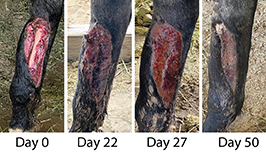
As amorphous silicate nanoparticles dissolve, they deliver orthosilicic acid for slow release into the wound to modulate the microenvironment. Veterinarians in this study used Zarasyl Equine’s patented barrier cream, which is not currently FDA-approved. The study horses’ wounds were considered to be chronic with delayed healing, or they had excessive tension or contamination that made them unsuitable for primary closure. The wounds that met study criteria had previously been treated unsuccessfully with manuka honey, systemic antimicrobials, systemic NSAIDs, Dermalone ointment, Derma Gel, silicone gel dressing, or wet-to-dry bandaging.
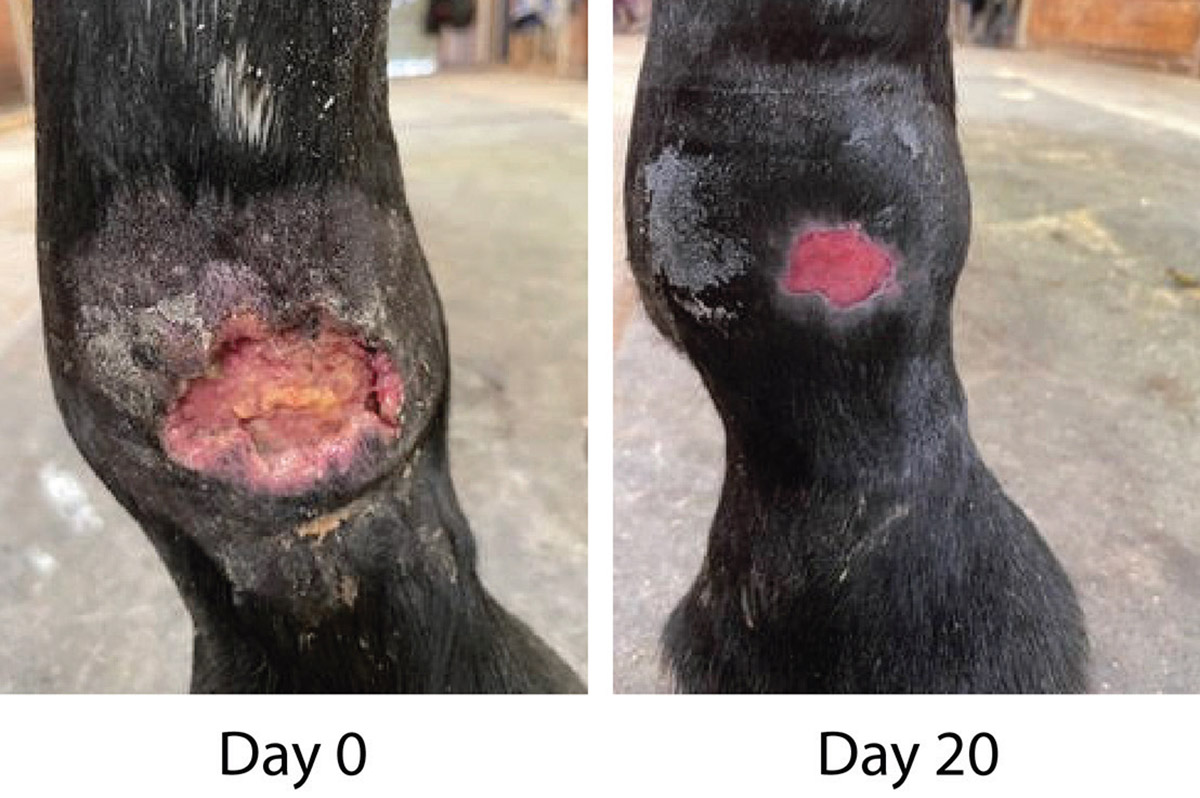
The wounds were clipped, cleaned, and debrided of necrotic or exuberant granulation tissue. Veterinarians applied the amorphous silicate topically every 1-3 days after cleaning the wound with sterile saline. They collected wound measurements during each silicate application. Wounds were bandaged when appropriate.
None of the 11 silicate-treated wounds developed exuberant granulation tissue, and no complications developed. The wounds reached 50% contracture between 7-60 days (median of 21 days), dependent on size at the start. Resolution occurred from 14-126 days (median of 49 days); this was dependent on the number of tissue planes affected and if bone was exposed.
Take-Home Message
The veterinarians who treated these wounds reported that this topical silicate is easy to apply. There were no complications, and they did not need to debride granulation tissue. Orthosilicic acid in this wound dressing reduces chronic inflammation and improves fibroblast differentiation, leading to good resolution, less scarring, and reduced treatment expense.
Reference
Chavalier JM, Pearson GB. Amorphous silicate technology produces good results in equine distal limb wound healing. JAVMA April 2023; DOI: 10.2460/javma.22.11.0490
Related Reading
- Strategies for Equine Bandaging and Splinting Success
- Mastering Regional Limb Perfusions in Horses
- Antimicrobial Stewardship With Honey
Stay in the know! Sign up for EquiManagement’s FREE weekly newsletters to get the latest equine research, disease alerts, and vet practice updates delivered straight to your inbox.